
The Unique Maintenance Challenges of Agrivoltaics
Agrivoltaic systems—which combine agricultural production with solar energy generation on the same land—represent one of the most promising innovations in sustainable land use. However, these dual-purpose installations create unique challenges for solar panel maintenance that conventional cleaning approaches fail to address adequately.
The integration of farming and energy production introduces cleaning complexities not encountered in traditional solar installations, from elevated organic soiling rates to restricted access patterns during growing seasons. Successfully maintaining these systems requires specialized approaches that balance agricultural and energy production needs.
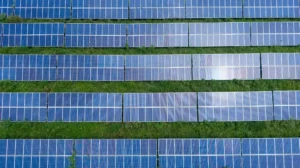
Understanding the Agrivoltaic Soiling Environment
The soiling dynamics in agrivoltaic settings differ significantly from traditional solar farms, driven by several distinct factors:
1. Elevated Organic Material Exposure
Agricultural activities generate substantial organic particulates that impact panel cleanliness:
- Pollen from flowering crops: Seasonal pollen events can rapidly coat panels with sticky residues that bind other particles to panel surfaces.
- Soil particulates from tillage: Ground disturbance operations can dramatically increase airborne dust concentrations.
- Crop residue particulates: Harvesting operations often release plant fragments and organic dust that adheres to panel surfaces.
These organic materials not only reduce light transmission but can promote microbial growth on panel surfaces when combined with moisture. Our research blog contains detailed analyses of how different agricultural activities impact soiling rates.
2. Irrigation Spray and Mineral Spotting
Many agrivoltaic systems feature crops requiring regular irrigation, which introduces additional cleaning challenges:
- Water droplet residue: Irrigation water often contains dissolved minerals that leave spots when dried on panel surfaces.
- Mineral buildup acceleration: The combination of irrigation mist and dust creates ideal conditions for stubborn mineral scaling.
- Uneven soiling patterns: Irrigation systems can create inconsistent wetting patterns across panel arrays, leading to variable soiling rates.
For installations using overhead irrigation, these impacts can be particularly significant. Our comparative analysis tools demonstrate the differential soiling rates between agrivoltaic systems using various irrigation methodologies.
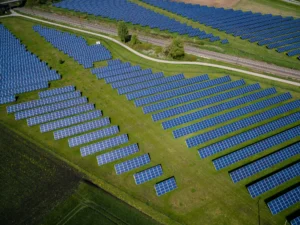
3. Restricted Access for Cleaning Operations
Unlike conventional solar farms, agrivoltaic installations must coordinate maintenance activities with agricultural operations:
- Seasonal access limitations: During certain cultivation or harvest periods, ground access may be restricted to prevent crop damage.
- Physical obstacles: Growing crops, trellises, or agricultural equipment may impede access to panel arrays.
- Soil condition constraints: Wet field conditions can restrict equipment movement and conventional cleaning approaches.
These limitations make conventional cleaning approaches impractical during significant portions of the growing season, precisely when soiling rates are often highest.
Innovative Cleaning Technologies for Agrivoltaic Applications
The challenges of agrivoltaic solar panel cleaning have driven significant innovation in maintenance technologies specifically designed for these hybrid environments:
1. Elevated Rail Systems for Equipment-Independent Access
Advanced agrivoltaic cleaning solutions often utilize permanent elevated rail infrastructure that enables maintenance operations independent of ground conditions:
- Panel-supported rail networks: Purpose-built mounting systems include integrated cleaning robot rails.
- Independent aerial frameworks: Standalone elevated rail systems suspended above both panels and crops.
These systems allow autonomous solar panel cleaning to continue regardless of crop development stage or field conditions. Our flagship product incorporates several patented rail design innovations specifically for agrivoltaic applications.
2. Specialized Cleaning Formulations for Agricultural Soiling
Standard cleaning approaches often struggle with the adhesive organic materials common in agricultural settings. Specialized formulations developed for agrivoltaic applications include:
- Enzymatic cleaning solutions: Organic-specific formulations that break down stubborn pollen and plant residues.
- Biodegradable surfactants: Agricultural-compatible cleaning agents safe for underlying crops.
- Rapidly-evaporating formulations: Quick-drying solutions that minimize dripping onto sensitive crops.
These advanced cleaning chemistries enhance cleaning effectiveness while maintaining compatibility with underlying agricultural operations. Our technical specifications page details the agricultural certifications of our cleaning solutions.
3. Intelligent Scheduling Systems Coordinated with Farm Operations
Automatic solar panel cleaning systems for agrivoltaic applications incorporate sophisticated scheduling algorithms that coordinate with agricultural activities:
- API integration with farm management software: Synchronizes cleaning operations with planned agricultural activities.
- Weather-adaptive scheduling: Automatically adjusts cleaning timing to avoid interference with weather-sensitive farm operations.
- Crop-specific programming: Customizes cleaning parameters based on the underlying crop’s sensitivity and growth stage.
This intelligent coordination maximizes cleaning effectiveness while minimizing disruption to agricultural productivity. Contact our team to learn how our scheduling systems can integrate with your existing farm management platforms.
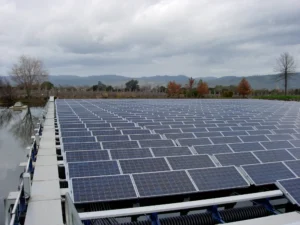
Case Study: Specialized Cleaning for Vineyard Agrivoltaic System
A 2.5MW agrivoltaic installation above a premium wine grape vineyard demonstrates the effectiveness of specialized cleaning approaches:
The Challenge
The installation faced multiple cleaning obstacles:
- Strict prohibition of chemical runoff that could alter soil chemistry and wine characteristics
- High-value crop requiring minimal disturbance
- Elevated pollen levels during flowering season coinciding with peak solar production months
- Complex trellis system limiting conventional equipment access
The Solution: Customized Rail-Based Robotic System
The implemented solution featured:
- Suspended rail infrastructure: Permanent overhead rail system allowing the solar panel cleaning robot to traverse the entire array without contacting the vineyard floor.
- Ultra-low moisture cleaning system: Advanced microfiber technology with minimal water consumption to eliminate runoff concerns.
- Seasonal programming: Intensified cleaning frequency during grape flowering periods when pollen counts peaked.
- Night operation capability: Scheduling cleaning during overnight hours to avoid conflict with daytime vineyard operations.
The Results
The specialized agrivoltaic cleaning solution delivered exceptional results:
- 9.3% annual energy production increase compared to the previous manual cleaning program
- Zero interference with vineyard operations throughout the growing season
- 97% reduction in cleaning water consumption
- Elimination of all soil chemistry concerns from cleaning runoff
Similar case studies across various crop types demonstrate the adaptability of specialized cleaning systems to different agricultural contexts.
Adapting Cleaning Technologies to Specific Crop Systems
Different agricultural activities beneath solar arrays create distinct cleaning requirements. Here’s how cleaning approaches are customized for various common agrivoltaic pairings:
Row Crops (Corn, Soybeans, etc.)
Tall seasonal crops present specific challenges including high seasonal pollen loads and harvesting dust:
- Elevated cleaning platforms: Systems operating entirely above maximum crop height.
- Intensified pre/post-harvest cleaning: Scheduling protocols that anticipate harvesting dust.
- Enhanced filtration systems: Specialized pre-filters for heavy organic particle environments.
For row crop applications, our engineering team has developed proprietary dust management systems that prevent harvest-time particulates from adhering to panel surfaces.
Grazing Operations (Sheep, Poultry)
Animal integration introduces biological soiling concerns:
- Anti-microbial panel treatments: Special coatings that inhibit growth from animal-related organic matter.
- Increased mechanical agitation: Enhanced scrubbing capabilities for biological residues.
- Scheduled intensive cleaning: Periodic deep-cleaning protocols between grazing rotations.
Livestock-compatible cleaning systems require specialized design considerations detailed in our technical documentation.
Specialty Crops (Berries, Vegetables)
High-value, sensitive crops beneath panels demand exceptional precision:
- Targeted cleaning zones: Ultra-precise solution application that eliminates overspray.
- Variable pressure systems: Adjustable cleaning pressure based on panel position relative to sensitive crops.
- Compatible formulation selection: Cleaning solutions certified safe for direct food crop contact.
These specialized adaptations ensure cleaning effectiveness without compromising crop quality or safety.
Emerging Innovations in Agrivoltaic Cleaning
The agrivoltaic sector continues to drive innovation in solar panel cleaning technologies, with several promising developments enhancing maintenance capabilities:
1. Drone-Assisted Inspection and Spot Cleaning
Advanced drone systems are beginning to complement fixed cleaning infrastructure:
- Thermal imaging assessment: Drones equipped with thermal cameras identify soiling-related hotspots.
- Targeted intervention: Precision spot-cleaning of heavily soiled areas between scheduled full cleanings.
- Access to difficult configurations: Reaching panel areas inaccessible to fixed rail systems.
Our innovation roadmap includes several drone-related initiatives currently in field testing.
2. Predictive Soiling Models for Agricultural Activities
Sophisticated data analytics are enabling proactive cleaning approaches:
- Farm activity integration: Algorithms that predict soiling spikes based on scheduled agricultural operations.
- Pollen forecasting: Integration with environmental monitoring to anticipate natural soiling events.
- Custom cleaning protocols: Tailored intervention strategies optimized for specific predicted soiling types.
These predictive capabilities enhance cleaning effectiveness while minimizing resource consumption. Our flagship product includes optional predictive management modules specifically for agrivoltaic applications.
3. Hydrophobic Nano-Coatings for Agrivoltaic Environments
Specialized panel treatments are emerging as important supplementary protection:
- Agricultural-specific formulations: Coatings designed to repel organic compounds and pollen.
- UV-resistant technologies: Enhanced durability under the intense exposure typical of agricultural settings.
- Self-cleaning enhancement: Treatments that amplify the effectiveness of natural rainfall in removing soiling.
These coating technologies can significantly extend cleaning intervals and enhance overall system performance in challenging agricultural environments.
Economic Considerations for Agrivoltaic Cleaning Systems
The specialized nature of agrivoltaic installations requires careful economic analysis when selecting cleaning technologies:
1. Dual-Benefit Evaluation
Unlike conventional solar installations, agrivoltaic cleaning impacts both energy and agricultural yields:
- Crop quality effects: Reduced panel dripping or overspray can improve crop marketability.
- Operational coordination benefits: Synchronized maintenance reduces overall farm operation disruption.
- Agricultural equipment compatibility: Systems designed to accommodate farm equipment movement.
These agricultural benefits should be incorporated into any ROI analysis for cleaning systems. Our ROI calculator includes agrivoltaic-specific parameters to capture these dual benefits.
2. Infrastructure Investment Analysis
The infrastructure requirements for agrivoltaic cleaning often differ from conventional solar installations:
- Higher initial capital costs: Specialized access systems typically require greater upfront investment.
- Extended usable lifespan: Purpose-built systems designed for agricultural environments often offer longer operational life.
- Reduced ongoing labor needs: Automated systems eliminate challenges of manual cleaning in complex agricultural settings.
A comprehensive lifecycle cost analysis typically favors more sophisticated automatic solar panel cleaning systems despite higher initial investments. Contact our financial analysts for detailed modeling of your specific installation economics.
Conclusion: The Specialized Future of Agrivoltaic Maintenance
As agrivoltaic installations continue to expand globally, the specialized cleaning technologies supporting these hybrid systems are becoming increasingly sophisticated. What began as adaptations of conventional solar cleaning approaches has evolved into a distinct category of maintenance solutions specifically engineered for the unique challenges of agricultural integration.
The future of agrivoltaic solar panel cleaning will likely see further convergence with smart farming technologies, creating integrated management systems that optimize both energy and agricultural productivity through coordinated maintenance approaches.
For agrivoltaic system operators seeking to maximize the performance of their dual-purpose installations, investing in specialized cleaning solutions designed specifically for these unique environments represents a critical success factor. Explore our agrivoltaic-specific product line to discover how purpose-built cleaning technology can enhance your system’s performance and longevity.