
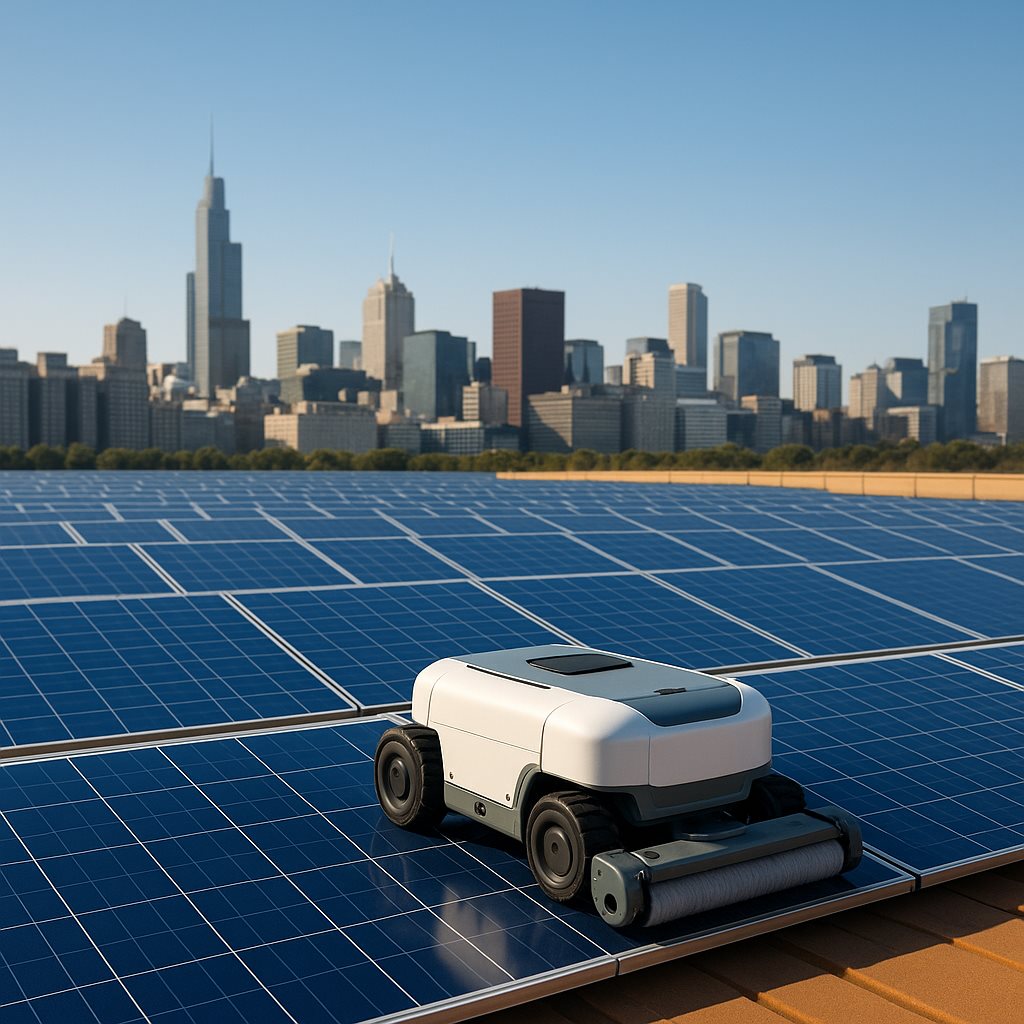
Commercial rooftops are some of the most valuable – and most neglected – solar real estate there is. The panels are productive, but cleaning them means sending people onto a roof with ladders, harnesses, and hoses, so it often gets postponed. A rooftop solar panel cleaning robot changes that equation: it keeps the array clean and the people on the ground. Here is how these systems work and where they pay off.
Why Rooftop Arrays Are Hard to Keep Clean
Rooftop installations combine every cleaning challenge at once: height and safety risk, awkward access, limited water supply, and business tenants who do not want disruption. Manual cleaning is slow and expensive under those conditions, so panels tend to sit dirty for long stretches – quietly bleeding a few percent of output the whole time.
How Rooftop Cleaning Robots Work
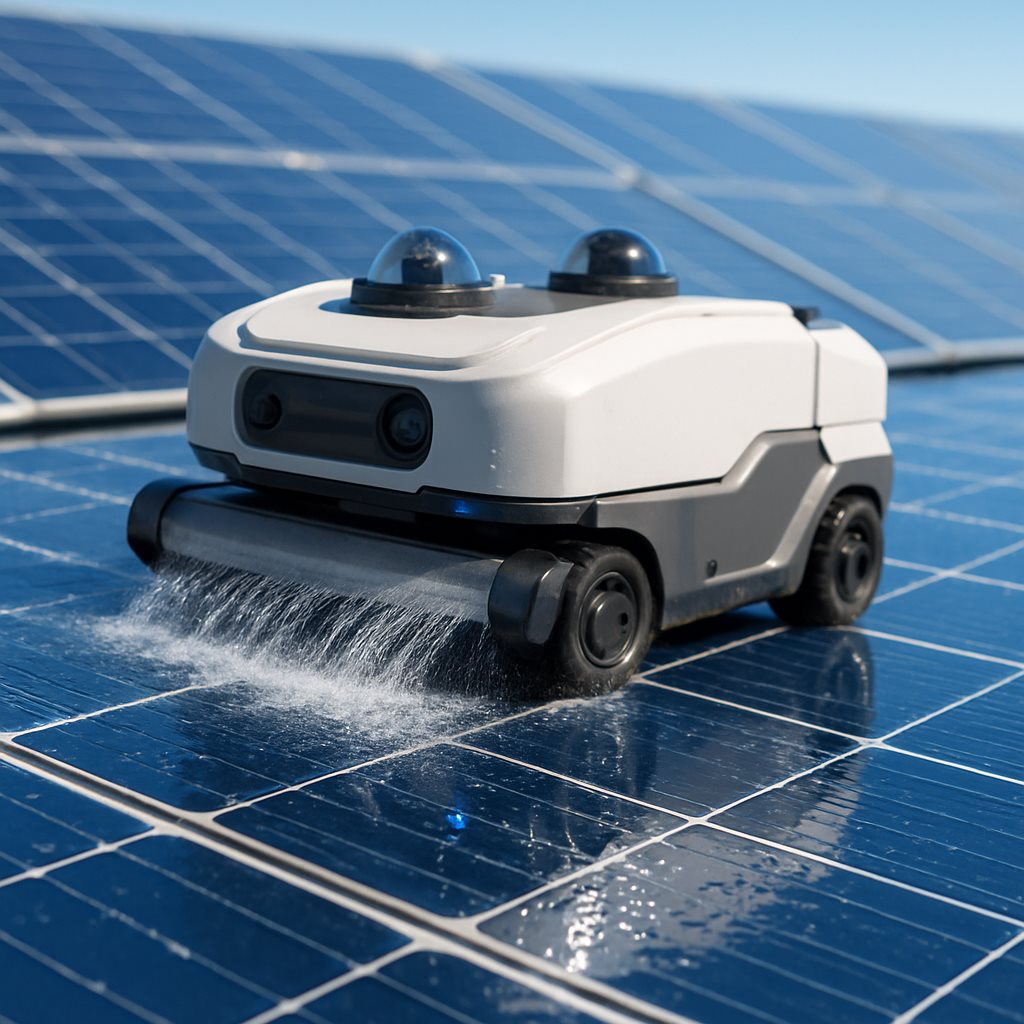
A rooftop cleaning robot navigates the array on its own, cleaning panel by panel without a technician walking alongside. The most capable systems are autonomous and water-based, using controlled water and gentle brushing to lift dust and stuck-on grime without harsh pressure. Because a rail-free design adds nothing permanent to the roof, it avoids extra load, shading, and penetrations. You can see the full cleaning cycle on our how it works page.
Safety: Keeping People Off the Roof
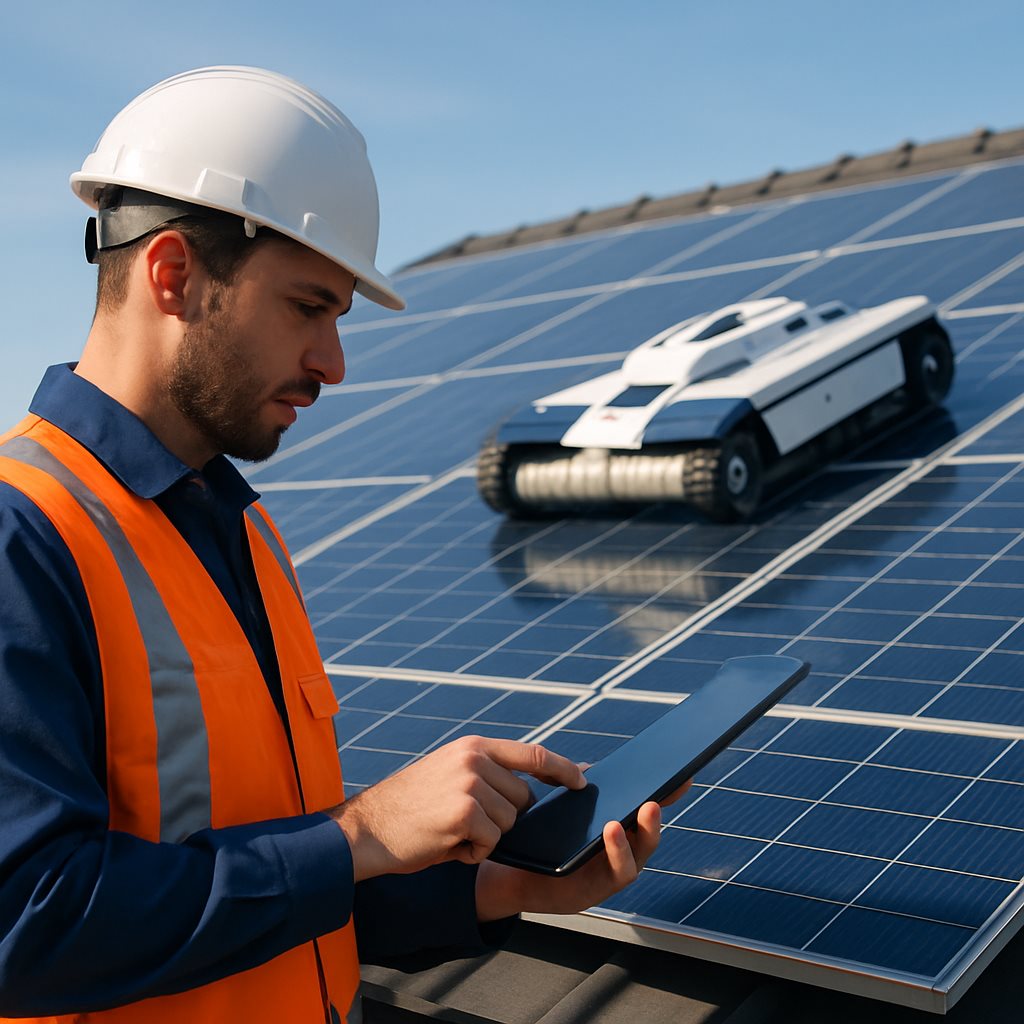
The single biggest benefit on rooftops is safety. Every manual cleaning visit puts workers at height, with all the fall risk, insurance exposure, and compliance overhead that involves. An autonomous robot removes the person from the hazard entirely. For many building owners, cutting that liability is reason enough to automate, before the energy gains are even counted.
Performance and Yield
Consistent cleaning keeps a rooftop array near its rated output instead of drifting down between infrequent visits. Across a commercial roof, recovering those lost percentages adds up quickly – which is why the ROI of autonomous cleaning is often strongest exactly where manual access is hardest. Neglect works the other way: our guide to the hidden costs of inadequate cleaning covers what dirty panels really cost over time.
Choosing a Robot for Commercial Rooftops
When evaluating a commercial rooftop solar cleaning system, weigh a few factors: does it operate autonomously without staff at height, does it add permanent load or shading to the roof, how much water does it use, and can it handle the stuck-on grime typical of urban and industrial roofs? Our commercial rooftop cleaning solution is built specifically around these constraints.
The Bottom Line
On commercial rooftops, robotic cleaning solves a safety problem and a yield problem at the same time. By keeping people off the roof and the panels consistently clean, a rooftop solar panel cleaning robot protects both your workforce and your energy revenue. To see what one could do for your building, request a demo.
Frequently Asked Questions
How does a rooftop solar panel cleaning robot work?
It moves across the rooftop array autonomously, cleaning each panel with controlled water and gentle brushing. The best systems are rail-free and water-based, so they add no permanent hardware to the roof and need no operator on site.
Is robotic cleaning safer than sending workers onto the roof?
Yes. Autonomous cleaning removes people from work at height, eliminating the main fall risk and reducing the insurance and compliance burden that comes with manual rooftop cleaning.
Will a cleaning robot damage my roof or add load?
A rail-free robot adds no permanent fixtures, penetrations, or shading. It operates on the panels themselves rather than requiring tracks bolted to the roof structure.
How much extra energy can rooftop cleaning recover?
It depends on soiling, but consistent cleaning typically recovers several percent of output that would otherwise be lost between infrequent manual visits – often the difference in a rooftop project’s returns.
How often should commercial rooftop panels be cleaned?
It depends on local dust, pollen, and pollution. Autonomous systems make frequent, condition-based cleaning practical, so panels stay near peak output without a growing labor bill.