
The Evolution Imperative in Solar Maintenance
As solar installations mature and expand, many operators find themselves at a critical decision point in their maintenance strategy. The labor-intensive manual cleaning approaches that may have sufficed during initial operations increasingly prove unsustainable as systems age, energy production targets become more demanding, and operational efficiency becomes paramount.
This transition from conventional to automated maintenance represents more than a simple equipment upgrade—it constitutes a fundamental reimagining of how solar assets are managed and optimized. For organizations considering this evolution, understanding both the challenges and opportunities is essential for successful implementation.
Recognizing the Limitations of Manual Cleaning Approaches
Before exploring automation benefits, it’s important to clearly identify the constraints that typically trigger consideration of automatic solar panel cleaning systems:
Operational Limitations
Traditional manual cleaning faces several practical constraints:
- Labor intensity: Requiring 5-15 labor hours per MW for thorough cleaning
- Scheduling complexity: Coordinating large cleaning crews across extensive installations
- Weather dependence: Narrow operational windows dictated by weather conditions
- Safety concerns: Worker risks associated with heights, electrical equipment, and sometimes challenging terrain
- Inconsistent results: Quality variations based on individual technique and thoroughness
These limitations create significant management challenges, particularly as installations scale beyond a few megawatts. Our detailed analysis documents the exponential growth in management complexity as system size increases.

Performance Limitations
Beyond operational challenges, manual approaches often fail to deliver optimal cleaning outcomes:
- Cleaning frequency constraints: Practical and economic factors typically limit cleaning to 2-6 times annually
- Extended soiling periods: Long intervals between cleanings create substantial energy production valleys
- Damage risk: Untrained or hurried workers potentially causing micro-scratches or frame damage
- Water inefficiency: Typical consumption of 0.2-0.5 gallons per panel without recovery systems
These performance limitations directly impact system production and longevity. Our case studies compare energy production patterns between manual and automated cleaning regimes.
The Transformative Potential of Robotic Cleaning Solutions
Solar panel cleaning robots offer a comprehensive solution to the limitations of manual approaches through several key advantages:
Operational Transformation
Automation fundamentally changes maintenance operations:
- Labor reduction: Typically reducing labor requirements by 75-90%
- Scheduling flexibility: Operating during off-hours or optimal conditions without human staffing concerns
- Consistent quality: Delivering uniform cleaning performance across entire installations
- Enhanced safety: Eliminating or dramatically reducing human exposure to heights and electrical hazards
- Simplified management: Centralizing cleaning operations under software control rather than crew management
These operational improvements deliver both immediate cost benefits and streamlined management. Our flagship product demonstrates how automation simplifies complex maintenance operations.
Performance Enhancement
Beyond operational benefits, automated solutions enhance cleaning effectiveness:
- Increased frequency: Enabling daily, weekly or bi-weekly cleaning without proportional cost increases
- Targeted cleaning: Addressing high-soiling areas with customized attention
- Gentler processes: Using precisely controlled pressure and specialized materials to prevent panel damage
- Resource efficiency: Reducing water consumption by 60-90% through optimized application and potential recycling
These performance advantages translate directly to improved energy production and system longevity. Contact our specialists for custom ROI projections based on your specific installation parameters.
Developing a Strategic Transition Plan
Moving from manual to autonomous solar panel cleaning requires thoughtful planning across multiple dimensions:
1. System Assessment and Compatibility Analysis
Before selecting specific solutions, comprehensive evaluation of the existing installation is essential:
- Panel and mounting compatibility: Ensuring physical support for robotic systems
- Layout and access analysis: Identifying possible navigation challenges or required modifications
- Electrical infrastructure assessment: Determining power availability for charging and operations
- Water system evaluation: Assessing water supply and potential recovery systems
This foundational analysis prevents compatibility surprises during implementation. Our assessment team offers comprehensive compatibility evaluations for existing installations.
2. Performance Baseline Establishment
Documenting current performance creates the foundation for measuring improvement:
- Soiling loss quantification: Measuring current energy losses attributable to soiling
- Cleaning cost analysis: Documenting all direct and indirect costs of current cleaning approaches
- Performance variability assessment: Analyzing production fluctuations between cleaning cycles
This baseline creates meaningful comparison metrics for post-implementation evaluation. Our analytics tools provide frameworks for establishing these critical benchmarks.
3. Solution Selection and Customization
With assessment complete, selecting appropriate automation technology involves:
- Technology matching: Identifying robot types suitable for specific installation characteristics
- Customization requirements: Determining any necessary modifications for site-specific challenges
- Fleet sizing calculation: Optimizing the number of units for operational efficiency
- Infrastructure additions: Planning any required support systems like charging stations or water treatment
This targeted approach ensures the selected solution addresses specific installation needs rather than applying generic technology. Our product selector guides operators through this critical decision process.
4. Implementation Phasing Strategy
For larger installations, phased implementation often proves most effective:
- Pilot area designation: Selecting representative sections for initial deployment
- Performance validation protocol: Establishing clear metrics for evaluating pilot success
- Adjustment period: Allowing time for fine-tuning before full-scale deployment
- Expansion scheduling: Planning methodical rollout across the remaining installation
This measured approach minimizes risk while allowing for optimization before full commitment. Our implementation roadmap outlines proven phasing strategies for various installation types.

Overcoming Common Transition Challenges
Several recurring challenges typically emerge during automation transitions:
1. Physical Infrastructure Adaptations
Existing installations may require modifications to accommodate robotic systems:
- Panel edge clearance: Ensuring adequate spacing for robot navigation
- Row-end access: Creating transition paths between panel rows
- Support reinforcement: Strengthening structures to support robot weight
- Charging infrastructure: Installing power access points for robot recharging
Our engineering team specializes in retrofit solutions that minimize modifications while ensuring robust operation.
2. Operational Integration
Merging automated cleaning into existing maintenance programs requires:
- Standard operating procedure updates: Revising maintenance protocols to incorporate automation
- Staff training programs: Developing skills for robot oversight and troubleshooting
- Maintenance scheduling coordination: Synchronizing cleaning with other system maintenance
- Performance monitoring integration: Incorporating cleaning metrics into overall system dashboards
This operational integration ensures seamless incorporation into existing workflows. Our training resources support staff transition to automation oversight roles.
3. Economic Expectation Management
Setting realistic financial expectations prevents disappointment:
- Investment recovery timelines: Understanding typical payback periods of 2-4 years
- Benefit accrual patterns: Recognizing that production benefits accumulate gradually
- Total cost accounting: Ensuring all relevant costs and savings are incorporated into analysis
- Value beyond ROI: Acknowledging benefits in regulatory compliance, safety, and risk reduction
Comprehensive economic analysis prevents narrow focus on immediate returns. Our ROI calculator facilitates this broad economic assessment.
Case Study: Staged Transition for Commercial Portfolio
A 25MW portfolio of commercial rooftop installations demonstrates effective transition strategy:
The Challenge
The portfolio faced multiple transition challenges:
- 32 separate installations across different building types
- Varying panel configurations and mounting systems
- Limited roof access for infrastructure modifications
- Need to maintain production during transition
The Solution: Phased Implementation Strategy
The implemented transition featured:
- Comprehensive portfolio assessment: Categorizing sites by complexity and potential benefit
- Three-phase rollout plan: Starting with simplest/highest-benefit sites
- Custom configuration development: Adapting solar panel cleaning robots to specific roof conditions
- Performance validation protocol: Detailed measurement at each phase before proceeding
The Results
The phased transition delivered exceptional results:
- 5.8% average increase in annual energy production across the portfolio
- 82% reduction in cleaning labor hours
- 67% reduction in overall maintenance costs
- Complete elimination of cleaning-related safety incidents
- 30-month average ROI across all sites
Similar case studies demonstrate how phased implementation optimizes both technical and financial outcomes.

Specialized Transition Considerations for Different Installation Types
The transition process varies significantly based on installation type:
Rooftop Commercial Systems
Commercial rooftop transitions require specific considerations:
- Roof loading analysis: Ensuring structural capacity for robot weight
- Parapet and obstacle navigation: Addressing building-specific features
- Access point development: Creating secure methods for robot deployment
- Stakeholder coordination: Working with building management and occupants
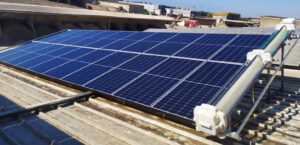
For these installations, lightweight rooftop solar panel cleaning solutions offer significant advantages. Our commercial system specifications detail the adapters available for various roof types.
Utility-Scale Ground Mounts
Large ground-mounted systems present different transition challenges:
- Scale-appropriate automation: Selecting robots designed for utility operations
- Fleet management systems: Implementing coordinated control of multiple units
- Terrain adaptation: Addressing uneven or challenging ground conditions
- Security integration: Protecting valuable robotic assets in remote locations
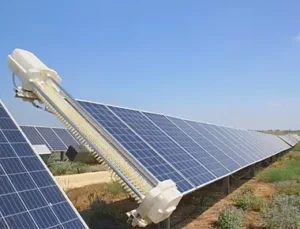
The economics of scale typically make these installations ideal candidates for automated solar panel cleaning. Our utility-scale solutions demonstrate the fleet-based approaches optimized for large installations.
Carport and Elevated Systems
Elevated structures create unique transition requirements:
- Height-specific robot design: Utilizing units designed for operation at height
- Safety tethering systems: Ensuring secure operation on elevated structures
- Specialized deployment systems: Creating safe methods for robot placement and retrieval
- Public area considerations: Addressing operations over spaces with public access
These specialized installations often benefit from custom cleaning solutions. Contact our design team for elevated installation-specific guidance.
Financial Analysis: Making the Investment Case
The transition to solar panel cleaning robots requires substantial initial investment, typically justified through several financial mechanisms:
1. Direct Cost Comparison
Straightforward comparison of current versus automated cleaning costs:
| Cost Factor | Manual Cleaning | Robotic Cleaning |
|---|---|---|
| Labor | $200-600/MW/cleaning | $30-90/MW/cleaning |
| Water | $25-75/MW/cleaning | $5-20/MW/cleaning |
| Equipment | $10-30/MW/cleaning | $50-150/MW/cleaning + initial investment |
| Management | $50-150/MW/cleaning | $10-30/MW/cleaning |
| Total per cleaning | $285-855/MW | $95-290/MW + amortized capital |
When accounting for increased cleaning frequency, the economics become even more favorable for automation. Our detailed financial models provide frameworks for customized cost comparison.
2. Production Improvement Value
Enhanced energy production typically provides the most significant financial benefit:
- Average soiling losses in manually-cleaned systems: 3-10% annually
- Average soiling losses in robot-cleaned systems: 0.5-2% annually
- Typical production improvement: 2-8% of annual energy production
For a 10MW system producing at $0.06/kWh, this represents $105,000-$420,000 in additional annual revenue. This production benefit alone typically justifies the investment. Our production calculator enables precise estimation of these benefits for specific installations.
3. Expanded Financial Benefits
Beyond direct cleaning costs and production improvements, additional financial benefits include:
- Panel degradation reduction: Extended panel life from more frequent, gentler cleaning
- Warranty compliance: Documented regular cleaning supporting warranty claims
- Insurance premium effects: Potential reductions from decreased on-site labor risks
- Staffing optimization: Reallocation of labor to higher-value maintenance activities
These supplementary benefits enhance the overall financial case. Contact our financial analysts for comprehensive evaluation of total financial impact.
Staff Transition: From Cleaners to Robot Operators
Successful automation requires thoughtful management of the human transition:
1. Role Evolution Planning
Rather than simple replacement, effective transition involves role transformation:
- Technical upskilling opportunities: Training cleaning staff for robot oversight roles
- Preventative maintenance positions: Developing robot maintenance specialists
- Data analysis roles: Creating positions focused on performance monitoring
- Deployment coordination: Managing scheduling and operation of automated systems
This emphasis on role evolution rather than elimination improves transition acceptance. Our transition planning guide provides frameworks for staff development planning.
2. Training and Certification Programs
Supporting role transitions requires comprehensive training:
- Technical familiarization curriculum: Building understanding of robotic systems
- Troubleshooting certification: Developing first-response maintenance capabilities
- Performance analysis training: Teaching data interpretation and optimization skills
- Advanced maintenance certification: Creating pathways to higher-skill positions
These programs transform cleaning staff into valuable automation specialists. Contact our training department for information on operator certification programs.
Future-Proofing: Selecting Adaptable Cleaning Technology
As the solar industry continues to evolve, selecting cleaning technology with adaptability ensures long-term viability:
1. Panel Technology Compatibility
Choosing systems compatible with emerging panel designs:
- Bifacial compatibility: Ability to clean both panel surfaces
- Frameless panel capabilities: Adaptable to modern frameless designs
- Thinner glass handling: Appropriate pressure for next-generation thinner panels
- Large-format panel navigation: Adapting to increasing panel dimensions
This forward compatibility prevents premature obsolescence. Our technology roadmap details our commitment to evolving panel compatibility.
2. Data Integration Capabilities
Selecting systems with robust connectivity enhances future utility:
- API availability: Allowing integration with asset management platforms
- Performance data collection: Capturing and exporting cleaning effectiveness metrics
- Remote management capabilities: Enabling offsite monitoring and control
- Firmware update paths: Supporting feature enhancement over time
These integration capabilities maximize long-term value. Our connectivity specifications detail the data integration options available.
Conclusion: The Strategic Advantage of Planned Transition
The shift from manual to automated solar panel cleaning represents a significant opportunity to enhance operational efficiency, improve energy production, and reduce maintenance costs. However, realizing these benefits requires thoughtful planning and implementation rather than abrupt change.
By approaching this transition as a strategic evolution—with appropriate assessment, phasing, and staff development—solar operators can maximize the return on their automation investment while minimizing disruption to ongoing operations.
As the economics of solar power continue to drive industry growth, the efficiency advantages of automated cleaning will increasingly separate leading operators from those relying on outdated maintenance approaches. For forward-thinking solar asset managers, the question is not whether to automate cleaning, but how to implement this transition most effectively for their specific installations.
To explore how your operation can successfully navigate the journey from manual to automated cleaning, contact our transition specialists for a customized assessment and implementation roadmap.