
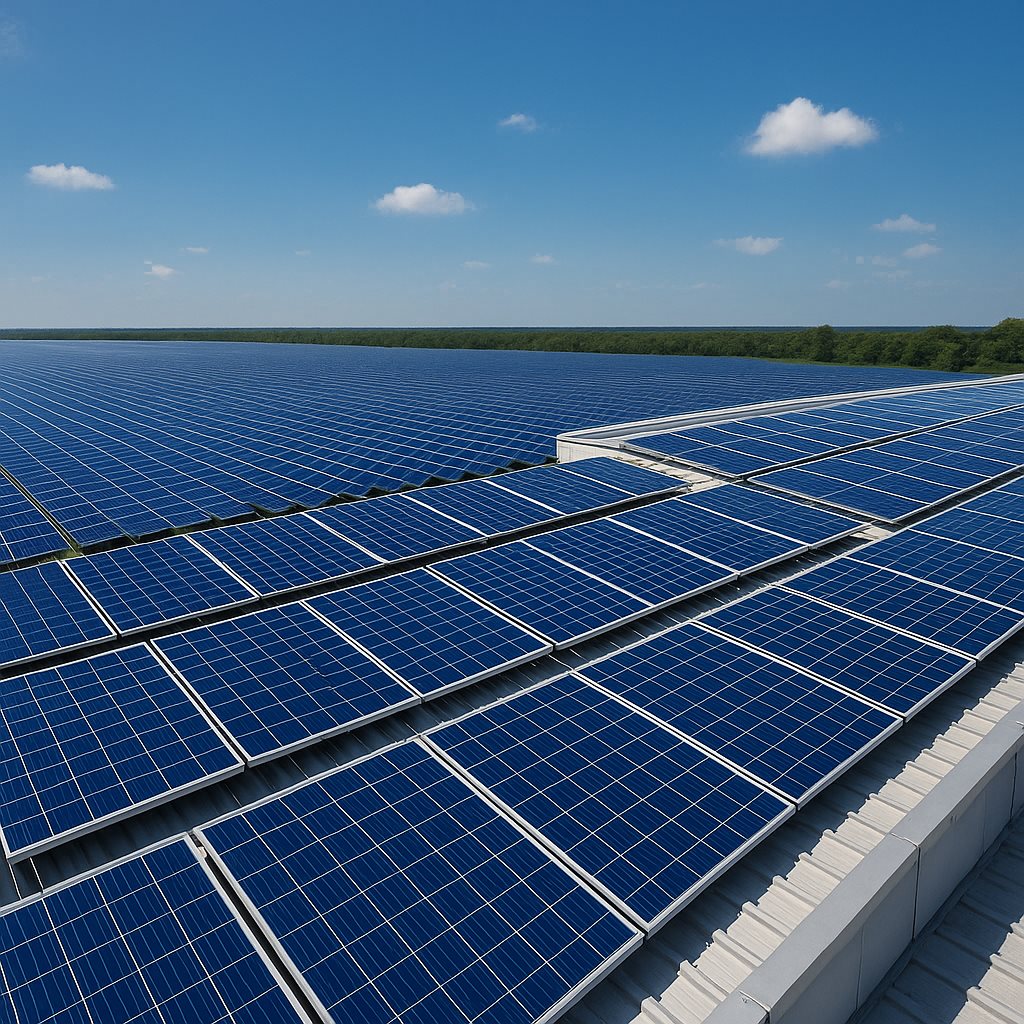
“Solar cleaning” means two very different jobs depending on where the panels sit. Keeping a sprawling desert solar farm clean has little in common with servicing a commercial rooftop across town – the scale, access, and economics all differ. Choosing the right robotic approach starts with understanding those differences. Here is how utility-scale and commercial solar cleaning compare, and how automation fits each.
Two Very Different Scales of Solar O&M
Utility-scale farms are measured in megawatts and stretch across open land, with enormous panel surface area and large absolute revenue at stake. Commercial installations – rooftops, car parks, small ground arrays – are smaller, closer to buildings and people, and constrained by access rather than sheer size. The right cleaning strategy follows those constraints.
Utility-Scale Cleaning: Scale Is the Challenge

On a utility scale solar cleaning robot deployment, the core problem is volume. There are simply too many panels for manual crews to clean often enough, and every day of soiling across that footprint is significant lost revenue. Automation is not a luxury here – it is the only way to clean frequently enough to matter. Rail-free, autonomous robots that scale across large arrays are the natural fit, as covered in our ground-mounted solar cleaning solution.
Commercial Cleaning: Access Is the Challenge
For a commercial solar panel cleaning robot, the constraint is usually access and safety rather than size. Rooftop arrays put workers at height; car-park and facade installations are awkward to reach. The value of automation here is removing the person from the hazard and keeping cleaning consistent without disrupting the business below. Our commercial rooftop cleaning solution is built around those realities.
How Robotic Cleaning Fits Each
The same core technology serves both, but the payoff differs:
- Utility-scale: the win is throughput and frequency – cleaning thousands of panels often enough to protect a large revenue base.
- Commercial: the win is safety and consistency – no crews at height, and panels that stay clean without constant scheduling.
In both cases, the economics hinge on cleaning at the right cadence. Our cleaning frequency guide explains how to set that cadence by soiling rather than a fixed calendar.
Matching the Robot to the Site
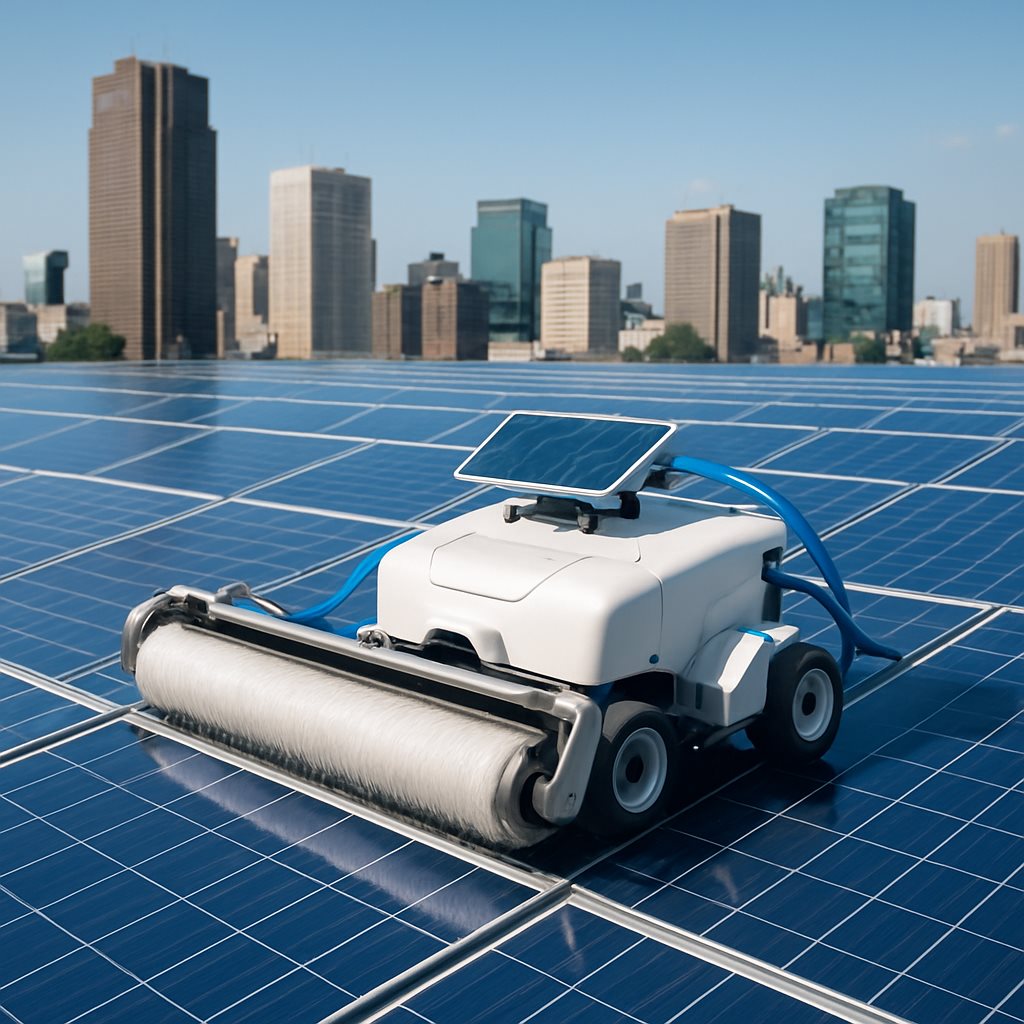
Choosing well means matching the system to the dominant constraint. A large ground farm needs a robot that scales affordably across a huge footprint without piling on rails and infrastructure. A commercial rooftop needs a robot that keeps people safe and adds no permanent load. A rail-free, water-powered design handles both, which is why it adapts across site types. The financial case for either is laid out in our guide to the ROI of autonomous cleaning.
The Bottom Line
Utility-scale cleaning is a problem of scale; commercial cleaning is a problem of access. Robotic, autonomous cleaning answers both, but the biggest gains land where the constraint is sharpest – frequency on large farms, safety on rooftops. Identify your dominant constraint, and the right approach follows. To match a system to your site, request a demo.
Frequently Asked Questions
What is the difference between utility-scale and commercial solar cleaning?
Utility-scale cleaning is defined by sheer panel volume across large land areas, where frequency and throughput matter most. Commercial cleaning is defined by access and safety constraints, especially on rooftops.
Do utility-scale farms need robotic cleaning more than commercial sites?
Both benefit, but for different reasons. Utility-scale farms need automation to clean enough panels often enough; commercial sites need it mainly to remove safety risk and keep cleaning consistent.
Can the same cleaning robot serve both utility and commercial sites?
A rail-free, autonomous design can adapt to both, since it needs no fixed infrastructure and can be deployed across different site types and layouts. Where a site is still on the drawing board, a handful of geometry and infrastructure decisions make that deployment simpler still, as set out in our checklist for designing a solar plant for robotic cleaning.
How does cleaning frequency differ between the two?
Utility-scale farms in dusty regions often justify very frequent cleaning because of the large revenue at stake. Commercial sites vary with local conditions, but both do best with condition-based rather than fixed-calendar cleaning.
Which offers a faster payback on robotic cleaning?
It depends on soiling and energy value. High-soiling utility farms often see the fastest payback, but rooftops can justify automation on safety and liability savings alone.