
Before requesting a solar panel cleaning quote, prepare a project brief containing your array layout, module details, dated site photographs, water supply information, access restrictions, and the scope you want priced. Mark missing information clearly and assign someone to verify it. This gives suppliers a consistent starting point, helps reveal installation dependencies early, and makes their proposals easier to compare.
Start with a clear request
A message saying “we have a 500 kW installation” leaves important questions unanswered. The panels might occupy one continuous field or several separate roofs. The request might cover equipment supply, installation, or an ongoing cleaning service. Those differences affect what a supplier needs to assess before preparing a meaningful proposal.
Write a short opening summary: site location, operating status, installation type, approximate capacity, and intended project timing. State whether you are gathering a preliminary budget or requesting a detailed proposal. For a portfolio, identify each site separately. Solaris Hydrobotics’ solar panel cleaning solutions provide a useful starting point for identifying the relevant installation category.
Build one shared evidence folder
Use a single folder with a dated index. Keep original documents alongside annotated copies, and identify which drawing reflects the installation as it exists today. An older construction plan can miss later extensions, replacement modules, or equipment added beside the array.
Gather these items before the first technical discussion:
- Layout: an as-built drawing or annotated aerial image with clear block and row identifiers.
- Module information: manufacturer, model, dimensions, frame details, and current cleaning instructions.
- Mounting information: fixed-tilt or tracker configuration, relevant drawings, and available structural documentation.
- Site photographs: overview images, representative row ends, interruptions, and unusual conditions.
- Utilities: water connection locations, available supply records, and existing controls or communications information.
- Operations: access arrangements, cleaning history, known restrictions, and the person responsible for answering questions.
Label every item as confirmed, estimated, or awaiting inspection. For example, “row length estimated from drawing” tells the reviewer more than an unexplained number. Record units consistently and give each file a descriptive name.
Make photographs easy to interpret
A useful photograph answers a specific question. Start with an overview that shows where a row sits within the site, then add closer images of its ends, module frames, gaps, and nearby obstructions. Include a scale where practical and safe. Photograph exceptions as well as the most orderly part of the installation.
Connect photographs to the layout using the same identifiers. A file named “Block-B_Row-04_east-end” is easier to discuss than a camera-generated filename. Add the date and viewing direction. Where geometry varies, document several representative areas and explain why they were selected. Existing approved inspection images may be sufficient for an initial review.

Add the details that depend on installation type
Commercial rooftops
For a rooftop brief, show separate panel groups, skylights, roof equipment, designated access routes, and drainage locations. Include available roof and mounting documentation, and identify who can authorize access or review proposed loads. The building manager may hold information the solar operator does not.
Use the commercial rooftop solar cleaning systems page to frame the discussion around the building’s actual constraints. A preliminary enquiry should make fragmented layouts and access limitations visible from the outset.
Agrivoltaic installations
An agricultural brief needs input from the farm operator as well as the solar asset owner. Include crop calendars, machinery routes, irrigation zones, and times when particular areas are unavailable. Identify whether the proposed water source is shared with irrigation and whether its composition changes during farm operations.
When reviewing agrivoltaic cleaning solutions, describe where cleaning water would drain and who will assess its suitability for the crops and soil. Treat any proposed irrigation benefit as something to evaluate for the specific installation.
Floating PV installations
For floating arrays, add platform drawings, access arrangements, information about water-level changes, and the platform supplier’s relevant restrictions. Identify who manages the reservoir and who can answer questions about water use and discharge.
Solaris lists its floating solar panel cleaning solution as Beta. Ask about current availability, evaluation requirements, and compatibility with your platform before including it in a committed procurement schedule.
Document utilities without guessing requirements
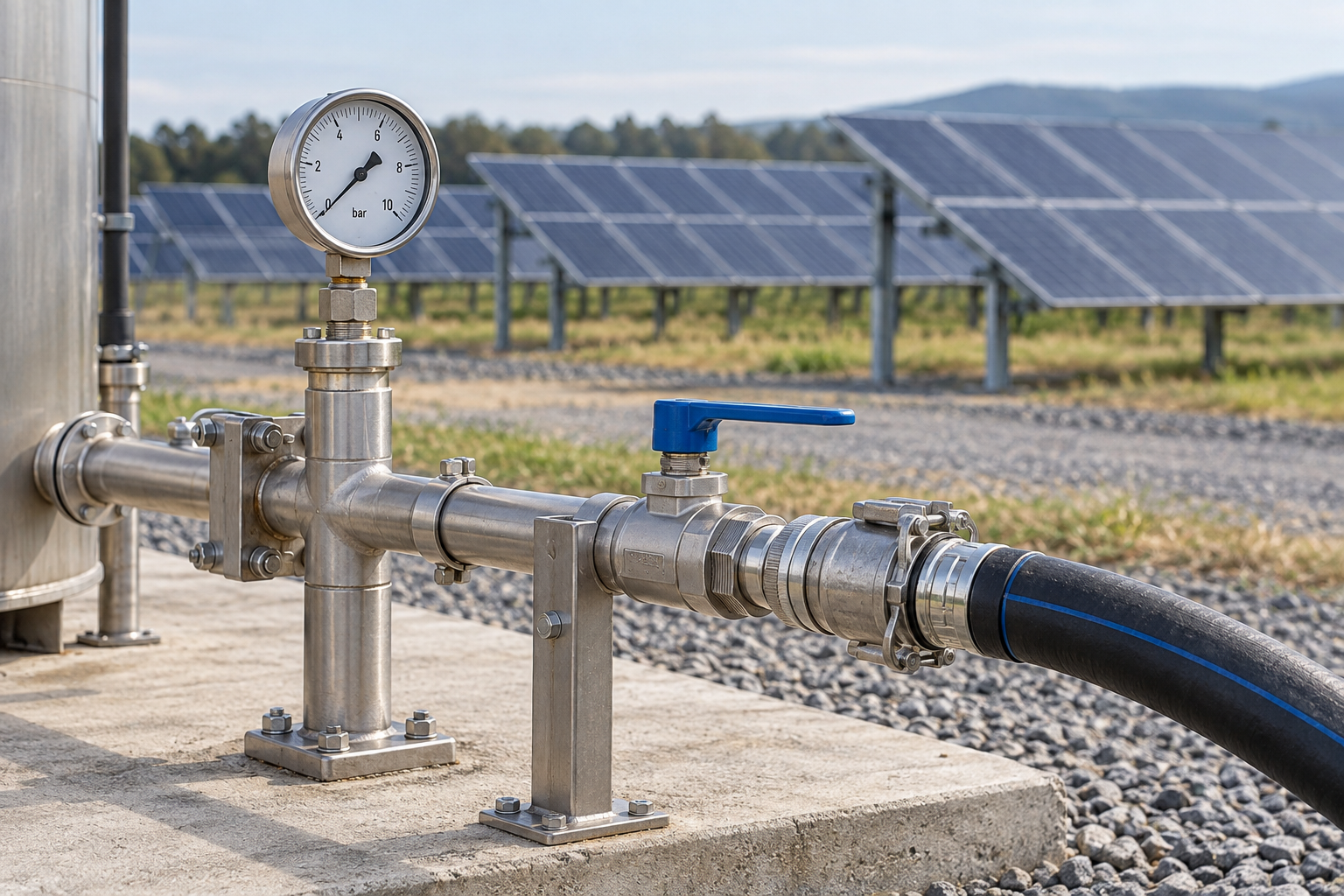
Mark water connection points on the site plan and provide any available pressure, flow, and water-quality records. Include the measurement location, date, and operating conditions. A reading at the supply entrance may not describe conditions at a distant array, especially when other users share the network.
If records are missing, write “to be verified” and ask the supplier what measurements are needed. Have the site’s qualified personnel arrange them. Record existing pumps, filtration, storage, and seasonal supply restrictions, together with any known power or connectivity provisions. Let the proposed configuration determine which additional checks are necessary.
Use an information register to close gaps
The following register keeps the review focused. Assign an owner to each missing item and update its status as evidence arrives. It is a preparation tool; the supplier still needs to assess the proposed system against the actual site.
| Information | Evidence to provide | Question it helps resolve |
|---|---|---|
| Array configuration | Dated layout with row identifiers | Which areas belong in the proposal? |
| Modules and mounting | Model details and applicable documentation | What compatibility checks are required? |
| Site exceptions | Labelled photographs of gaps and obstructions | Where is closer inspection needed? |
| Water supply | Connection map and available measurements | What supply assumptions need verification? |
| Access and operations | Site rules and availability windows | What affects installation and servicing? |
| Requested scope | Written inclusions and exclusions | Are suppliers pricing the same work? |
Ask suppliers to make assumptions visible
Send the same brief to each supplier and request a response that separates confirmed scope from provisional allowances. Ask which site observations still need verification, which tasks fall to the owner, and what could change the proposed configuration or price. Keep answers with the brief so later revisions remain traceable.
Request separate descriptions of equipment, installation, commissioning, training, and ongoing support where applicable. Clarify whether water distribution, treatment, access equipment, or communications work is included. This prevents an apparently complete proposal from being compared with an equipment-only price.
Choose one coordinator to collect questions from procurement, operations, the building or land manager, and the supplier. Update the brief when an answer changes the scope, then circulate the same revision to everyone preparing a proposal.
Frequently asked questions
Can I request a quote without as-built drawings?
Yes, you can start an enquiry with a labelled aerial image, module information, and recent photographs. Explain what is missing. Ask whether the supplier can provide a preliminary estimate and what survey information is needed before a detailed proposal.
Is installed capacity enough to estimate the number of robots?
Capacity alone does not describe row lengths, disconnected panel groups, or access constraints. Provide layout evidence and ask the supplier to explain its proposed coverage and equipment assumptions.
Should I prepare a separate brief for every site?
Use one shared template, with a separate record for each installation. Common module models or ownership do not establish identical geometry, utilities, or operating conditions. Flag differences explicitly.
Does a completed brief replace a site visit?
It supports an initial review and helps make any visit more productive. The supplier should identify which conditions require on-site verification and which approvals remain outstanding before installation.
Turn the brief into a practical next step
Check that the folder has a current layout, representative photographs, named contacts, and a clear list of unknowns. Then contact Solaris Hydrobotics to discuss your cleaning project. Describe the installation type and requested scope, and ask how best to share the supporting documents. A well-organized brief gives that first conversation a concrete basis for deciding what needs to happen next.