
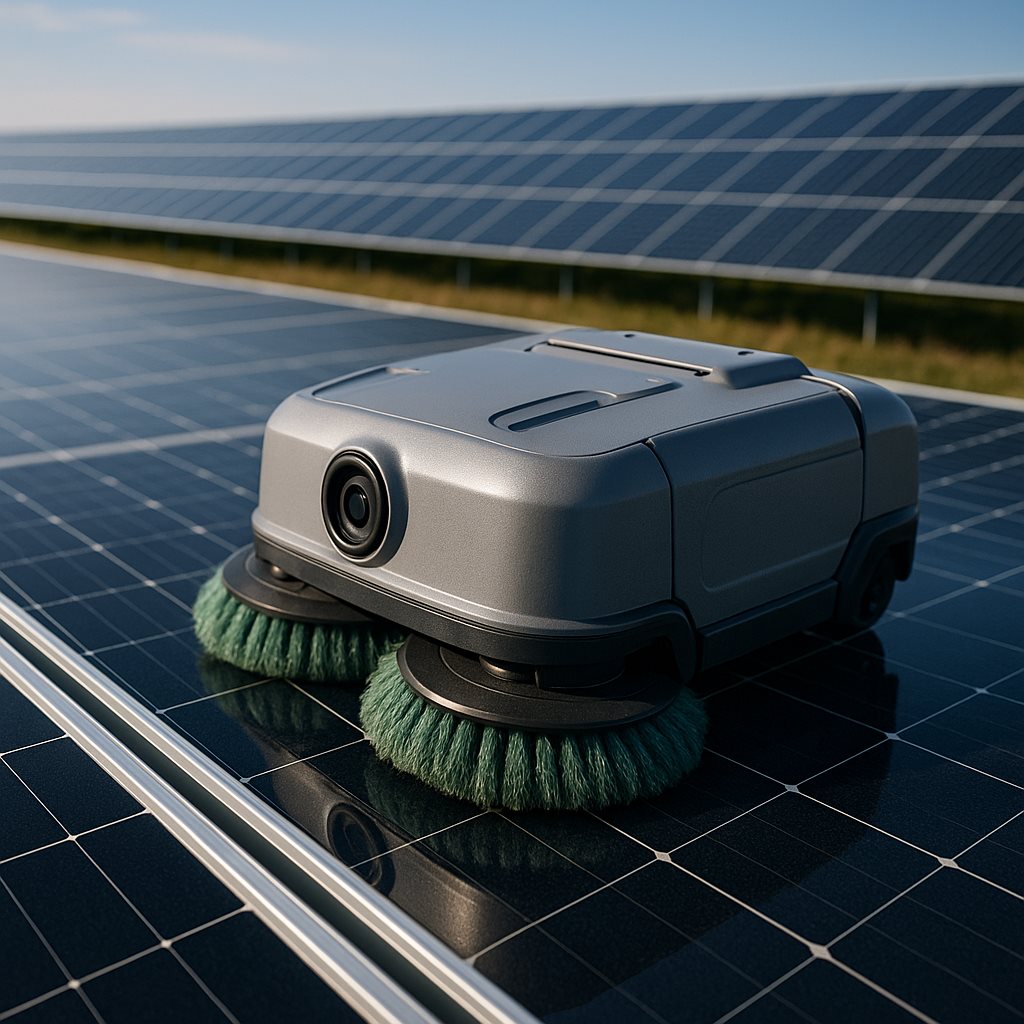
The first question asset owners ask about a cleaning system is rarely how well it cleans. It is who carries the loss if a module fails in year twelve and the manufacturer points at the cleaning equipment. That concern is legitimate, and it has stalled more than one automation project. The good news is that module warranties are far more specific than most people assume, and once you read the actual clauses, the question of whether robotic cleaning voids your solar panel warranty has a clear, documentable answer.
What a module warranty actually covers
Every crystalline silicon module ships with two separate promises, and they fail in different ways.
The product warranty (typically 10 to 15 years, and 25 years from premium manufacturers) covers defects in materials and workmanship: delamination, junction box failure, frame corrosion, backsheet cracking. The performance warranty (usually 25 to 30 years) guarantees that output will not fall below a stated percentage of nameplate power, with an allowed annual degradation rate.
Neither one is unconditional. Both are written with a list of exclusions, and cleaning-related damage sits squarely inside that list. The standard exclusions include improper installation, exceeding mechanical load limits, abrasive damage to the glass or coating, chemical damage, thermal shock, and any modification or contact not described in the manufacturer’s installation and operation manual.
That manual, not the warranty certificate, is where cleaning is governed. It is also the document almost nobody reads before selecting a cleaning method.
The cleaning rules buried in your module documentation
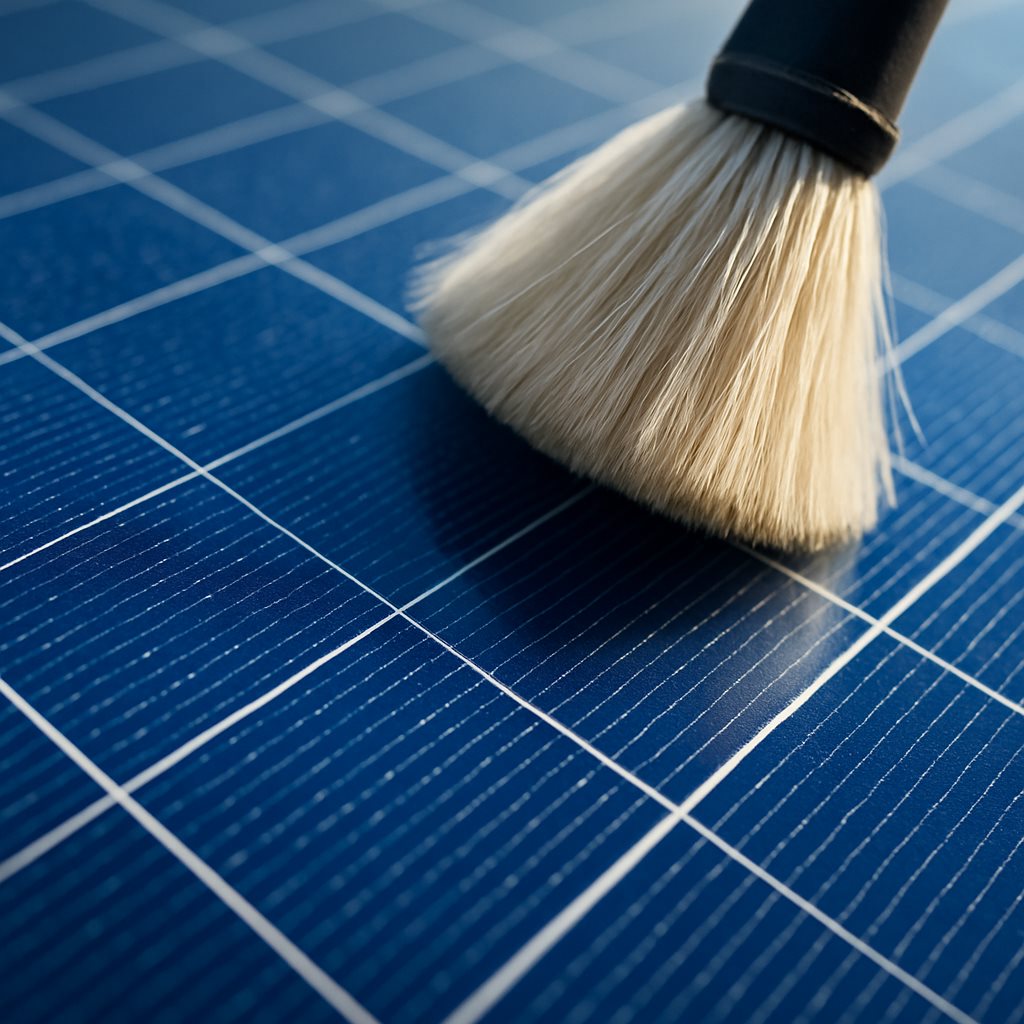
Open the O&M section of any Tier 1 module manual and you will find a short but strict set of instructions. The specific wording varies, but the same six constraints appear again and again:
- Approved contact materials. Soft brushes, microfibre or sponge. Abrasive pads, scrapers and metal tools are excluded, because the anti-reflective coating on the front glass is only a few hundred nanometres thick and scratches permanently.
- Water pressure limits. Many manuals cap cleaning pressure well below what a commercial pressure washer delivers. High pressure drives water past the frame seal and into the laminate edge.
- Water temperature and thermal shock. Cold water on glass that has been sitting at 60 to 70 degrees Celsius under midday sun creates thermal stress. Most manuals require cleaning in early morning or evening, or when module temperature is close to ambient.
- Water quality. Mineral-heavy water leaves deposits that etch glass and force harsher cleaning later. Some manufacturers state a maximum hardness or conductivity outright.
- Mechanical load. Modules are certified under IEC 61215 to defined load levels, commonly 2400 Pa and 5400 Pa depending on the model. Anything resting or pressing on the glass counts against that budget, and standing on modules is universally prohibited.
- No chemicals unless specified. Solvents, acids and alkaline detergents attack sealants, the frame anodising and the coating.
Read that list again and one thing becomes obvious. Nothing in it prohibits automation. Every constraint is about contact pressure, materials, water and timing, which is exactly what an engineered system controls better than a person with a hose.
Where robotic cleaning does create warranty risk
Automation is not automatically compliant. Risk concentrates in four places, and all four are specification questions you can settle before purchase.
Weight and load path. A machine that rides on the glass surface transfers its mass into the laminate. A machine that rides on the frame or on a dedicated structure does not. Ask where the load goes, and what the peak point load is when the robot changes direction or climbs a step between tables.
Dry brushing on abrasive dust. Sweeping hard mineral particles across coated glass with no water is functionally sandpapering the surface. This is the single most common cause of coating wear in the field, and it is the mechanism behind the slow, invisible degradation covered in our analysis of whether your cleaning method is damaging panels over the long run.
Edge and seal intrusion. Water applied at high pressure or aimed at the frame-glass junction shortens the life of the edge seal, which is where moisture ingress and delamination begin.
Uncontrolled autonomy. A robot that cannot detect a broken module, an obstruction or a misaligned row will keep working anyway. Fault detection and a safe stop behaviour are warranty-relevant features, not conveniences.
Where robotic cleaning reduces warranty risk
The comparison that matters is not robot versus perfect theory. It is robot versus what actually happens on site with a manual crew under time pressure.
A machine applies the same brush speed, the same contact pressure and the same water volume on pass one and on pass four thousand. A crew working through a heatwave does not. Manual cleaning also introduces the two risks robots eliminate entirely: people walking on modules, and pressure washers used at whatever setting gets the job finished before dark.
Water-based systems that clean at low pressure with soft contact, such as the hydraulic-driven platforms Solaris Hydrobotics deploys across ground-mounted and agrivoltaic sites, are designed around those documented module limits rather than against them. The engineering detail behind that approach is set out on our automated solar panel cleaning system page.
There is a second, less obvious benefit. Frequent light cleaning keeps soiling from cementing onto the glass. Cemented soiling is what forces aggressive intervention later, and aggressive intervention is what actually breaks warranty terms.
Questions to ask before you deploy
Bring these to the robot supplier and to the module manufacturer, in writing, before the purchase order:
- What is the maximum contact pressure the system applies to the glass, in kPa?
- Does any part of the machine rest on the glass, or only on the frame or a separate rail?
- What is the water pressure at the nozzle, and does it stay within the module manual limit?
- What water quality does the system require, and what does it do with mineral-rich supply water?
- Can cleaning be restricted to defined module temperature or time windows?
- What brush material is used, and what is its replacement interval?
- Has the system been reviewed or approved by module manufacturers, and can the supplier produce that correspondence?
- What happens when the machine encounters a cracked module or an obstacle?
Most of these overlap with general procurement criteria, which we cover in detail in the guide to choosing a solar panel cleaning robot. The difference here is that the answers belong in your contract file, not just in a sales conversation.
The documentation that protects a claim

Warranty disputes are won on records. When a manufacturer investigates a failed module, the owner who can show what happened to that module and when is in a completely different position from the owner who cannot.
Keep four things: the module manual clause you designed the cleaning program around, the robot specification sheet showing compliance with it, written confirmation from the manufacturer or supplier, and a cleaning log per row or per block with dates, water use and any faults raised.
That last item is where automated systems have an advantage that has nothing to do with cleaning quality. A connected platform records every pass automatically, which is one of the practical arguments made in our overview of remote monitoring in robotic solar cleaning. A manual contractor’s monthly summary sheet does not carry the same weight in a claim.
The bottom line
Robotic cleaning does not void a solar panel warranty. Cleaning that exceeds documented limits does, whether a machine or a person did it. The manufacturer does not care what performed the work, only what pressure, what material, what water and what load reached the module.
Treat cleaning as an engineering specification rather than a service line item, verify it against your own module manuals, and record what happens. Done that way, automation is the version of cleaning that is easiest to defend, because it is the only version that behaves identically every single time.
If you want a technical review of your module documentation against a specific cleaning approach before you commit, that conversation is worth having early, while the specification can still change.
Frequently Asked Questions
Do module manufacturers approve robotic cleaning?
Manufacturers generally do not certify individual machines. They publish cleaning requirements in the installation and O&M manual, and any method that stays inside those requirements is acceptable. Serious suppliers can produce correspondence with major module makers confirming compatibility, and it is reasonable to request it.
Can a cleaning robot cause microcracks?
It can, if it applies significant load through the glass or repeatedly crosses misaligned steps between tables. Systems that carry their weight on the frame or on a separate structure, and that keep contact pressure low, do not create the loading conditions associated with cell cracking.
Is dry brushing safer for the warranty than water cleaning?
Not usually. Dry brushing drags abrasive mineral particles across the anti-reflective coating, which is exactly the abrasion mechanism warranties exclude. Low-pressure water lifts particles instead of grinding them, provided the water quality and pressure stay within the stated limits.
Does high-pressure washing void the warranty?
Frequently, yes. Most module manuals set a pressure ceiling well below commercial washer output, because high pressure forces water past the edge seal and into the laminate. It is one of the most common warranty exclusions triggered by field cleaning.
What water quality do module warranties require?
Requirements vary, but the common theme is low mineral content. Hard water leaves deposits that etch glass over time and require harsher removal later. Where supply water is brackish or heavily mineralised, treatment before cleaning is the safer path.
Who is liable if a robot damages a module?
That depends entirely on the supply contract. Liability for module damage caused by the cleaning system, including the deductible and the claims process, should be written explicitly into the purchase or service agreement rather than left to the module warranty to resolve.