
The Critical Choice in Solar Panel Cleaning Methodologies
When it comes to maintaining optimal performance of solar energy systems, the decision between wet and dry solar panel cleaning technologies represents one of the most consequential choices system owners must make. This decision impacts not only immediate cleaning effectiveness but also long-term panel health, water consumption, and operational costs.
Both methodologies have distinct advantages and limitations that make them suitable for different environments and installation types. Understanding these differences is essential for implementing a cleaning strategy that maximizes energy production while minimizing resource usage and potential panel damage.
Understanding Wet Cleaning Technologies
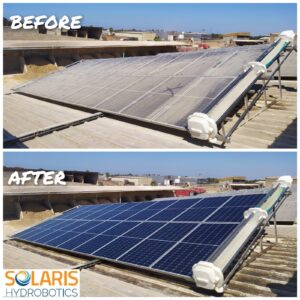
Wet cleaning solar panels utilizes water—sometimes combined with mild detergents—to remove accumulated dirt, dust, pollen, bird droppings, and other soiling agents from panel surfaces.
Advantages of Wet Cleaning
- Superior Cleaning Power: Water-based methods excel at removing stubborn contaminants like bird droppings, sticky pollen, and industrial residues that can be particularly challenging for dry methods. For heavily soiled panels, our performance tests show wet cleaning typically achieves 2-5% better restoration of original efficiency compared to dry methods.
- Reduced Risk of Micro-Scratching: The lubricating properties of water minimize friction between cleaning implements and panel surfaces, reducing the risk of microscopic scratches that can gradually degrade panel performance over time.
- Temperature Management: In hot climates, water-based cleaning helps cool panels during the cleaning process, preventing thermal stress that can occur when cool water contacts hot panels.
Limitations of Traditional Wet Cleaning
- Water Resource Requirements: Conventional wet cleaning methods can consume 0.1-0.5 gallons per panel, making them potentially problematic in water-scarce regions. Our flagship product incorporates advanced water conservation technologies that reduce consumption by up to 90% compared to manual methods.
- Mineral Residue Concerns: In areas with hard water, mineral deposits left behind after evaporation can actually reduce panel efficiency if proper filtration or deionization systems aren’t employed. Our guide to water quality for solar panel cleaning covers the TDS, hardness and silica levels that decide the outcome.
- Weather Restrictions: Wet cleaning operations are generally limited to non-freezing conditions and may require scheduling around precipitation forecasts.
- Runoff Management: Environmental regulations in some jurisdictions restrict cleaning water runoff, requiring collection and treatment systems that add complexity to wet cleaning operations.
The Evolution of Dry Cleaning Technologies
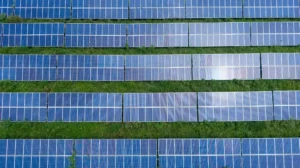
Modern dry solar panel cleaning equipment encompasses a range of technologies from simple brushes to sophisticated robotic systems that use microfiber materials, air pressure, and electrostatic principles to remove soiling without water.
Advantages of Advanced Dry Cleaning
- Water Independence: Particularly valuable in arid regions or areas experiencing water restrictions, dry cleaning eliminates water consumption entirely. Our project showcases include several installations in desert environments where water conservation was a primary decision factor.
- Year-Round Operation: Dry systems can operate in freezing conditions that would render wet cleaning impossible, ensuring consistent panel performance throughout winter months.
- No Mineral Spotting: By eliminating water, dry cleaning avoids the potential for mineral residue spotting that can occur with untreated water sources.
- Simplified Compliance: Without water runoff, dry cleaning simplifies regulatory compliance in environmentally sensitive areas.
Limitations of Traditional Dry Methods
- Challenge with Stubborn Deposits: Conventional dry methods may struggle with sticky residues or hardened bird droppings that wet methods dissolve more easily.
- Potential for Micro-Abrasions: Without the lubricating effect of water, poorly designed dry systems can potentially cause microscopic scratching of panel surfaces. This is why material selection is crucial in our engineering process, with extensive testing to ensure optimal cleaning without damage.
- Static Electricity Concerns: Some dry cleaning methodologies can generate static electricity, potentially attracting additional dust if not properly managed with anti-static technologies.
Hybrid Systems: The Best of Both Worlds
The most advanced autonomous solar panel cleaning systems now incorporate hybrid capabilities, intelligently switching between dry and minimal-water cleaning modes based on soiling type and severity.
How Hybrid Systems Work
These sophisticated solar panel cleaning robots typically employ:
- Soiling Detection Sensors: Advanced optical or electrical sensors that identify the type and severity of panel soiling in real-time.
- Conditional Water Application: Precision micro-spray systems that apply minimal water only when and where needed for stubborn soiling.
- Multi-Material Cleaning Elements: Specialized surfaces that optimize cleaning effectiveness for different contaminant types.
- Weather-Adaptive Programming: Intelligent scheduling that considers weather forecasts to choose optimal cleaning modes.
For a detailed explanation of how these hybrid technologies integrate, visit our technology overview which includes animated demonstrations of conditional cleaning algorithms.
Decision Framework: Selecting the Right Cleaning Approach
When evaluating wet versus dry solar panel cleaning for your specific installation, consider these key factors:
Environmental Considerations
- Local Water Availability: In regions experiencing water scarcity, dry or ultra-low-water systems offer significant sustainability advantages. Our environmental impact calculator can help quantify these benefits for your specific location.
- Climate Patterns: Areas with frequent freeze-thaw cycles benefit from dry systems that can operate year-round, while installations in regions with seasonal heavy pollen or agricultural dust may require periodic wet cleaning for optimal results.
- Local Regulations: Water runoff restrictions may favor dry systems or require advanced water reclamation capabilities for wet solutions.
Installation-Specific Factors
- Panel Type and Warranty Requirements: Some panel manufacturers specify cleaning methodologies in warranty terms. Contact our team for manufacturer-specific guidance on approved cleaning methods.
- Soiling Composition: Sites affected by bird populations, agricultural activities, or industrial emissions face different cleaning challenges that may favor specific technologies.
- System Size and Configuration: Larger installations with consistent panel orientation typically achieve better economics with automated systems, while smaller or complex installations may benefit from portable solutions.
Case Studies: Cleaning Technology Selection in Practice
Desert Solar Farm: The Dry Solution
A 50MW solar farm in an arid region with water restrictions implemented a fully dry solar panel cleaning robot system:
- Annual water savings: Over 1.2 million gallons
- Cleaning effectiveness: 94% restoration of optimal efficiency
- Operational advantages: Year-round cleaning operations regardless of temperature
Similar case studies demonstrate how dry cleaning technologies thrive in water-constrained environments.
Coastal Commercial Installation: The Hybrid Approach
A commercial rooftop installation in a coastal environment with salt spray and bird activity, the conditions examined in our guide to cleaning salt and sea spray soiling, implemented a hybrid automatic solar panel cleaning system:
- Cleaning effectiveness: 99.1% restoration of optimal efficiency
- Water usage: 85% reduction compared to traditional wet cleaning
- Operational pattern: Predominantly dry cleaning with targeted water application for salt residue and bird droppings
This installation exemplifies the adaptability of hybrid systems to challenging environmental conditions. Our technical specifications detail the sensor technologies that enable this conditional cleaning approach.
Advanced Technology Trends in Panel Cleaning
The distinction between wet and dry cleaning continues to evolve as new technologies emerge:
Ultrasonic Cleaning
Using high-frequency sound waves to break the bond between contaminants and panel surfaces, ultrasonic cleaning represents a minimal-water approach that achieves wet-cleaning results with a fraction of the water consumption.
Electrostatic Dust Repulsion
Emerging systems use electrical charges to actively repel dust particles from panel surfaces, potentially reducing cleaning frequency requirements. Our research blog covers these emerging technologies and their practical applications.
Hydrophobic Coatings
Advanced panel coatings that repel water and dust are changing cleaning requirements, often enabling more effective dry cleaning while reducing cleaning frequency needs.
Economic Analysis: Cost Implications of Cleaning Method Selection
The choice between wet and dry cleaning technologies has significant economic implications:
Capital Expenditure Considerations
Sophisticated hybrid solar panel cleaning robots typically require higher initial investment than single-mode systems. However, this premium is often offset by:
- Enhanced Cleaning Versatility: The ability to address various soiling conditions without supplemental manual cleaning
- Extended Operational Season: Year-round cleaning capability in variable climates
- Reduced Resource Costs: Lower water and potential treatment chemical expenses
For a comprehensive financial analysis comparing various cleaning technologies, request our ROI comparison tool calibrated to your specific installation parameters.
Operational Expense Variations
The ongoing operational costs differ significantly between wet and dry methodologies:
| Cost Factor | Conventional Wet | Advanced Dry | Hybrid |
|---|---|---|---|
| Water Consumption | Moderate-High | None | Very Low |
| Electricity Usage | Low-Moderate | Low-Moderate | Low-Moderate |
| Consumable Materials | Water filters, Cleaning agents | Brush/microfiber replacement | Limited consumables |
| Maintenance Complexity | Moderate (pumps, filters) | Low-Moderate | Moderate |
These operational differences significantly impact lifetime ownership costs, especially for larger installations where consumable expenses scale with system size.
Making the Optimal Choice for Your Installation
When selecting between wet, dry, or hybrid solar panel cleaning technologies, we recommend this structured decision process:
- Assess your environmental context: Water availability, soiling types, climate patterns
- Evaluate installation-specific constraints: Panel warranty requirements, system size, accessibility
- Calculate total cost of ownership: Initial investment, operational costs, expected cleaning effectiveness
- Consider future expansion: Scalability of cleaning solutions with potential system growth
For assistance navigating these considerations for your specific installation, contact our technical team for a comprehensive consultation.
Smart Cleaning vs Scheduled Cleaning: Why Your Frequency Strategy Matters
Choosing between wet and dry methods is only half the decision – how often you clean matters just as much. Traditional programs clean on a fixed calendar, which almost always cleans either too early (wasting resources on panels that are still producing well) or too late (after soiling has already eaten into revenue). A smart, data-driven approach instead triggers cleaning based on actual soiling and production loss, so every cleaning cycle is justified by the energy it recovers. For most commercial and utility-scale solar fields, this shift from scheduled to condition-based cleaning delivers a better return than any single method choice, because it keeps panels near peak output year-round. We break down the financial side of this in our guide to the ROI of autonomous cleaning.
How to Choose the Right Cleaning System: A Quick Checklist
Once you understand wet, dry, and hybrid methods, use these factors to match a system to your site:
- Climate and soiling type – dust, pollen, bird droppings, and industrial grime each respond differently to wet and dry methods
- Water availability – arid sites favor low-water or water-efficient robotic cleaning
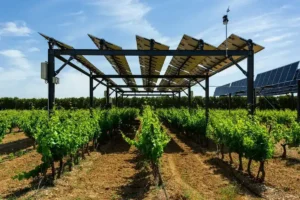
- Installation type – rooftop, ground-mounted, floating, and agrivoltaic arrays each have distinct access and safety needs
- Labor and safety exposure – the more manual work at height, the stronger the case for autonomous systems
- Scale – larger arrays gain the most from automation because manual methods do not scale affordably
Solaris systems are water-based, autonomous, and require no grid electricity, rails, or operator, which lets a single approach serve rooftops, ground mounts, and floating arrays alike. You can see how the robot handles each environment on our how it works page.
New to the topic? Start with our complete guide to solar panel cleaning robots.
Frequently Asked Questions About Solar Cleaning Methods
Is wet or dry cleaning better for solar panels?
Neither is universally better – it depends on your soiling type and water access. Dry methods suit low-water, light-dust conditions; wet methods handle stuck-on grime more thoroughly. Many sites get the best result from a water-based robotic system that cleans effectively while using minimal water.
How do I choose a solar panel cleaning system?
Match the system to your climate, water availability, installation type, safety exposure, and scale. Use the checklist above as a starting point, then validate the choice against expected ROI for your specific site.
What is the difference between smart cleaning and scheduled cleaning?
Scheduled cleaning follows a fixed calendar regardless of panel condition. Smart cleaning responds to real soiling and production data, so panels are cleaned when it actually pays to do so – typically recovering more energy for less effort.
Conclusion: Beyond the Wet vs. Dry Dichotomy
As solar panel cleaning technology advances, the traditional distinction between wet and dry methodologies is increasingly replaced by intelligent, adaptive systems that apply optimal cleaning techniques based on real-time conditions.
Rather than committing exclusively to either approach, forward-thinking solar operators are embracing flexible cleaning systems that can adjust to changing environmental conditions, soiling types, and water availability constraints.
The future of solar panel cleaning lies not in choosing between wet or dry, but in implementing smart systems that know when to use each approach for maximum energy production with minimal resource consumption. Explore our latest innovations in adaptive cleaning technology to see how this evolution is transforming solar maintenance.