
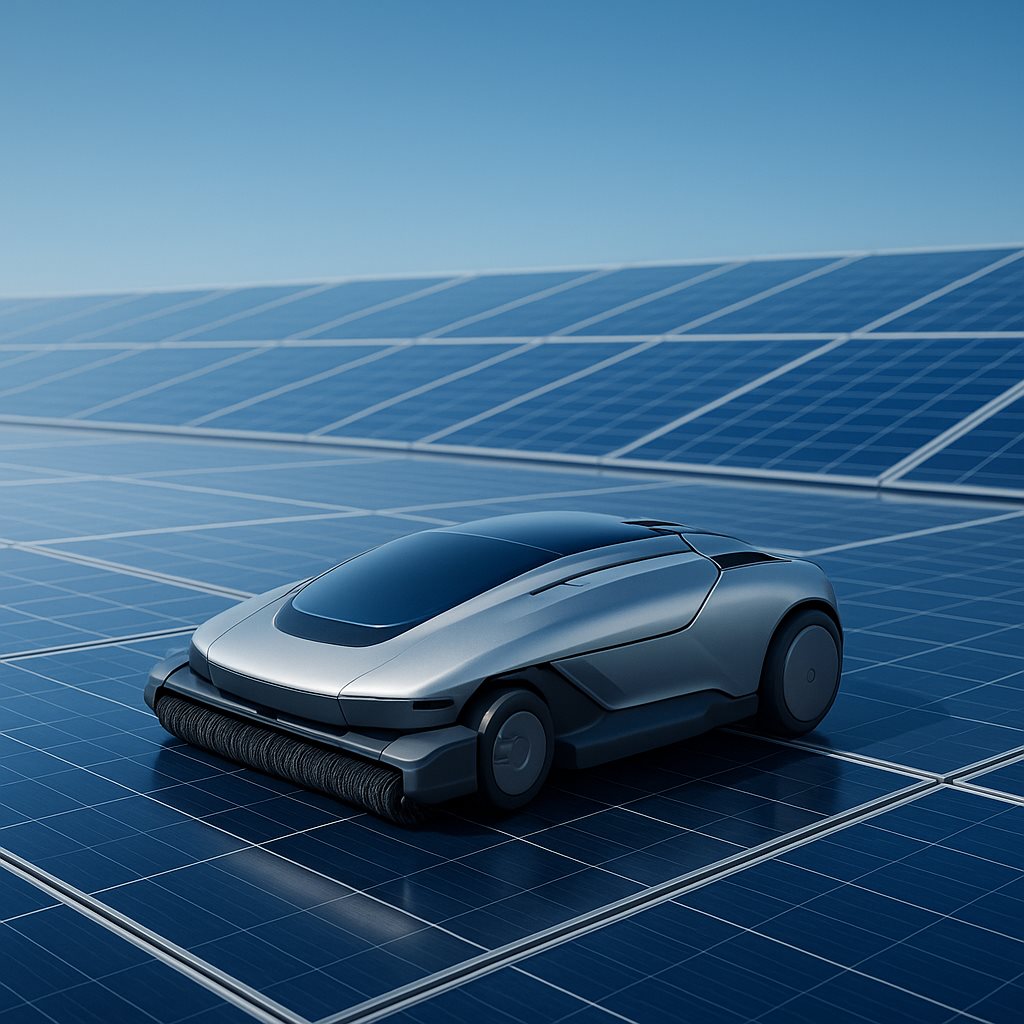
When operators shop for robotic solar cleaning, one design choice shapes almost everything else about cost and flexibility: does the robot ride on fixed rails, or does it move rail-free? A rail cleaning robot for solar panels and a rail-free autonomous system can both get panels clean, but they commit you to very different infrastructure. Here is how they compare – and why the difference matters more on large sites.
What Is a Rail-Based Cleaning System?
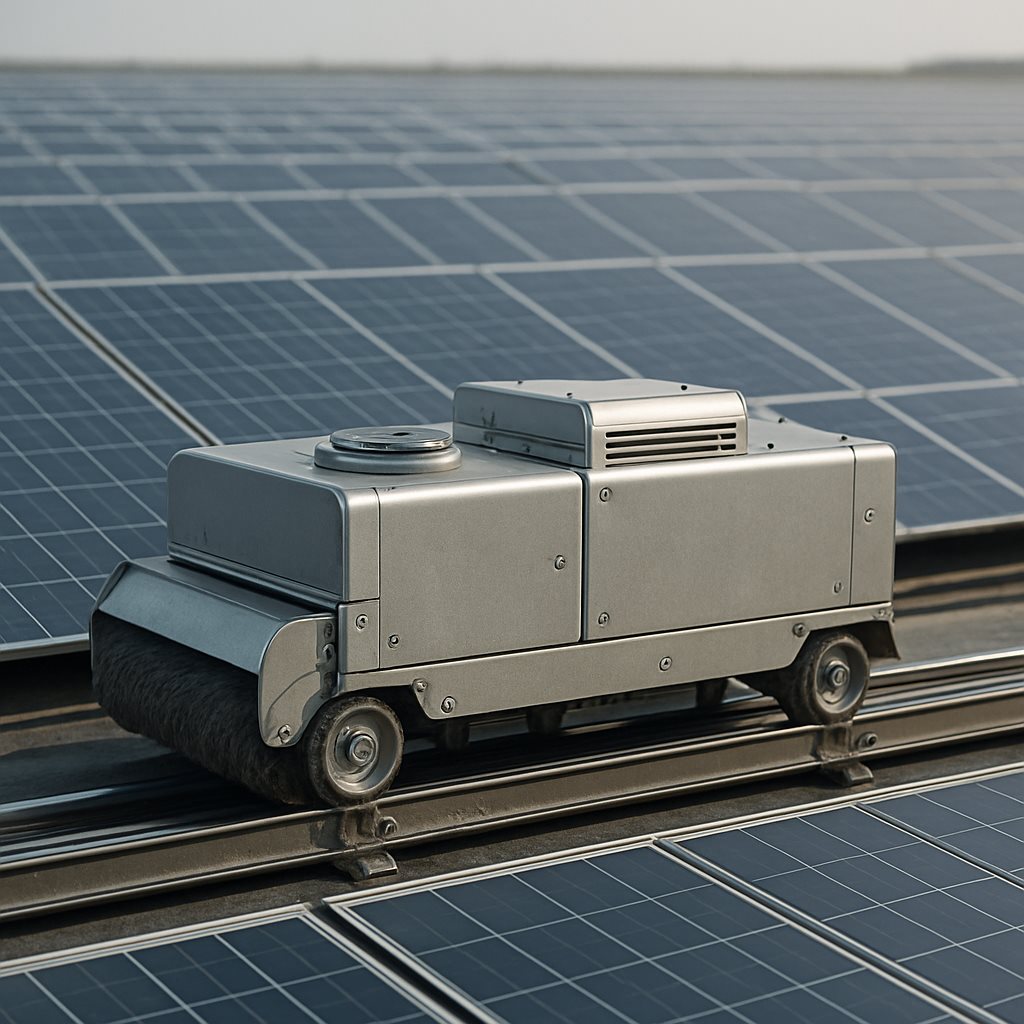
A solar rail cleaning robot runs along tracks that are permanently mounted onto the panel rows or the racking structure. The robot travels back and forth on those rails to clean, and often stays parked on the array between cycles. Rails give the robot a fixed, predictable path, which simplifies the machine itself.
The trade-off is everything that comes with the rails: they have to be engineered, purchased, installed, and maintained for the life of the site. On a large array, that is a significant added cost – and a set of parts that can wear, corrode, or misalign over time.
What “Rail-Free” Means
A rail-free robot carries its own guidance and locomotion, so it moves across the panels without any fixed track. Nothing permanent is bolted to the modules. The Solaris approach goes a step further by being water-powered as well, so the same system needs no rails, no grid electricity, and no operator. If you want the mechanics of that self-contained design, see how a water-powered cleaning robot works.
Cost and Installation Differences
The clearest gap between the two approaches shows up before a single panel is cleaned:
- Upfront infrastructure. Rail-based systems add the material and labor cost of installing tracks across the whole array. Rail-free systems skip that entirely.
- Shading and yield. Rails and their hardware can cast shadows or complicate module layout. A rail-free robot adds nothing permanent to the glass.
- Long-term maintenance. Rails are one more system to inspect and repair. Removing them removes that maintenance line item.
Flexibility and Redeployment
Rails lock cleaning to the exact rows they were built for. A rail-free robot can be moved between sections of a site, redeployed to new arrays, or shared across installations. For operators managing multiple sites or expanding capacity, that flexibility is a real operational advantage rather than a nice-to-have.
Which Approach Fits Your Site?
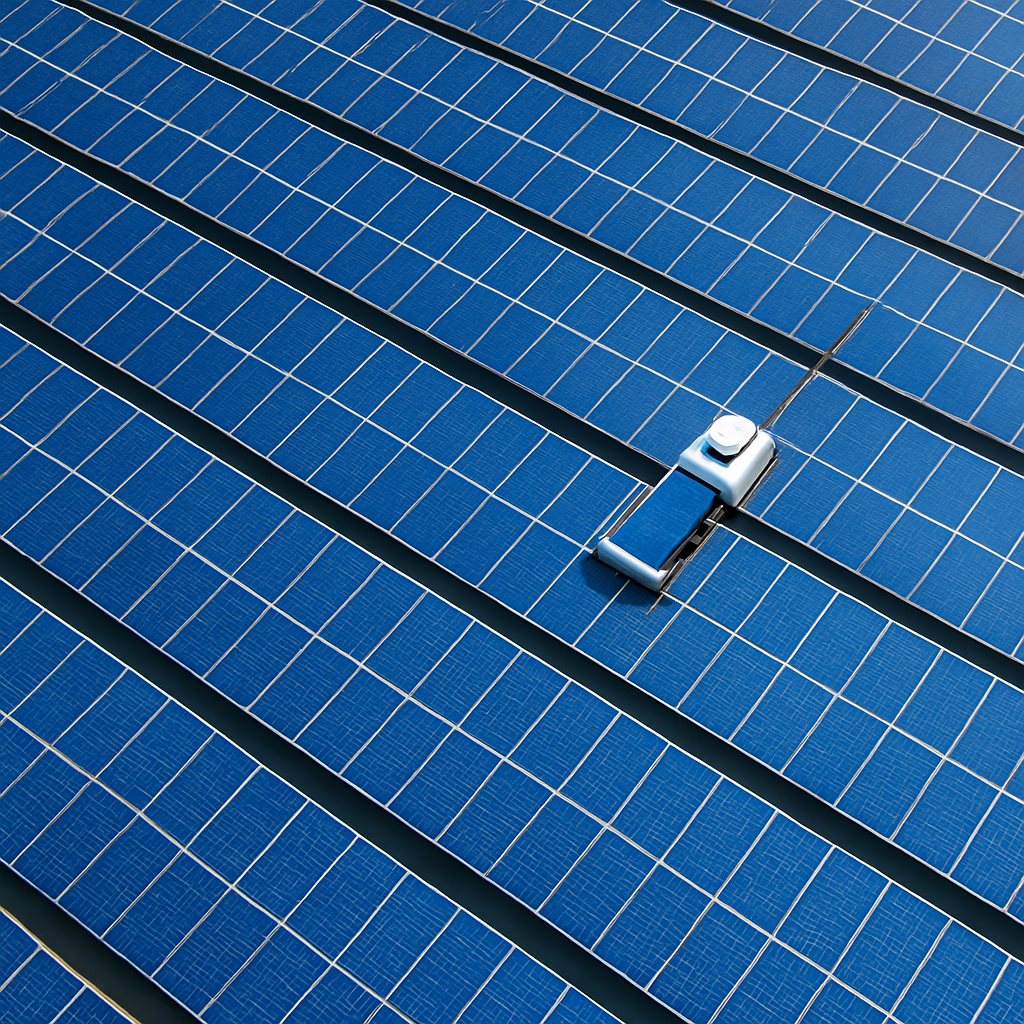
Rail-based systems can make sense on some fixed, uniform installations where the rails are designed in from day one. But for most large and evolving sites, rail-free wins on cost and adaptability:
- Utility-scale ground arrays benefit from avoiding rail costs across a huge footprint – see our ground-mounted solar cleaning solution.
- Commercial rooftops gain from not adding permanent hardware and shading to the roof – see commercial rooftop cleaning.
The Bottom Line
Rails buy a simpler robot at the price of permanent, site-wide infrastructure. Rail-free autonomous cleaning puts that intelligence into the machine instead, cutting installation cost, avoiding added shading, and keeping your cleaning program flexible as your portfolio grows. For most large PV operators, that is the more future-proof choice. To see a rail-free system matched to your site, request a demo.
Frequently Asked Questions
What is a rail cleaning robot for solar panels?
It is a cleaning robot that travels along tracks permanently mounted on the panel rows or racking. The rails guide its path, but they must be installed and maintained across the whole array.
Is a rail-free cleaning robot better than a rail-based one?
For most large and growing sites, yes. Rail-free systems avoid the cost, shading, and maintenance of permanent tracks, and they can be redeployed across different arrays rather than being locked to fixed rows.
Do rails reduce solar panel output?
They can, if hardware casts shadows or forces a less-than-ideal module layout. A rail-free robot adds nothing permanent to the panels, so it avoids that risk.
Can one rail-free robot clean multiple arrays?
Yes. Because it is not tied to fixed tracks, a rail-free robot can be moved between sections or sites, which is useful for operators managing several installations.
Does rail-free mean the robot needs its own power supply?
Not necessarily. Water-powered rail-free robots draw their motion from the cleaning water itself, so they need neither rails nor grid electricity nor onboard batteries.