
Understanding the Financial Impact of Soiled Solar Panels
Solar energy installations represent significant investments, with stakeholders expecting consistent returns over decades of operation. What many system owners fail to fully appreciate, however, is how dramatically panel soiling can impact those financial returns. Studies consistently show that dirty solar panels can reduce energy production by 5-30% depending on location and environmental conditions.
This reduction in output directly translates to lost revenue and extended payback periods. For commercial installations and solar farms, even a 5% decrease in energy production can represent thousands or even millions of dollars in lost annual revenue. Our detailed analysis tools can help you calculate the specific impact on your installation based on size, location, and local electricity rates.
The True Cost of Traditional Cleaning Methods
Conventional approaches to solar panel maintenance typically fall into two categories: manual cleaning or periodic professional servicing. Both approaches come with significant drawbacks:
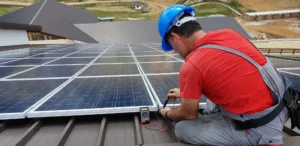
- Manual cleaning requires staff time, safety equipment, water resources, and cleaning supplies. For rooftop or large-scale installations, the logistical challenges and safety concerns multiply exponentially.
- Professional cleaning services eliminate some risks but introduce substantial ongoing expenses. With recommended cleaning frequencies ranging from monthly to quarterly depending on local conditions, these costs accumulate rapidly.
Additionally, both methods face scheduling challenges, with cleaning often delayed by weather conditions or resource availability. These delays extend the periods during which panels operate at reduced efficiency. Our case studies page documents numerous examples of how traditional cleaning methodologies impact operational efficiency.
How Autonomous Systems Transform the Economics of Solar Maintenance
Autonomous solar panel cleaning technology fundamentally changes the maintenance equation by providing:
1. Consistent, Scheduled Cleaning Without Human Intervention
Robotic systems can be programmed to clean at optimal intervals—whether daily in extremely dusty environments or weekly in moderate conditions. This consistency eliminates the efficiency valleys that occur between manual cleaning sessions.
A study of installations in desert environments showed that daily automated cleaning maintained energy output at 99.6% of optimal levels, compared to just 83% with monthly manual cleaning. Our flagship product incorporates advanced scheduling capabilities that adapt to seasonal variations in soiling rates.
2. Dramatic Reduction in Operating Expenses
While the initial investment in solar panel cleaning robots exceeds that of basic cleaning equipment, the operational economics quickly tilt in favor of autonomous systems. A typical medium-sized commercial installation can expect:
- 85-90% reduction in annual cleaning labor costs
- 30-65% reduction in water consumption
- Elimination of specialized cleaning chemical expenses
- Reduced insurance costs associated with rooftop worker safety
For detailed ROI calculations specific to your installation, contact our analysis team for a customized assessment.
3. Extended Panel Lifespan Through Gentle, Consistent Cleaning
Beyond immediate energy production benefits, automatic solar panel cleaning systems contribute to system longevity. Conventional cleaning methods, especially when performed infrequently, often require aggressive techniques to remove accumulated soiling. This can gradually degrade the panel surface and protective coatings.
Autonomous robots use precisely calibrated pressure and specialized materials designed specifically for solar glass, minimizing micro-abrasions and extending panel warranty life. Industry projections suggest this gentle approach can extend overall system lifespan by 2-5 years.
Case Study: Commercial Rooftop Installation ROI Analysis
A 500kW commercial rooftop solar panel cleaning installation in an industrial area experienced these results after implementing autonomous cleaning:
| Metric | Before Automation | After Automation | Improvement |
|---|---|---|---|
| Annual Energy Production | 745,000 kWh | 802,000 kWh | +7.7% |
| Cleaning Labor Hours | 216 hours/year | 24 hours/year | -89% |
| Water Usage | 12,000 gallons/year | 3,200 gallons/year | -73% |
| Maintenance Downtime | 96 hours/year | 12 hours/year | -87.5% |
The initial investment in the autonomous cleaning system was recovered in just 1.8 years, with all subsequent benefits contributing directly to improved ROI. Similar case studies across various installation types consistently demonstrate payback periods of under 36 months.
Special Considerations for Different Installation Types
The ROI calculations for autonomous cleaning vary based on installation type:
Utility-Scale Solar Farms
For large solar farms, solar farm cleaning robots provide economies of scale that dramatically improve ROI metrics. The massive surface area to be cleaned makes manual methods prohibitively expensive, while the potential revenue gains from consistent cleaning are substantial.
Utility operators typically see payback periods of 12-24 months, with some desert installations achieving ROI in under one year due to extreme soiling conditions. Our projects page showcases several solar farm implementations with detailed performance metrics.
Commercial and Industrial Installations
Mid-sized commercial installations benefit from both improved energy production and significant operational simplifications. The elimination of rooftop safety concerns alone often justifies the investment from a risk-management perspective.
These installations typically achieve ROI in 18-36 months depending on local electricity rates and environmental conditions. Contact our team for commercial-specific ROI analysis.
Residential Systems
While smaller residential systems have traditionally been challenging to automate cost-effectively, new compact solar panel cleaning robot designs are changing this equation. For premium residential installations, especially in areas with high electricity costs and significant soiling challenges, autonomous systems now offer attractive economics with typical payback periods of 3-4 years.
Making the Investment Decision: Beyond Simple Payback
When evaluating autonomous cleaning systems, sophisticated investors look beyond simple payback periods to consider:
- Enhanced predictability of energy production leading to more reliable financial forecasting
- Reduced maintenance management overhead and scheduling complexity
- Decreased water consumption supporting environmental goals and, in some regions, compliance with water usage regulations
- Improved safety profile by eliminating or reducing manual rooftop operations
These additional factors often accelerate approval even when direct ROI calculations are borderline, especially for organizations with strong sustainability commitments or safety concerns. Our about us page explains how we help customers evaluate these broader impact factors.
How Much Does Solar Panel Cleaning Really Cost?
Before you can measure ROI, you need a clear view of what cleaning actually costs under each approach. The comparison below outlines the typical annual cost drivers for a mid-sized commercial installation.
| Cost driver | Manual cleaning | Contracted service | Autonomous robot |
|---|---|---|---|
| Labor | High – recurring staff hours | High – per-visit fees | Minimal – unattended operation |
| Water and chemicals | High | Medium | Low – water-based, no chemicals |
| Safety and insurance | High – rooftop risk | Shifted to contractor | Low – no workers at height |
| Production lost between cleanings | High – infrequent visits | High – scheduled, not on-demand | Low – frequent, consistent cleaning |
| Upfront cost | Low | None | Higher – one-time system cost |
Manual and contracted cleaning look cheaper on paper, but most of their true cost is hidden in the energy lost while panels sit dirty between visits. That is why a realistic solar panel cleaning cost comparison has to weigh recovered production against the headline price of each method, not just the invoice. It is also why contracted cleaning should be priced against an outcome rather than a visit count, as we explain in our guide to cleaning KPIs and SLAs in solar O&M contracts. The same logic applies whether you operate a rooftop array or a utility-scale ground-mounted solar field.
How to Calculate Your Solar Cleaning ROI
A dependable ROI estimate comes down to a handful of inputs. Gather these figures for your site and the calculation becomes straightforward:
- System size (kW or MW) and expected annual production
- Electricity or PPA rate – what each recovered kWh is worth to you
- Soiling rate – how fast output drops in your climate, with published benchmarks in our review of how much energy dirty panels lose
- Current cleaning cost and frequency – labor, water, and downtime today
- Production recovery expected from consistent cleaning (commonly 3-8% annually, higher in dusty regions)
- System cost and lifespan of the autonomous solution
From there, the core relationship is simple: annual gain = value of recovered production + labor and water saved – the running cost of automated cleaning, and payback = system cost / annual gain. For most commercial and utility sites this produces payback periods between 12 and 36 months. To turn these inputs into a figure for your specific field, request a personalized ROI analysis from our team.
When Should You Clean for Maximum ROI?
Timing affects ROI as much as method. Cleaning too rarely lets losses pile up; cleaning on a rigid calendar wastes effort when panels are already clean. The goal is to clean just before soiling losses exceed the cost of a cleaning cycle – which depends on your climate, tilt, and local dust or pollen. Desert and coastal sites reach that point far faster than temperate ones, so a fixed monthly schedule almost always leaves revenue on the table. This is exactly where autonomous, data-driven cleaning outperforms scheduled visits, because it can respond to actual soiling rather than a calendar. We cover the trade-offs in depth in our guide to wet versus dry cleaning methods and in our solar cleaning frequency guide.
For the full picture, see our complete guide to solar panel cleaning robots.
Frequently Asked Questions About Solar Cleaning ROI
What is a typical payback period for a solar panel cleaning robot?
For commercial and utility-scale installations, payback usually falls between 12 and 36 months, with the fastest returns in high-soiling desert environments where lost production is greatest.
Does robotic cleaning really increase energy output?
Yes. By keeping panels consistently clean rather than letting output sag between manual visits, autonomous cleaning typically recovers several percent of annual production – often the difference between a project meeting or missing its financial targets.
Is autonomous cleaning worth it for smaller sites?
It depends on electricity rates and soiling. Sites with high tariffs and heavy dust reach positive ROI quickly; sites with mild conditions and low rates take longer. The inputs above let you check your own case.
How does water-based robotic cleaning lower operating costs?
It removes the recurring bill for labor, specialized chemicals, and rooftop safety measures, while using far less water than manual washing. Those savings compound every year the system runs. You can see how the robot achieves this on our how it works page.
What data do I need to estimate ROI accurately?
System size, local electricity or PPA rate, current cleaning cost and frequency, and your climate’s soiling rate. With those four figures, the payback calculation above gives a realistic first estimate.
Conclusion: The Compelling Economics of Automation
The financial case for autonomous solar panel cleaning has reached a decisive tipping point across most solar installation categories. With payback periods typically ranging from 12-36 months, followed by years of reduced operating costs and enhanced energy production, the technology represents one of the highest-return investments available to solar asset owners.
As panel cleaning technology continues to advance and production scales drive hardware costs down further, these economics will only improve. Forward-thinking solar operators are increasingly treating autonomous cleaning not as an optional upgrade but as an essential component of financially optimized solar deployments.
To discover how much your specific installation could benefit from autonomous cleaning technology, request a personalized ROI analysis from our specialized technical team.