
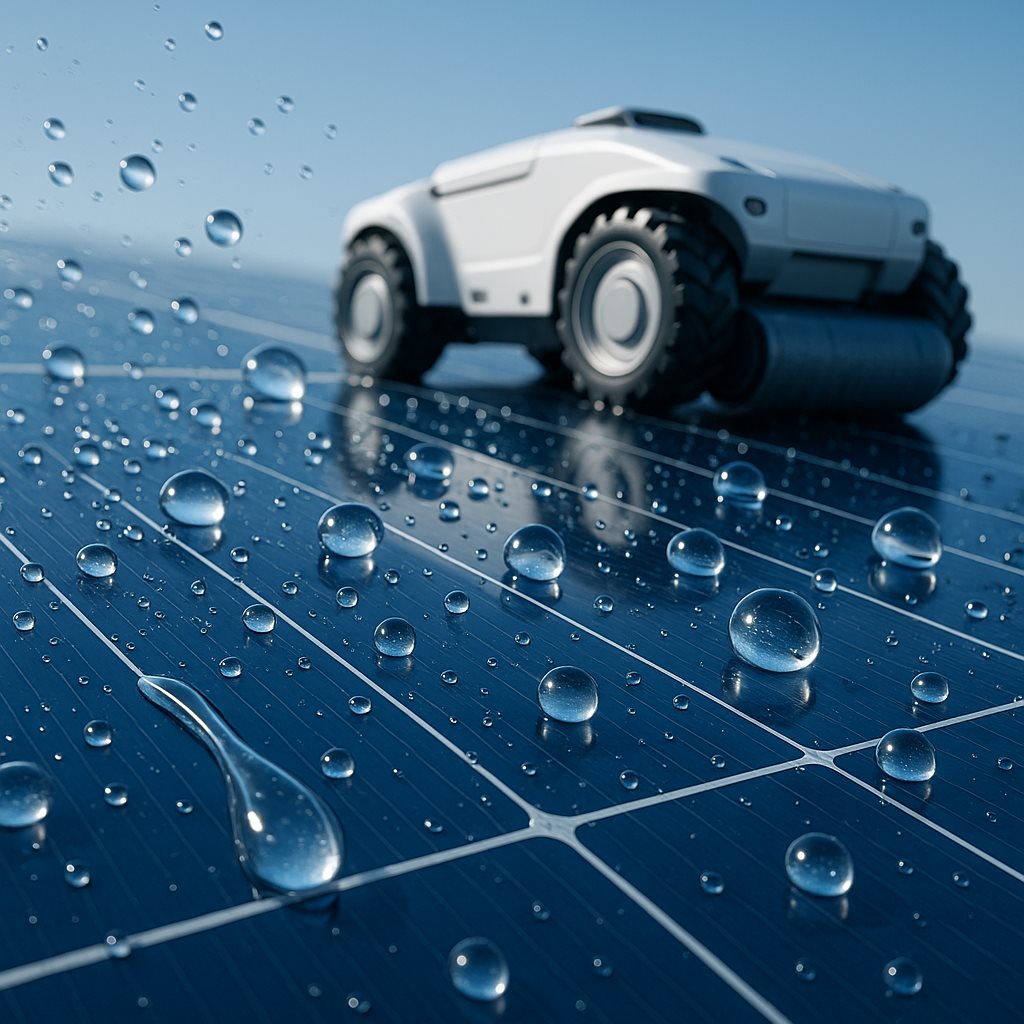
If dirt is the enemy of solar output, why not stop it sticking in the first place? That is the promise of anti-soiling coatings – surface treatments that make panels shed dust and water more easily. They are a genuinely useful tool, but they are often oversold as a replacement for cleaning. Here is how anti-soiling coatings really compare with robotic cleaning, and how to use both wisely.
What Are Anti-Soiling Coatings?
Anti-soiling coatings are thin treatments applied to panel glass to reduce how much dirt adheres and to help rain or cleaning water carry it away. They generally work in one of two ways: hydrophilic coatings spread water into a sheet that rinses dust off, while hydrophobic coatings make water bead and roll away, carrying particles with it. The goal is the same – less soiling build-up between cleanings.
Do Anti-Soiling Coatings Actually Work?
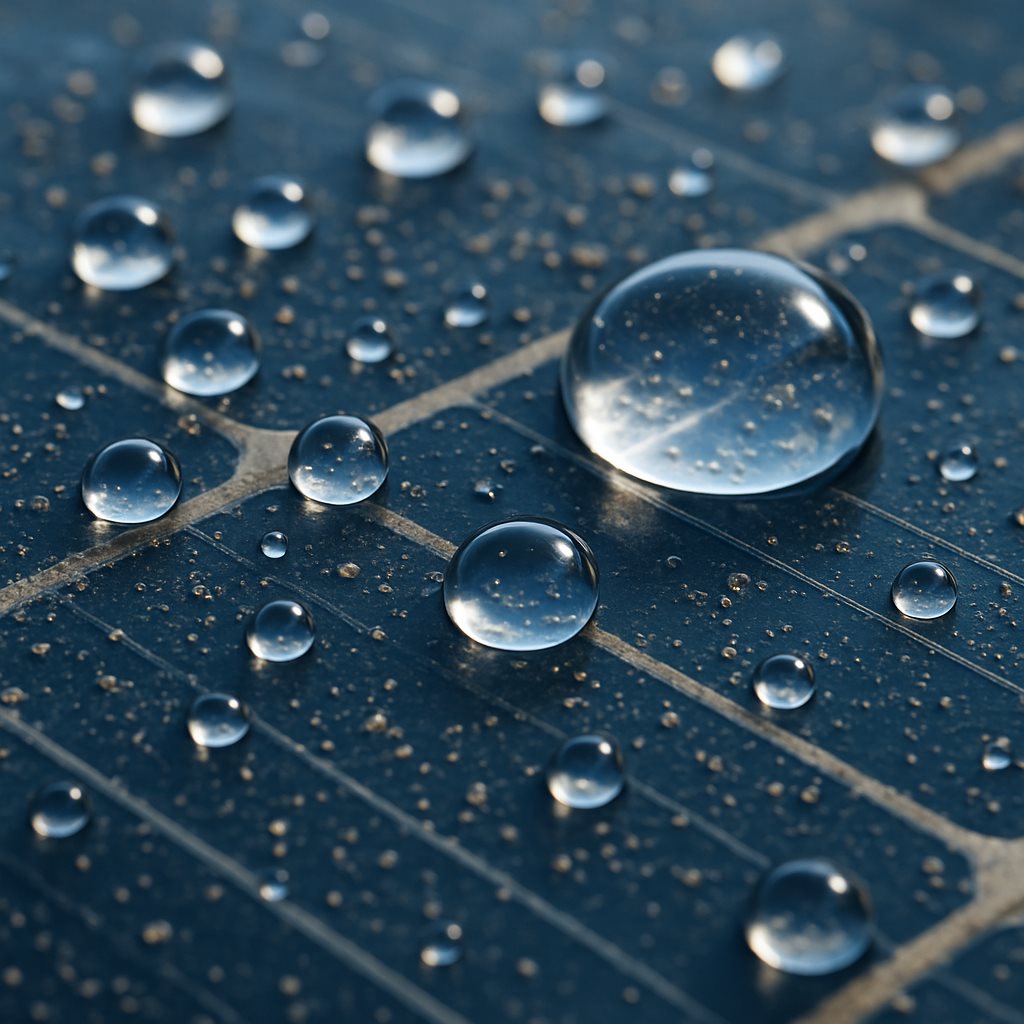
They help, but within limits. Coatings can slow the rate of light-dust accumulation and make each cleaning more effective. What they do not do is eliminate cleaning:
- They wear off. Coatings degrade over time and need reapplication, which is itself a recurring cost.
- They do not beat sticky soiling. Bird droppings, pollen, and greasy grime still bond to a coated surface – the organic soiling that does the most damage.
- They depend on rain. In arid regions with little rainfall, the self-cleaning effect has little to activate it.
Where Robotic Cleaning Fits
Robotic cleaning addresses exactly what coatings cannot: it physically removes soiling on a schedule you control, including the stuck-on grime that coatings leave behind. It does not wear off, it does not depend on rain, and it works in the driest, dustiest conditions. The mechanics are on our how it works page. In other words, a coating slows soiling; cleaning removes it. Only one of those actually restores lost output.
Coatings and Cleaning: Better Together
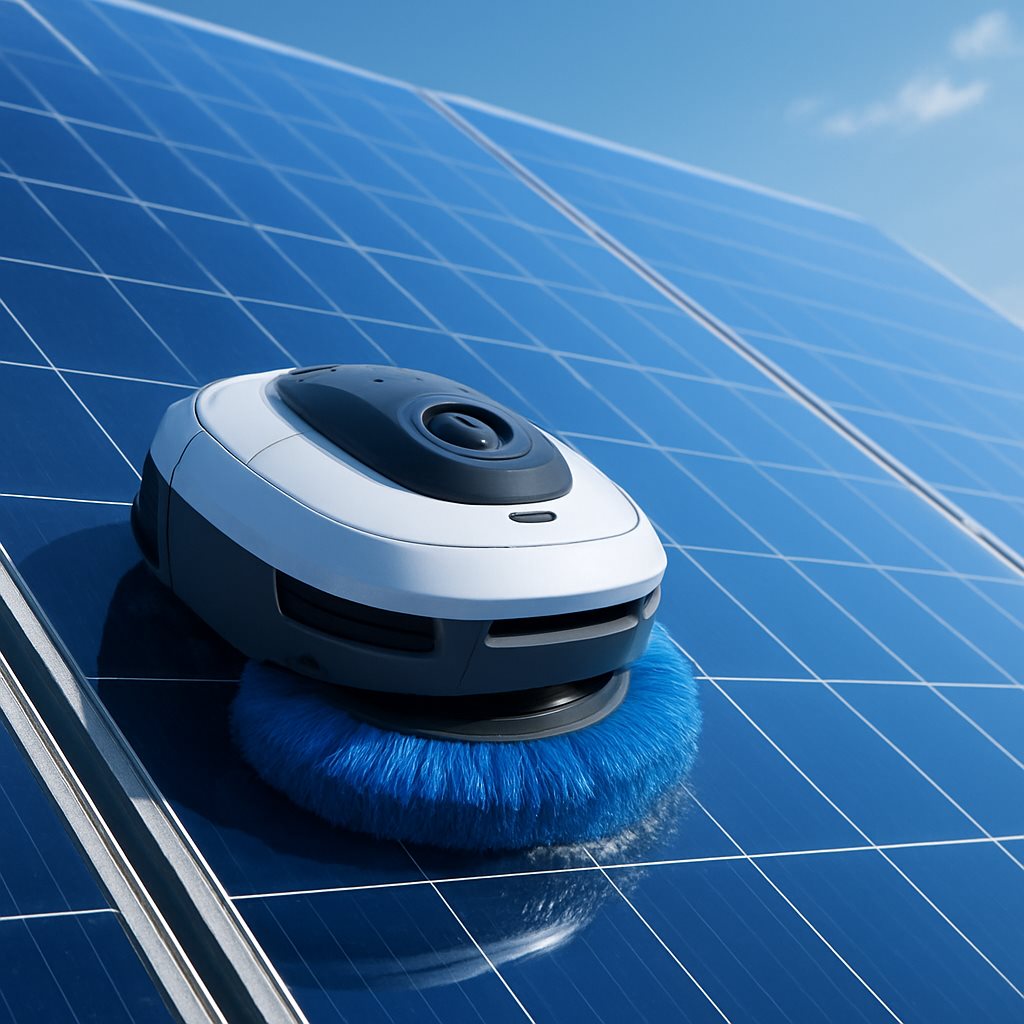
The smart framing is not “either/or” but “how do they combine.” A coating can stretch the interval between cleanings and make each one more effective, while robotic cleaning guarantees the soiling actually comes off. Together they can lower the total cost of keeping panels clean. The right cleaning cadence – even with a coating – still comes down to conditions, as covered in our cleaning frequency guide, and neglecting cleaning entirely carries the costs described in our guide to the hidden costs of inadequate cleaning.
The Bottom Line
Anti-soiling coatings are a helpful supplement, not a substitute for cleaning. They slow build-up but wear off, struggle with sticky soiling, and lean on rain. Robotic cleaning does the job coatings cannot – reliably removing soiling whenever you need. Used together, they keep panels clean at the lowest overall cost. To plan the right approach for your site, request a demo.
Frequently Asked Questions
Do anti-soiling coatings replace the need to clean solar panels?
No. They slow how fast dust builds up and make cleaning more effective, but they wear off, do not remove sticky soiling like bird droppings, and depend on rain, so cleaning is still required.
How long do anti-soiling coatings last?
They degrade over time and eventually need reapplication. The exact lifespan varies by product and conditions, but the recurring reapplication is part of their true cost.
Are coatings useful in desert or arid sites?
Their self-cleaning benefit relies partly on rain, so in very dry regions the effect is limited – which makes active robotic cleaning even more important there.
Should I use a coating and robotic cleaning together?
Often, yes. A coating can extend the interval between cleanings while robotic cleaning guarantees soiling is actually removed, which can lower the total cost of keeping panels clean.
Which restores lost energy output, a coating or cleaning?
Cleaning. A coating slows soiling, but only physically removing the dirt restores the output already lost to it.