
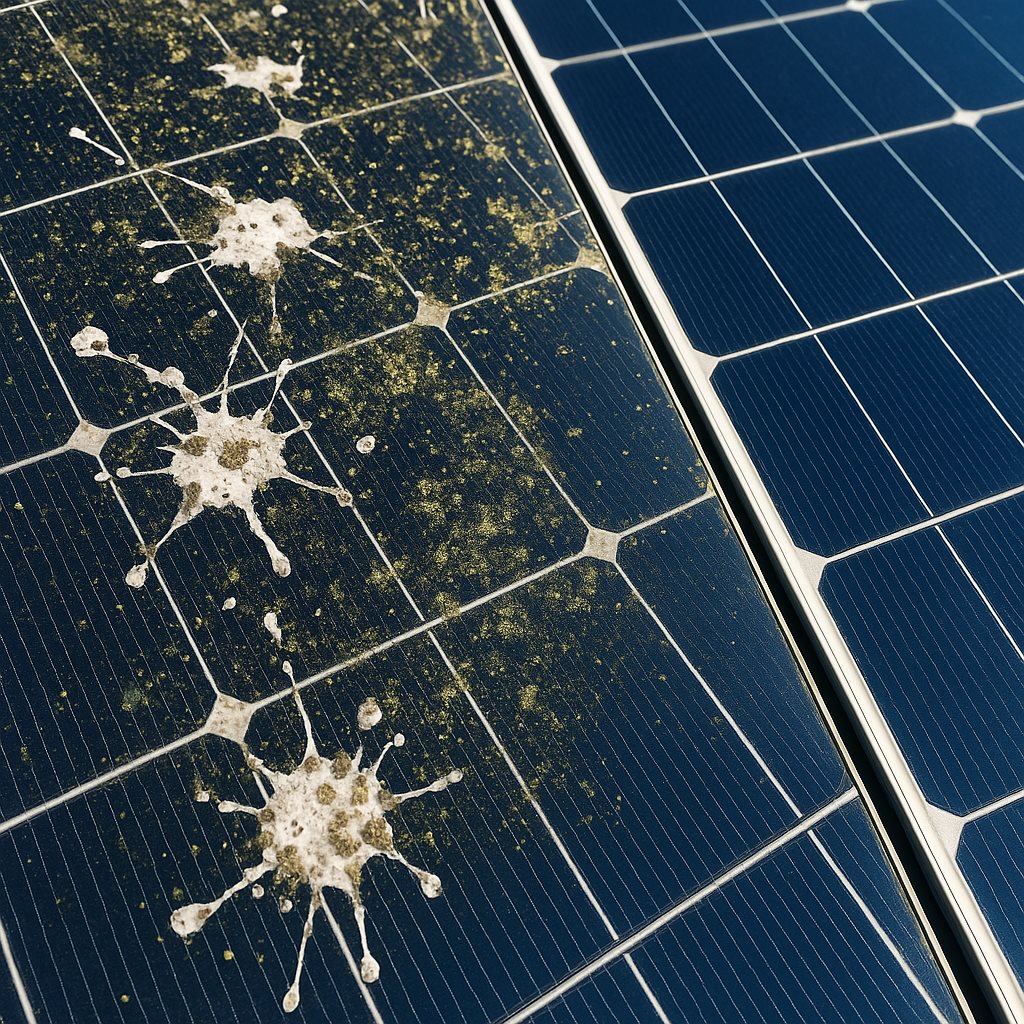
Not all dirt is equal. A film of dry dust is one problem; a bird dropping baked onto the glass, a smear of pollen, or a crust of industrial grime is another entirely. This sticky, biological build-up – organic soiling – is where light-duty cleaning falls short and real damage can begin. Here is why it matters and how robotic cleaning is built to handle it.
What Is Organic Soiling?
Organic soiling is the sticky, biological, and chemical build-up that goes beyond loose dust: bird droppings, pollen, leaf residue, insect remains, sap, and the greasy grime common near industry and traffic. Unlike dust, it bonds to the glass, resists a quick wipe, and often needs water and mechanical action to remove without harming the panel surface.
Why Organic Soiling Is Worse Than Dust
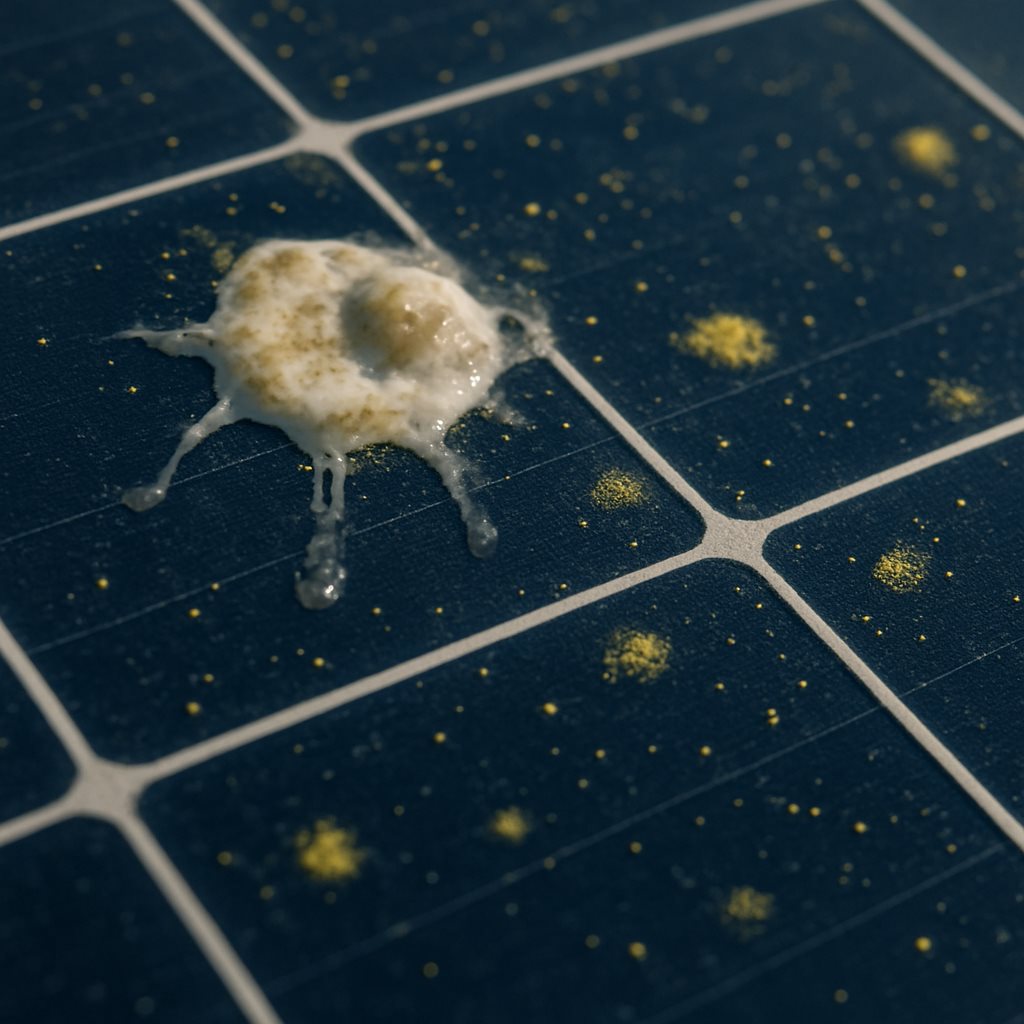
Dust reduces output evenly and rinses off fairly easily. Organic soiling behaves differently, and more dangerously:
- It sticks. Droppings and sap bond to the glass and will not blow or brush off, so they linger far longer than dust.
- It shades unevenly. A concentrated spot blocks light on specific cells, which can create hot spots – localized heating that stresses the panel and, over time, accelerates degradation.
- It tempts harsh cleaning. Because it is stubborn, people often scrub aggressively to remove it, risking the scratches and micro-cracks covered in our guide to the hidden costs of inadequate cleaning.
How Robots Remove Stuck-On Grime
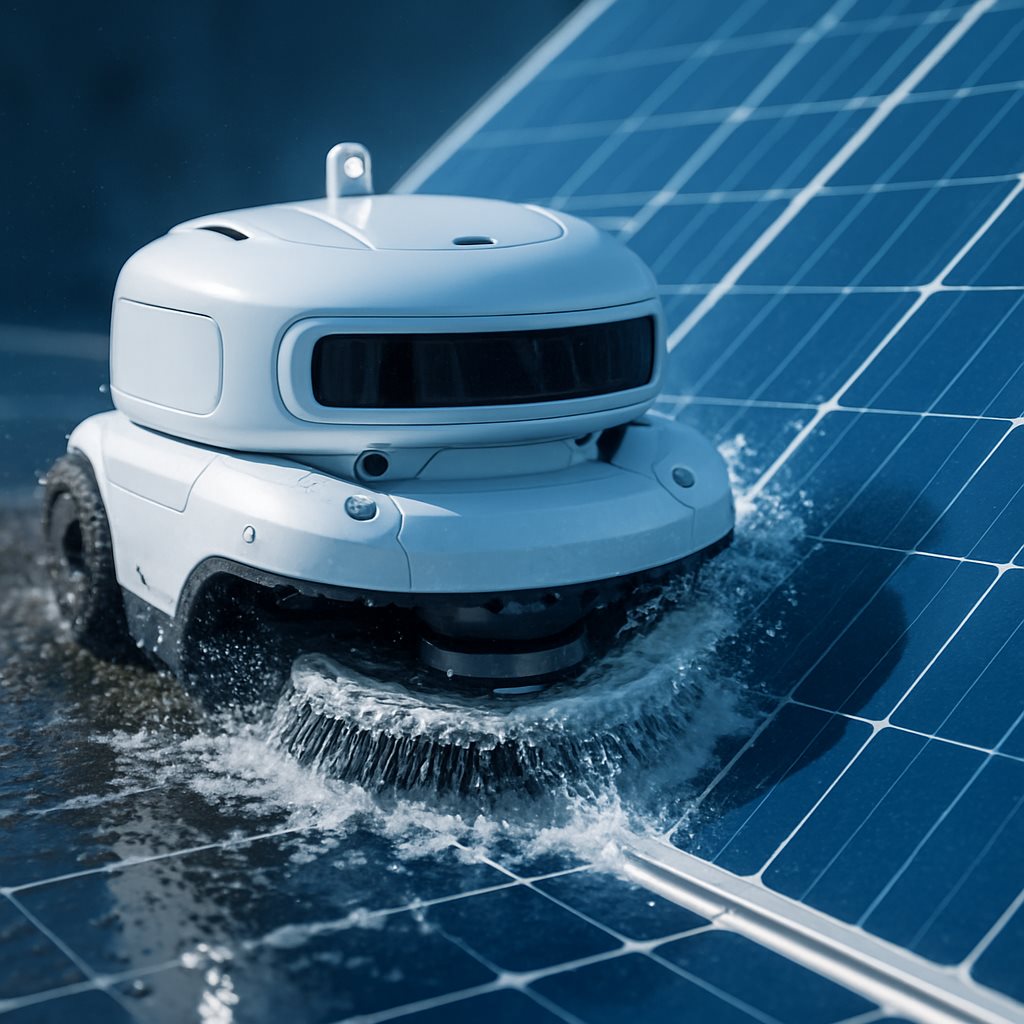
Removing organic soiling safely takes two things at once: enough mechanical force to lift the bond, and enough gentleness to spare the glass. This is exactly where a water-based robotic system with a high-torque, low-pressure design shines – it cleans stuck-on grime, not just dust, without the harsh blasting that damages coatings. The mechanics behind that are on our how it works page, and the broader method trade-offs are covered in our wet vs dry cleaning guide.
Prevention and the Right Frequency
You cannot stop birds or pollen, but you can stop soiling from accumulating into a bigger problem. Frequent, consistent cleaning removes organic build-up before it hardens or creates hot spots. Setting that cadence by real conditions – not a fixed calendar – is the subject of our cleaning frequency guide.
The Bottom Line
Organic soiling is the dirt that actually threatens both output and panel life, because it sticks, shades unevenly, and invites damaging cleaning. Handling it well means cleaning frequently, with a system strong enough to lift stuck-on grime yet gentle enough to protect the glass. To see how Solaris robots handle the toughest soiling, request a demo.
Frequently Asked Questions
What is organic soiling on solar panels?
It is sticky, biological build-up such as bird droppings, pollen, sap, and greasy grime that bonds to the glass – unlike loose dust, it resists easy removal and often needs water plus mechanical action.
Why are bird droppings so bad for solar panels?
They bond to the glass and block light on specific cells, which can create hot spots. That localized heating stresses the panel and, if left, can accelerate long-term degradation.
Can you just wipe off pollen and grime?
Not easily. Organic soiling clings to the surface, and scrubbing it off aggressively risks scratches and micro-cracks. A water-based robotic system removes it with controlled force instead.
How do cleaning robots handle stuck-on grime without damaging panels?
A high-torque, low-pressure water-based design supplies enough force to lift bonded soiling while keeping pressure gentle on the glass, avoiding the micro-abrasions harsh manual cleaning can cause.
How often should panels with heavy organic soiling be cleaned?
More frequently than dust-only sites, and ideally on a condition-based schedule that removes build-up before it hardens or creates hot spots.