
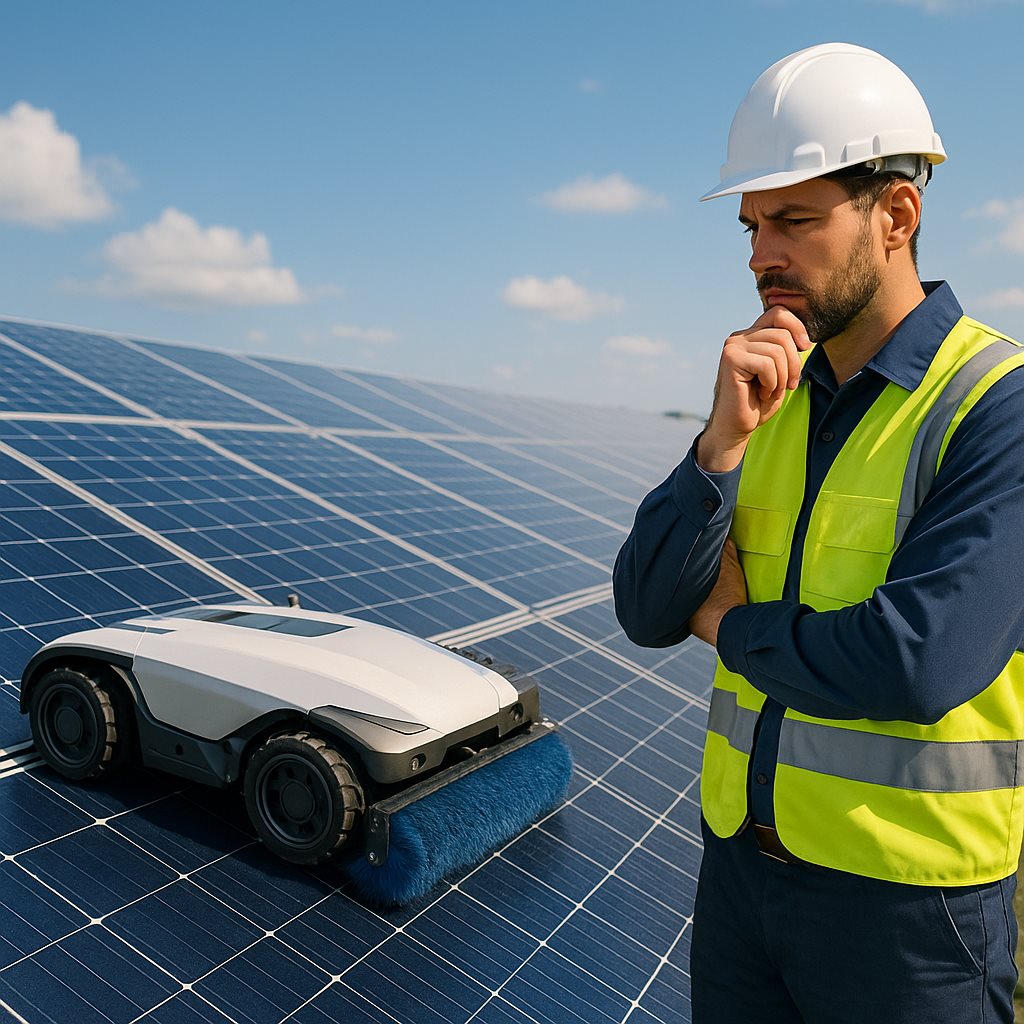
The market for solar cleaning robots has grown fast, and the machines are not all alike. Some need rails; some need grid power; some clean only light dust; some are truly autonomous and some are not. Choosing well means matching the robot to your site and your operation rather than to a spec sheet. This buyer’s guide walks through the factors that actually matter when deciding how to choose a solar panel cleaning robot.
Start With Your Site
Before comparing robots, characterize your installation: is it rooftop, ground-mounted, floating, or agrivoltaic? How large is it, how dusty is the climate, and how much water is available? The right robot for a dusty utility farm is not the right robot for a water-scarce rooftop. Every factor below should be weighed against your specific site.
Power and Infrastructure
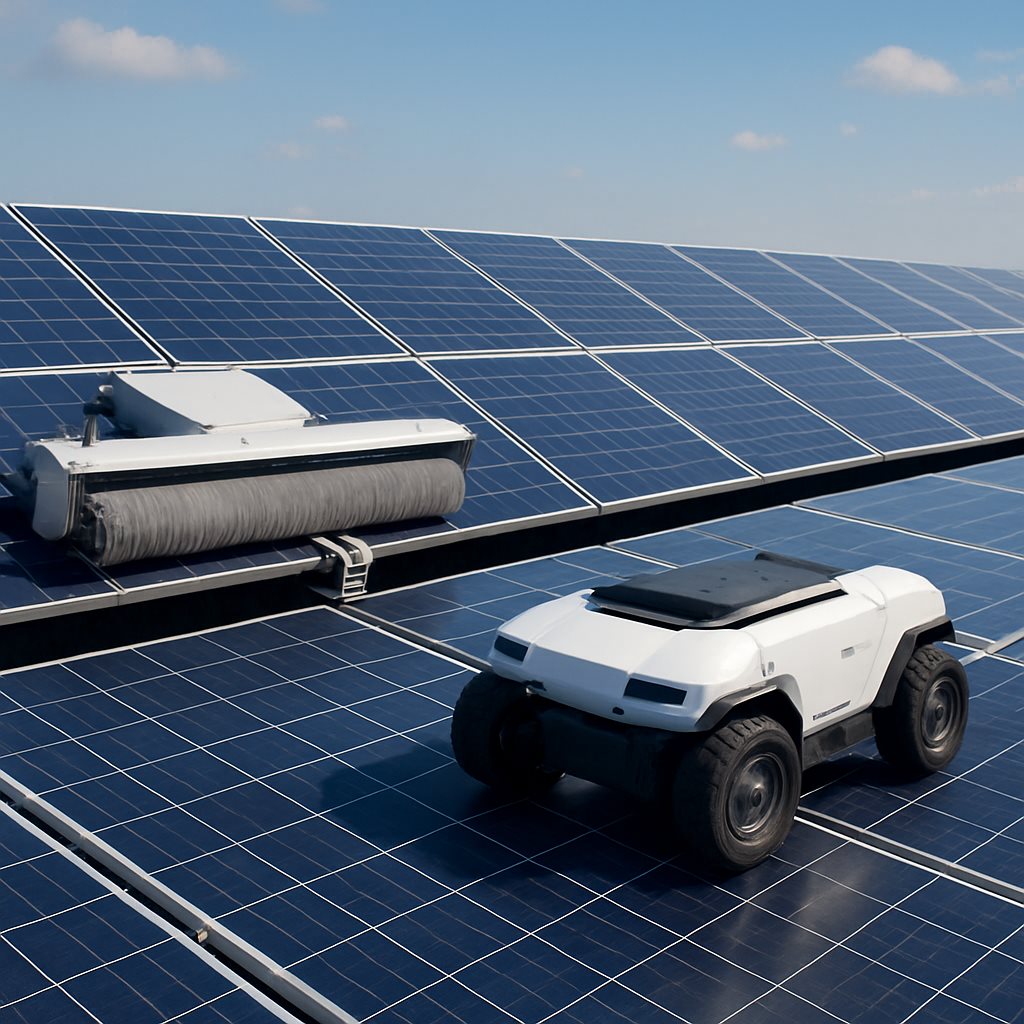
Two questions here save the most cost and hassle down the line:
- Does it need rails? Rail-based robots require permanent tracks installed across the array, adding cost, shading, and maintenance. Rail-free robots avoid all of it – see our comparison of rail-free vs rail-based cleaning robots.
- Does it need grid electricity? Systems that draw grid power or rely on batteries add infrastructure and logistics. A water-powered robot avoids both by running on the cleaning water itself.
Cleaning Effectiveness
Ask what the robot can actually remove. Many systems handle loose dust but struggle with stuck-on grime, bird droppings, and pollen – the soiling that does real damage. Look for a design with enough force to lift bonded soiling while staying gentle on the glass, as explained on our how it works page. A robot that only clears dust leaves the hardest problem unsolved.
Water Use, Autonomy, and Monitoring
Three more factors separate serious systems from the rest:
- Water efficiency – especially in arid regions, favor systems that clean thoroughly with minimal water.
- True autonomy – can it run without an operator on site, or does it still need staff to supervise each cycle?
- Monitoring – does it report cleaning status and yield so you can prove the value and catch faults early?
Support and Track Record
A cleaning robot is a long-term asset, so the vendor matters as much as the machine. Look for real deployments, engineering depth, and support you can rely on over the system’s life. The strength of the underlying technology – for Solaris, a patented hydraulic motor – is a signal of whether a system will hold up in the field.
A Quick Selection Checklist
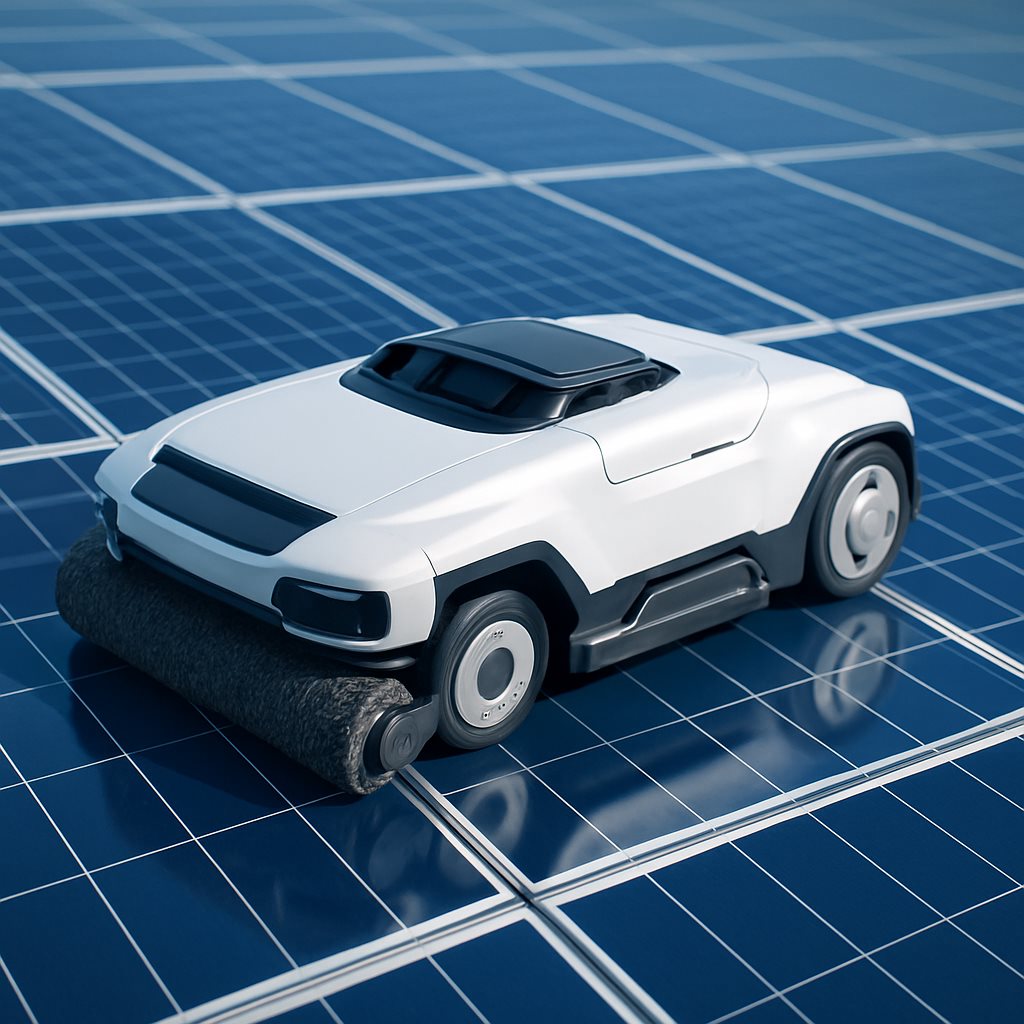
Before you commit, confirm the robot:
- Fits your installation type and scale
- Needs no rails or grid electricity, if you want to avoid added infrastructure
- Removes stuck-on grime, not just dust, without harsh pressure
- Uses water efficiently
- Runs autonomously and reports its results
- Is backed by proven deployments and solid support
Weigh all of this against expected returns using our guide to the ROI of autonomous cleaning.
The Bottom Line
The best solar cleaning robot is the one that matches your site’s constraints – power, water, soiling, and scale – while running autonomously and proving its value. Start from your installation, not the spec sheet, and the right choice becomes clear. To match a system to your site, request a demo.
Frequently Asked Questions
What should I look for in a solar panel cleaning robot?
Fit for your site type and scale, whether it needs rails or grid power, how well it removes stuck-on grime, water efficiency, true autonomy, monitoring, and a vendor with a proven track record.
Are rail-free cleaning robots better?
For most sites, yes. They avoid the cost, shading, and maintenance of permanent rails and can be redeployed across different arrays.
Does a cleaning robot need its own power supply?
Not always. Water-powered robots run on the pressure of the cleaning water, so they need neither grid electricity nor onboard batteries.
How important is stuck-on grime removal?
Very. Dust is easy; bird droppings, pollen, and grime are what damage panels and cut yield. A robot that only clears dust leaves the hardest problem unsolved.
Why does the vendor matter, not just the robot?
Because a cleaning robot is a long-term asset. Proven deployments, engineering depth, and reliable support determine whether it keeps performing over its full life.