
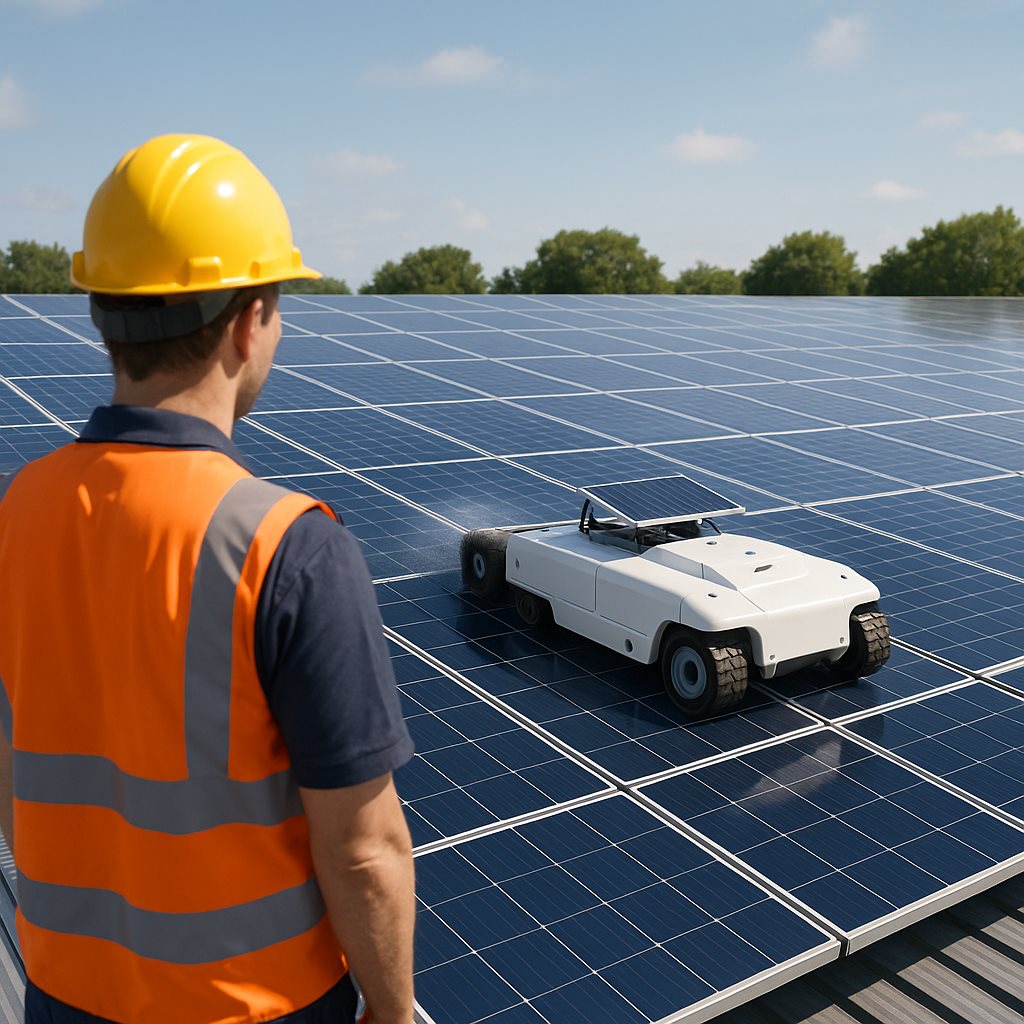
Ask any solar operator about cleaning, and the conversation quickly turns to safety. Sending people onto rooftops and up tall ground-mount rows with water and equipment is one of the more hazardous routine tasks in solar O&M. So the question is a fair one: is robotic solar cleaning safer than manual cleaning? The short answer is yes – and the reasons go beyond the obvious.
The Real Risks of Manual Solar Cleaning
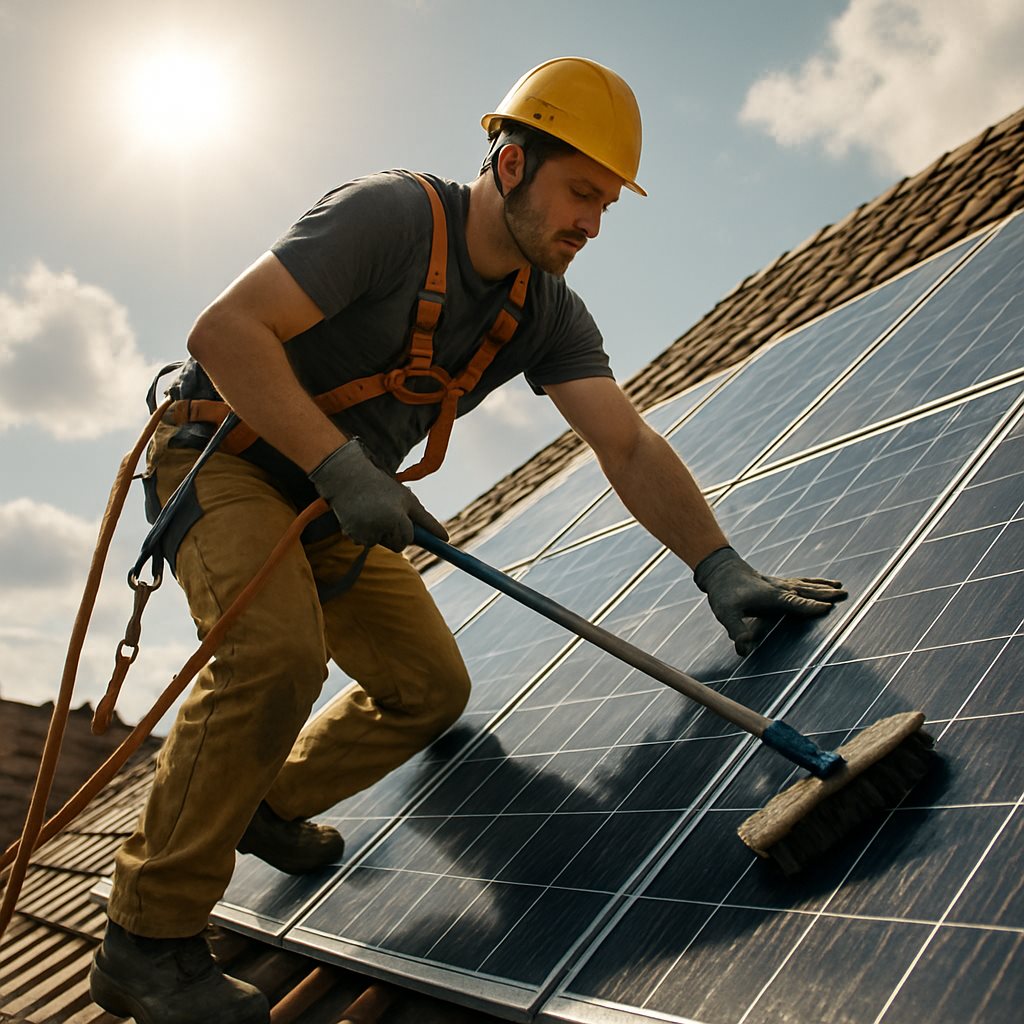
Manual cleaning concentrates several hazards into one job:
- Falls from height. Rooftop and elevated arrays are the leading danger – wet, sloped surfaces make it worse.
- Slips and water hazards. Cleaning means water on glass and walkways, close to live electrical equipment.
- Heat and fatigue. Cleaning happens outdoors, often in the heat, where fatigue raises the chance of mistakes.
- Repetitive strain. Manual scrubbing across large arrays takes a physical toll over time.
Every one of these grows with the size of the site and the frequency of cleaning – exactly when you most need to clean often.
How Robots Remove the Hazard
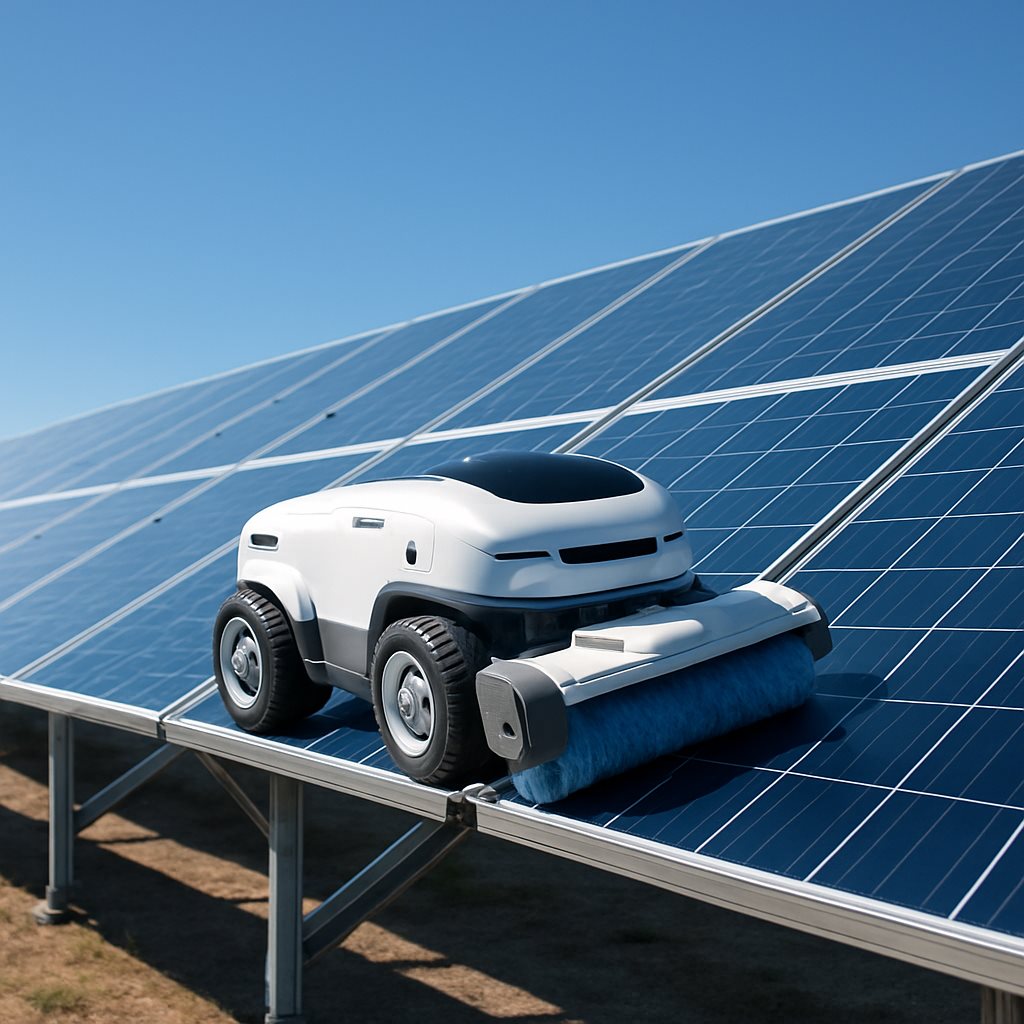
Autonomous cleaning changes the safety equation by removing the person from the dangerous part of the task. The robot works on the array; the people stay on the ground. There is no one at height during cleaning, no one handling hoses near live equipment, and no crew exposed to heat for hours. The core comparison between the two approaches is covered in our guide on how cleaning robots revolutionize maintenance, and the autonomous, no-operator design is explained on our how it works page.
Beyond Safety: Insurance and Compliance
Fewer people at height is not only safer – it is cheaper and simpler to manage. Manual cleaning at height brings insurance premiums, safety training, permits, fall-protection equipment, and compliance paperwork. Removing the at-height work removes much of that overhead. For many building owners and operators, cutting this liability is a deciding factor on its own, and it feeds directly into the broader ROI of autonomous cleaning.
Where the Safety Gain Is Largest
The safety benefit is greatest exactly where manual cleaning is most dangerous – on commercial rooftops and elevated arrays. That is why rooftop operators are among the fastest to adopt robotic cleaning; our commercial rooftop cleaning solution is built around keeping people off the roof entirely.
The Bottom Line
Robotic solar cleaning is meaningfully safer than manual cleaning because it takes the person out of the hazard – no work at height, no water near live equipment, no crews in the heat. On top of the human benefit, it trims the insurance and compliance costs that manual cleaning carries. To see how autonomous cleaning removes risk from your site, request a demo.
Frequently Asked Questions
Is robotic solar cleaning safer than manual cleaning?
Yes. It removes people from the most dangerous part of the task – working at height with water near live electrical equipment – by having the robot clean the array while staff remain safely on the ground.
What are the main safety risks of manual solar cleaning?
Falls from height, slips on wet surfaces near live equipment, heat and fatigue, and repetitive strain. These risks increase with larger sites and more frequent cleaning.
Does robotic cleaning reduce insurance and compliance costs?
It can. Removing at-height manual work reduces the fall-protection, training, permitting, and insurance overhead that comes with sending crews onto roofs and elevated arrays.
Where does robotic cleaning improve safety the most?
On commercial rooftops and elevated arrays, where manual cleaning carries the highest fall risk. These sites see the largest safety gain from automation.
Do you still need people involved with robotic cleaning?
Yes, but in a safer role – overseeing and monitoring the system rather than performing the hazardous at-height cleaning themselves.