
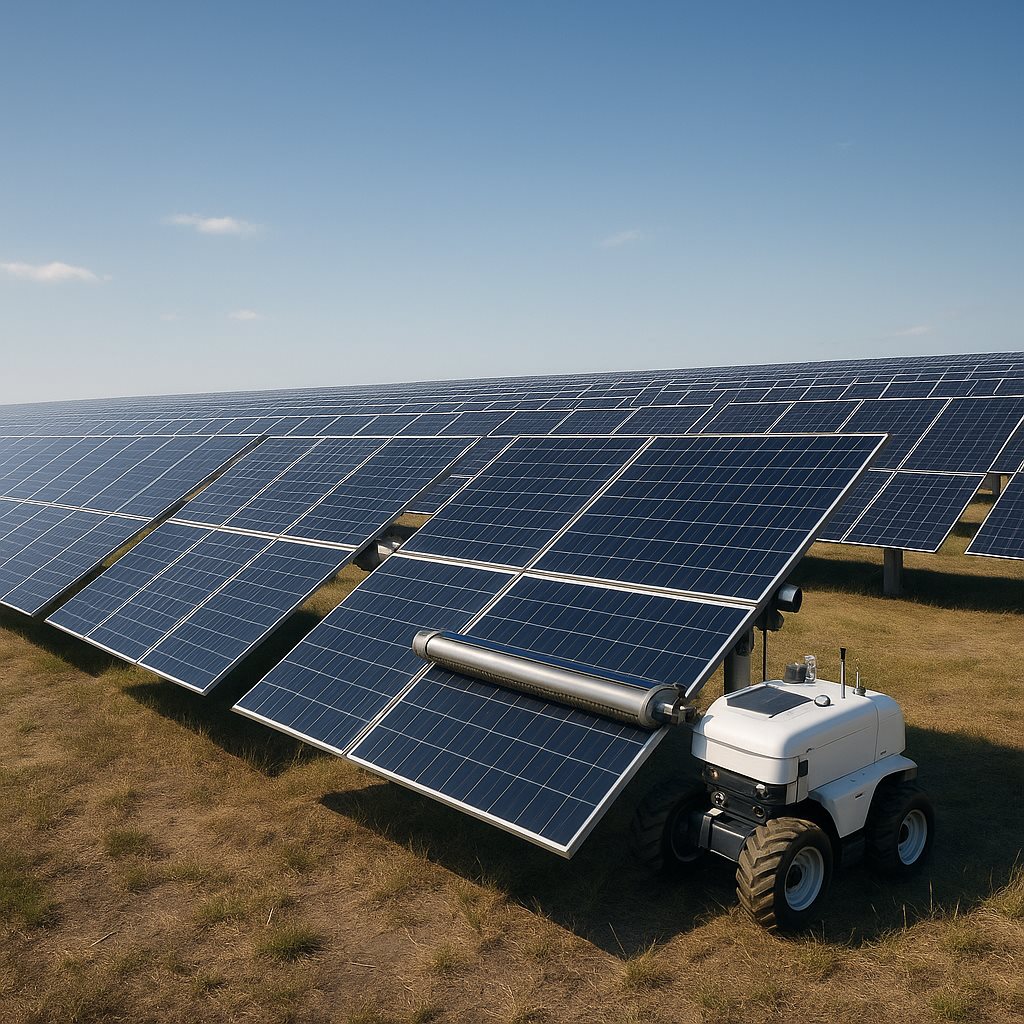
Single-axis trackers have become standard on large ground-mounted solar farms because they follow the sun and lift energy yield. But a moving array is a harder array to clean. The very motion that boosts output complicates access, timing, and the geometry a cleaning system has to work with. Here is what solar tracker cleaning takes, and how autonomous robots handle it.
What Single-Axis Trackers Change
A tracker rotates panels through the day to keep them facing the sun, tilting from east in the morning to west in the afternoon. That extra yield is exactly why utility-scale developers use them. But it also means the panel surface is rarely in the same position twice, and the rows sit within a mechanism that a cleaning method must respect.
Why Trackers Complicate Cleaning
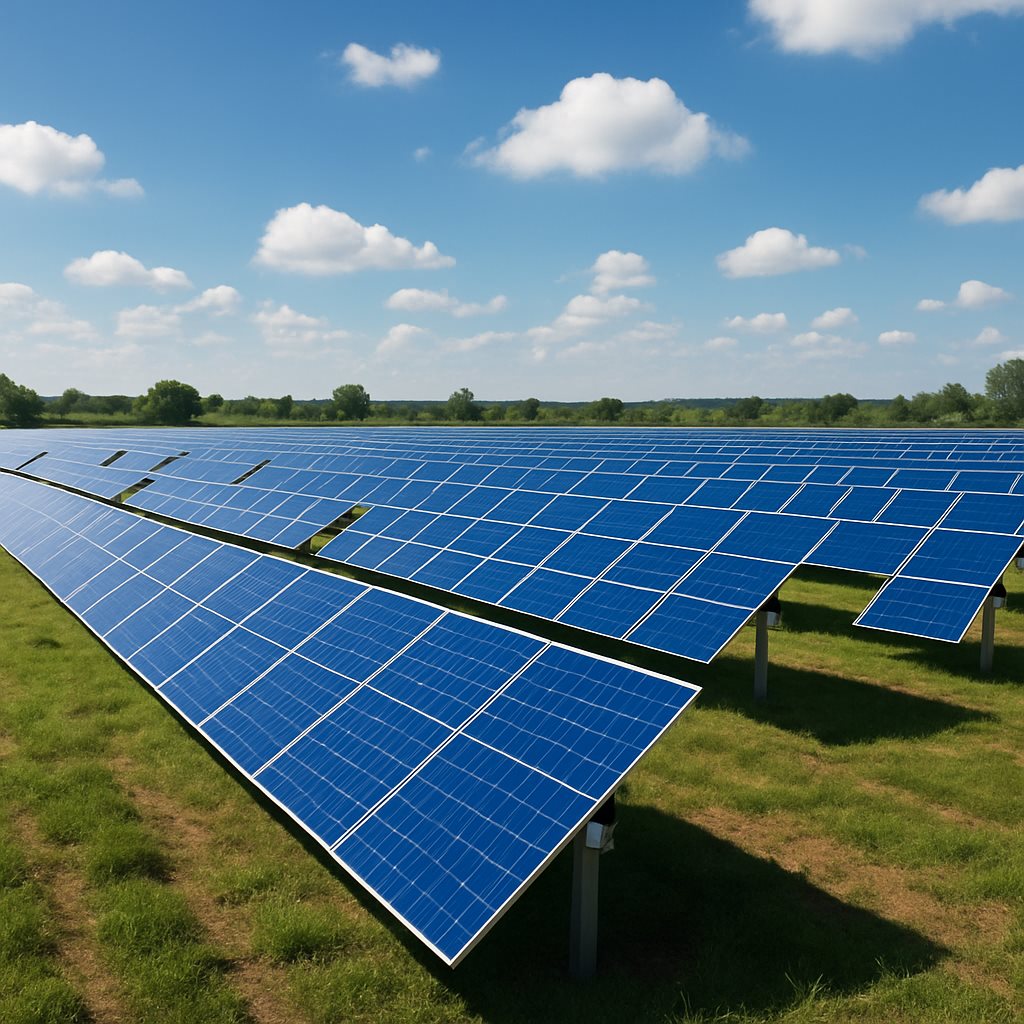
Cleaning a tracked array raises challenges a fixed-tilt array does not:
- Changing angle. The panel tilt shifts through the day, so any cleaning approach has to cope with a moving surface or work around a set cleaning position.
- Coordination with motion. Cleaning has to happen when the tracker is in a safe, suitable position rather than interfering with sun-tracking.
- Scale. Tracker farms are typically very large, so manual cleaning is even less practical than on smaller sites.
How Robotic Cleaning Adapts to Trackers
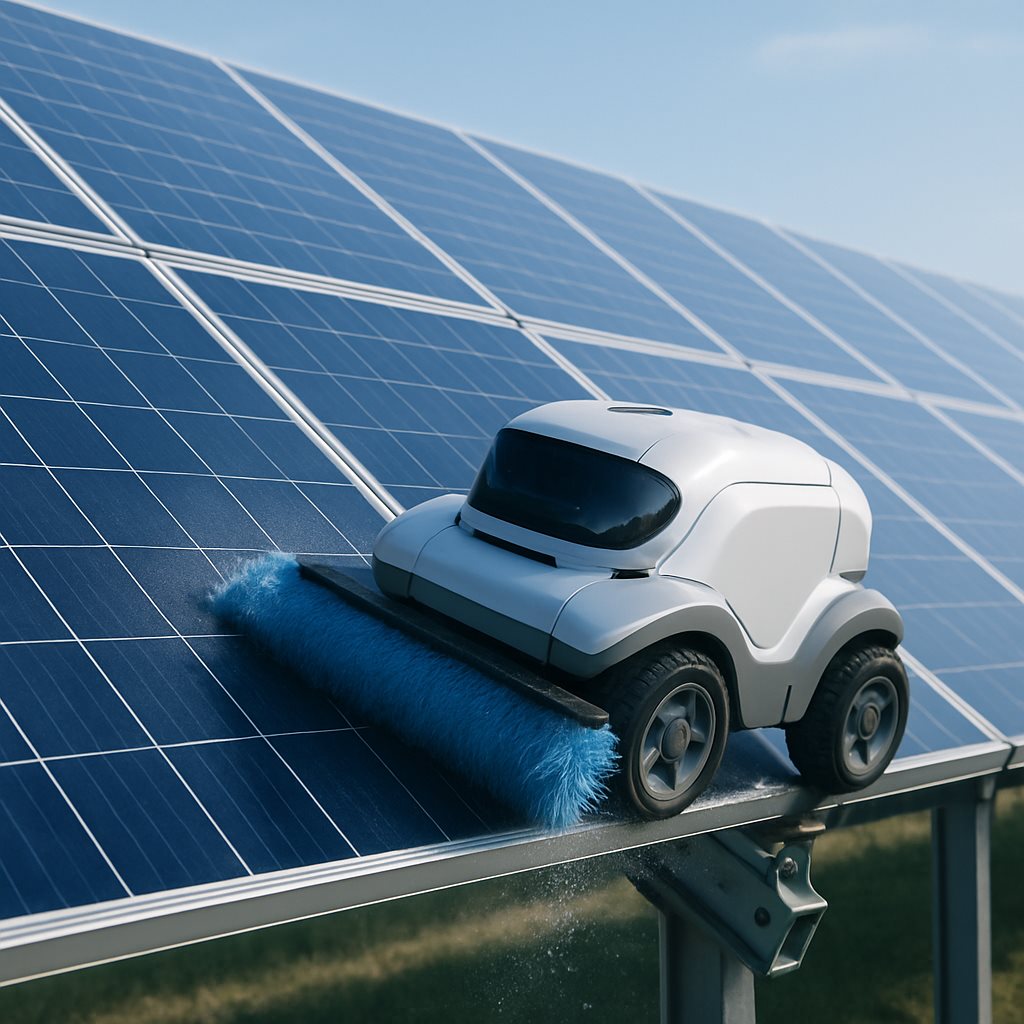
Autonomous cleaning fits tracker farms well precisely because it is flexible and self-directed. A rail-free robot is not tied to a fixed track geometry, so it can work across tracked rows, and cleaning can be coordinated to run when the array is in a stow or cleaning position – without disrupting daytime generation. Because tracker projects are large ground-mounted installations, they gain the most from scalable, autonomous systems, as covered in our ground-mounted solar cleaning solution and on our how it works page. The control interface that makes that coordination straightforward is far easier to specify during design, one of the items on our checklist for designing a solar plant for robotic cleaning.
Timing Cleaning With Tracker Movement
The practical key is coordination. Cleaning cycles can be scheduled for times when the tracker is positioned suitably – often overnight or during low-production windows – so that cleaning and generation never compete. Combined with condition-based scheduling, this keeps a tracked array near peak output without ever getting in the way of its sun-tracking.
The Bottom Line
Trackers add yield and add complexity. Cleaning them well means working with their motion, not against it – which is exactly what flexible, autonomous robotic cleaning is built to do. For large tracked farms, that combination protects the extra output trackers are there to deliver. The economics follow the same logic as any large site, laid out in our guide to utility-scale vs commercial cleaning. To keep a tracker farm at peak performance, request a demo.
Frequently Asked Questions
Why are tracked solar panels harder to clean?
Because the panels tilt through the day to follow the sun, the surface is rarely in the same position, and cleaning must be coordinated with the tracker’s motion rather than interfering with generation.
Can robotic cleaners work on single-axis tracker farms?
Yes. Rail-free, autonomous robots are not tied to a fixed geometry and can clean across tracked rows, with cycles timed to when the array is in a suitable position.
When should tracked arrays be cleaned?
Ideally during low-production windows, such as overnight or when the tracker is in a stow or cleaning position, so cleaning and sun-tracking never compete.
Do trackers make robotic cleaning more worthwhile?
Often, yes. Tracker farms are large and produce more, so keeping them clean protects a bigger output – and manual cleaning is especially impractical at that scale.
Does cleaning interfere with the tracker’s operation?
It should not, when coordinated correctly. Cleaning is scheduled around the tracker’s position so that generation continues uninterrupted.