

Solar operations and maintenance has automated a lot: remote monitoring, fault detection, performance analytics. Yet one of the most repetitive, labor-heavy tasks often stays stubbornly manual – cleaning the panels. Closing that gap is where solar O&M automation delivers some of its clearest returns. Here is how automated cleaning fits into a modern maintenance program.
What Is Solar O&M Automation?
O&M automation means using technology to handle maintenance tasks that once required people on site – monitoring performance, flagging faults, and increasingly, physically maintaining the array. The goal is consistent, data-driven upkeep that scales without a headcount that grows in lockstep with your portfolio. Cleaning is the natural next frontier, because it is frequent, physical, and directly tied to output.
Cleaning: The Biggest Manual Gap in O&M
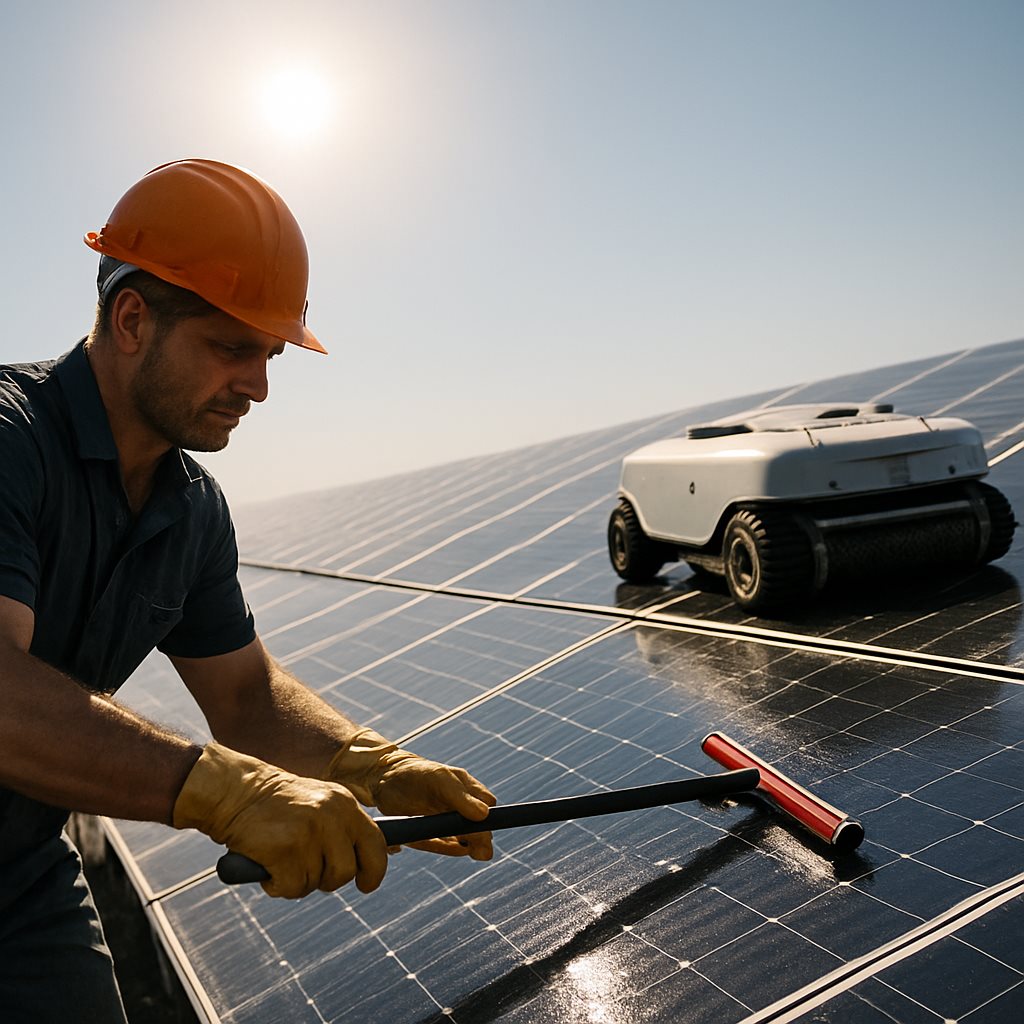
Most O&M functions have gone digital, but cleaning has lagged because it is physical work. That gap is expensive. Manual cleaning carries recurring labor and safety costs, and because it is hard to schedule frequently, panels spend long stretches soiled and underproducing. Automating cleaning removes a major recurring cost and closes the loop between “we can see the panels are dirty” and “the panels are now clean.” The full case is in our guide to the ROI of autonomous cleaning.
How Autonomous Cleaning Fits Your O&M
Autonomous, robotic cleaning slots into O&M as a self-running function rather than a scheduled crew visit. The robots clean on their own, report their activity, and integrate with the same monitoring stack that already runs the site. Moving from manual to automated cleaning is a transition many operators are already making – our guide on transitioning from manual to robotic cleaning walks through the steps.
Data and Predictive Maintenance
Automated cleaning is not just about doing the work – it is about doing it at the right time. Connected robots feed soiling and yield data back into O&M, enabling condition-based cleaning that responds to real conditions instead of a fixed calendar. Our cleaning frequency guide shows why that data-driven cadence outperforms scheduled visits.
Building Cleaning Into Your O&M Program
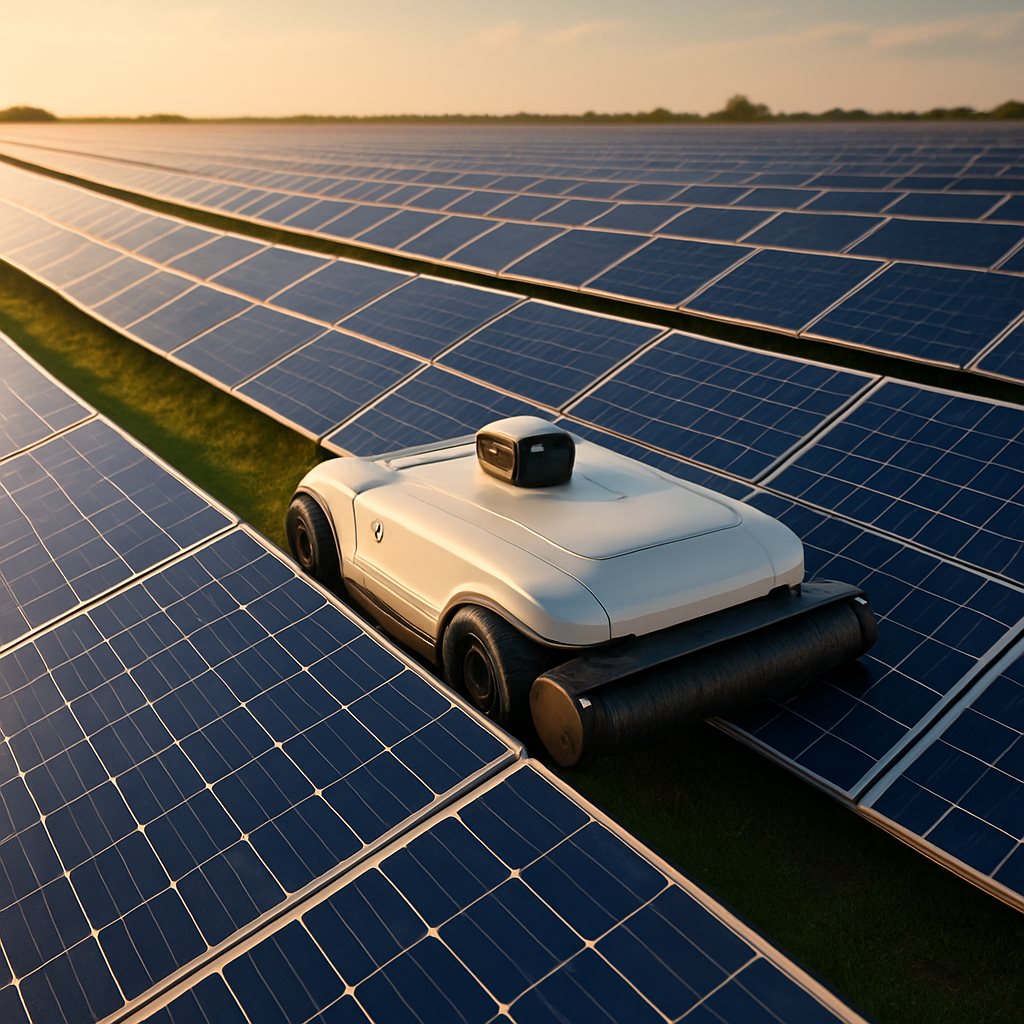
Treating cleaning as a core, automated O&M function – not an occasional add-on – changes the economics of a site. It stabilizes yield, removes a recurring labor line, and makes performance more predictable. It also changes what your maintenance agreement should measure, since availability and soiling ratio replace a count of site visits – a shift we work through in our guide to cleaning KPIs and SLAs in solar O&M contracts. The mechanics of the autonomous system that makes this possible are on our how it works page. Done well, automated cleaning becomes as routine and invisible as remote monitoring already is.
The Bottom Line
Solar O&M automation is only complete when the most physical, repetitive task – cleaning – is automated too. Building autonomous, data-driven cleaning into your maintenance program closes the last big manual gap, cutting cost and protecting output at the same time. To see how automated cleaning fits your operation, request a demo.
Frequently Asked Questions
What is solar O&M automation?
It is the use of technology to handle maintenance tasks that once required people on site, from performance monitoring and fault detection to physically maintaining and cleaning the array.
Why is cleaning considered the biggest manual gap in O&M?
Because most other O&M functions have gone digital while cleaning has stayed physical and labor-intensive. That makes it one of the largest remaining sources of recurring cost and inconsistency.
How does automated cleaning integrate with existing O&M systems?
Autonomous robots run on their own and report their activity and results to the same monitoring stack that already manages the site, so cleaning becomes another data-driven O&M function.
Does automating cleaning reduce O&M costs?
Yes. It removes recurring cleaning labor and safety costs and keeps panels consistently clean, which stabilizes yield and makes site performance more predictable.
Can cleaning automation support predictive maintenance?
It can. Connected cleaning robots contribute soiling and yield data that feed condition-based scheduling and broader predictive-maintenance planning.