
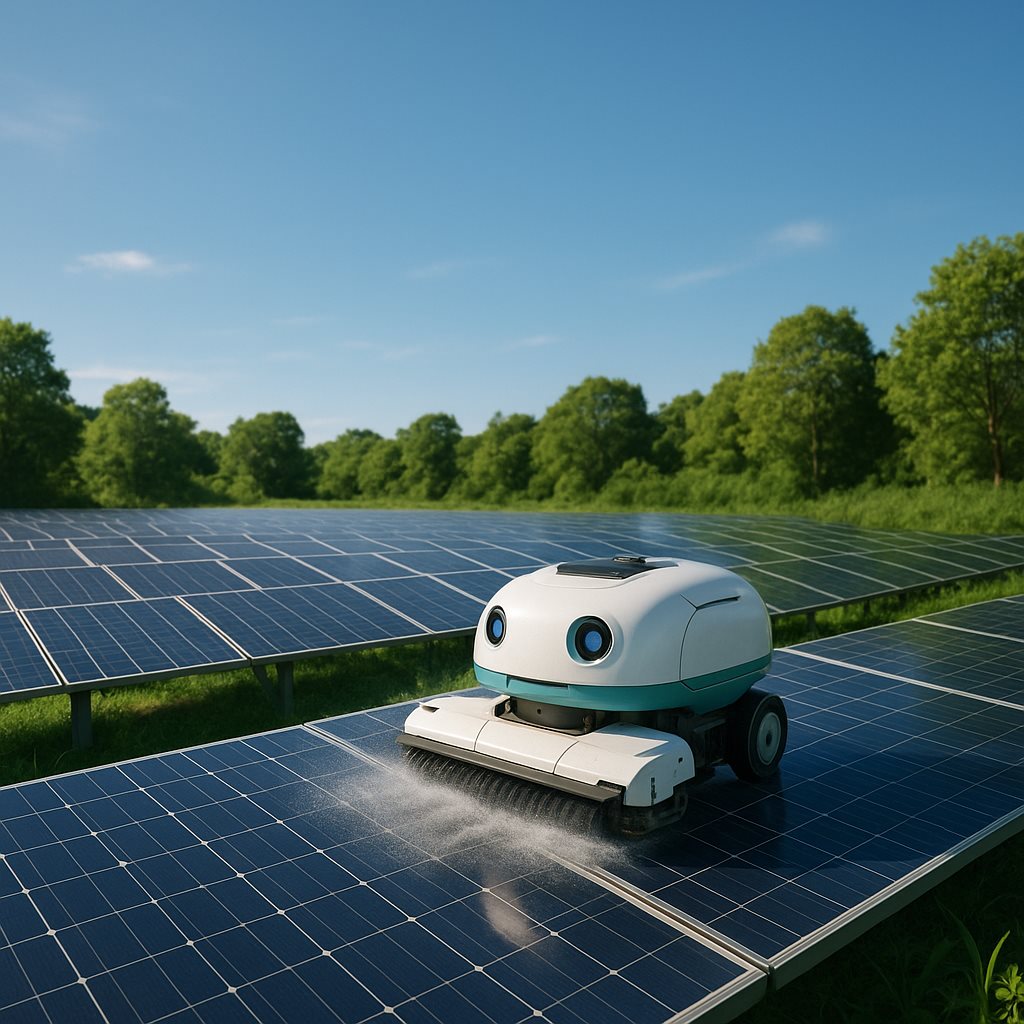
Solar is a clean-energy technology, but keeping it running is not automatically clean. Cleaning panels can burn through water, fuel, and grid power, and can shorten panel life if done badly. As sustainability and ESG reporting move up the agenda, how you maintain a solar asset matters as much as the asset itself. Here is the case for sustainable solar panel cleaning built on water-based robotics.
The Hidden Footprint of Cleaning
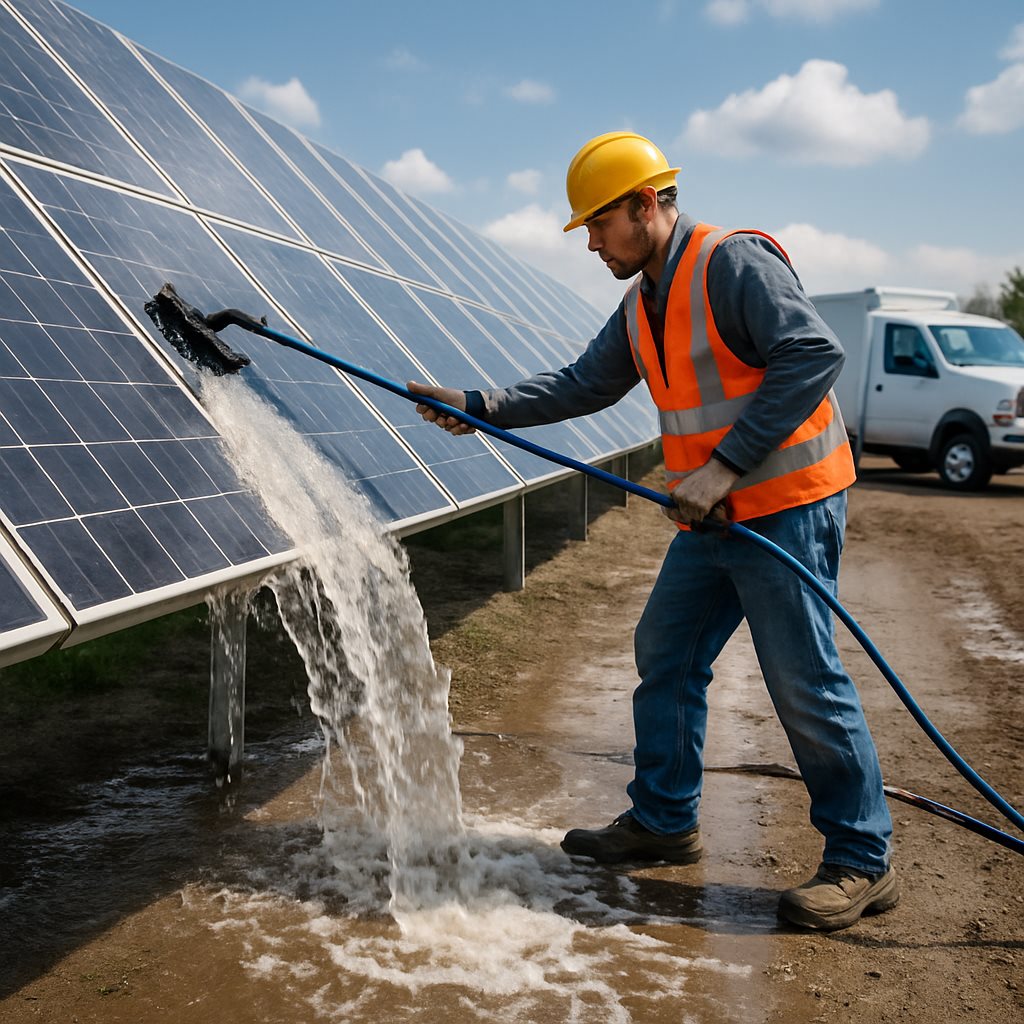
Traditional cleaning carries an environmental cost that rarely shows up in the brochure:
- Water. Manual washing can use large volumes of water, a serious issue in the arid regions where many solar farms sit.
- Fuel and power. Crews, trucks, and some cleaning machines consume fuel or grid electricity, adding emissions to a supposedly green operation.
- Chemicals. Detergents and cleaning agents create runoff and disposal concerns.
A cleaning method that ignores these can quietly undercut the sustainability story of the whole project.
Water Efficiency Without Waste
Water is the biggest lever. Water-based robotic cleaning is engineered to clean thoroughly using far less water than manual washing, and to avoid the overspray and evaporation that waste it. In water-scarce regions this is decisive – our guide to water management in arid regions goes deeper on cleaning without waste.
No Grid Electricity, Fewer Emissions
The cleaning method itself can be emissions-light. A water-powered robot draws no grid electricity and needs no fuel-burning support equipment on the array – it runs on the pressure of the cleaning water. That removes a source of emissions and parasitic load that other systems add, and it aligns the maintenance with the clean-energy purpose of the site.
Cleaner Panels, Longer Life, Less Waste
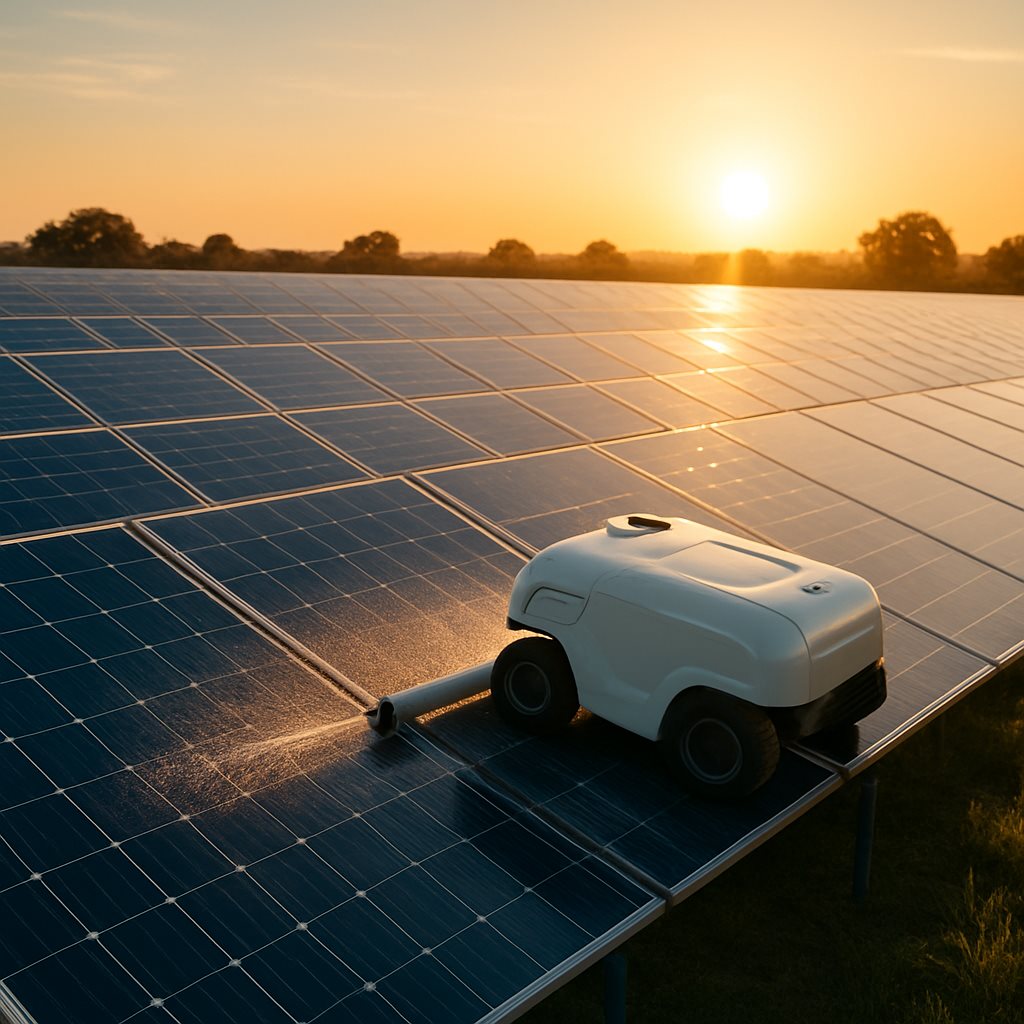
Sustainability is not only about inputs – it is about extending the life of what you have built. Gentle, consistent cleaning avoids the micro-abrasions of harsh manual scrubbing, helping panels last longer and delaying the day they become waste. Every extra year of panel life is embodied energy and materials saved. It also protects output, which is why sustainable cleaning and a strong ROI point in the same direction, and the underlying gentleness is built into the design shown on our how it works page.
ESG and Compliance
For asset owners reporting on ESG, maintenance choices are increasingly part of the disclosure. Low-water, low-emission, chemical-free cleaning is a concrete, defensible sustainability improvement – and in some regions, reduced water use also helps with regulatory compliance. Sustainable cleaning is becoming not just good practice but good reporting.
The Bottom Line
Clean energy deserves clean maintenance. Water-based, grid-free robotic cleaning cuts water use, avoids fuel and chemicals, and extends panel life – closing the gap between how solar generates power and how it is looked after. To make your solar maintenance genuinely sustainable, request a demo.
Frequently Asked Questions
Does cleaning solar panels have an environmental cost?
It can. Manual and conventional cleaning may use large volumes of water, burn fuel or grid power, and involve chemicals – a footprint that a sustainable method aims to minimize.
How is water-based robotic cleaning more sustainable?
It cleans thoroughly with far less water, avoids overspray waste, and – when water-powered – uses no grid electricity or fuel, keeping the maintenance in line with the clean-energy purpose of the site.
Does gentle cleaning really extend panel life?
Yes. Avoiding the micro-abrasions caused by harsh manual scrubbing helps preserve panel surfaces and coatings, delaying degradation and the point at which panels become waste.
Is sustainable cleaning relevant to ESG reporting?
Increasingly so. Low-water, low-emission, chemical-free maintenance is a concrete sustainability improvement that supports ESG disclosure and, in some regions, water-use compliance.
Does sustainable cleaning mean higher cost?
Not necessarily. Water-based robotic cleaning that reduces water, fuel, and labor often lowers operating costs while improving sustainability at the same time.