
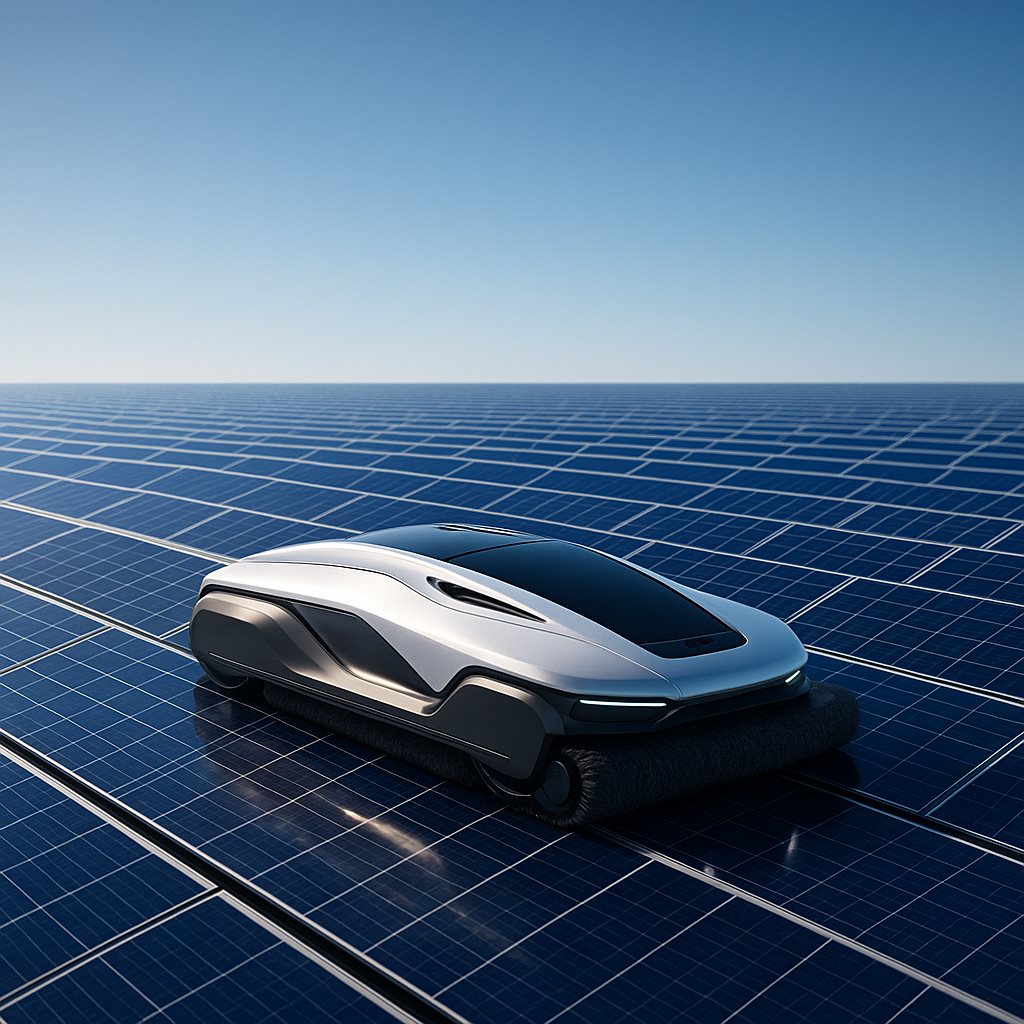
A solar panel cleaning robot is an automated machine that cleans photovoltaic (PV) panels on its own – removing the dust, pollen, and grime that quietly drain a solar installation’s output. As solar farms have grown from rooftops into vast utility-scale fields, keeping their panels clean by hand has become slow, costly, and dangerous. Cleaning robots solve that problem by doing the work consistently, safely, and at scale. This guide explains what these robots are, how they work, the main types, their benefits and ROI, and how to choose the right one for your site.
What Is a Solar Panel Cleaning Robot?
At its simplest, a solar panel cleaning robot is a device that moves across a PV array and cleans the glass surface without a person doing the scrubbing. Some are fully autonomous and run on their own schedule; others are semi-automated and supervised. The best modern systems combine three qualities: they clean thoroughly, they operate safely without people at height, and they scale across large arrays that manual crews cannot service affordably.
The reason they exist is money. Dirty panels produce less electricity, and across a large installation that lost output adds up fast. A cleaning robot turns an expensive, irregular manual task into a consistent, automated one – protecting the energy yield the whole project depends on.
Why Robotic Cleaning Matters
Soiling – the build-up of dust, sand, pollen, bird droppings, and industrial grime – can cut a panel’s output by anywhere from a few percent to well over 20% in harsh environments. Because the loss compounds every day panels stay dirty, even a modest percentage becomes significant lost revenue over a year. Worse, sticky organic soiling can create hot spots that stress panels and shorten their life, as covered in our guide to the hidden costs of inadequate cleaning.
Manual cleaning struggles to keep up. It is labor-intensive, hazardous on rooftops and elevated arrays, and hard to schedule frequently enough – so panels spend long stretches underproducing. Robotic cleaning closes that gap by making frequent, consistent cleaning practical. The right frequency itself depends on conditions rather than a fixed calendar, a topic we cover in the solar cleaning frequency guide.
How Solar Panel Cleaning Robots Work
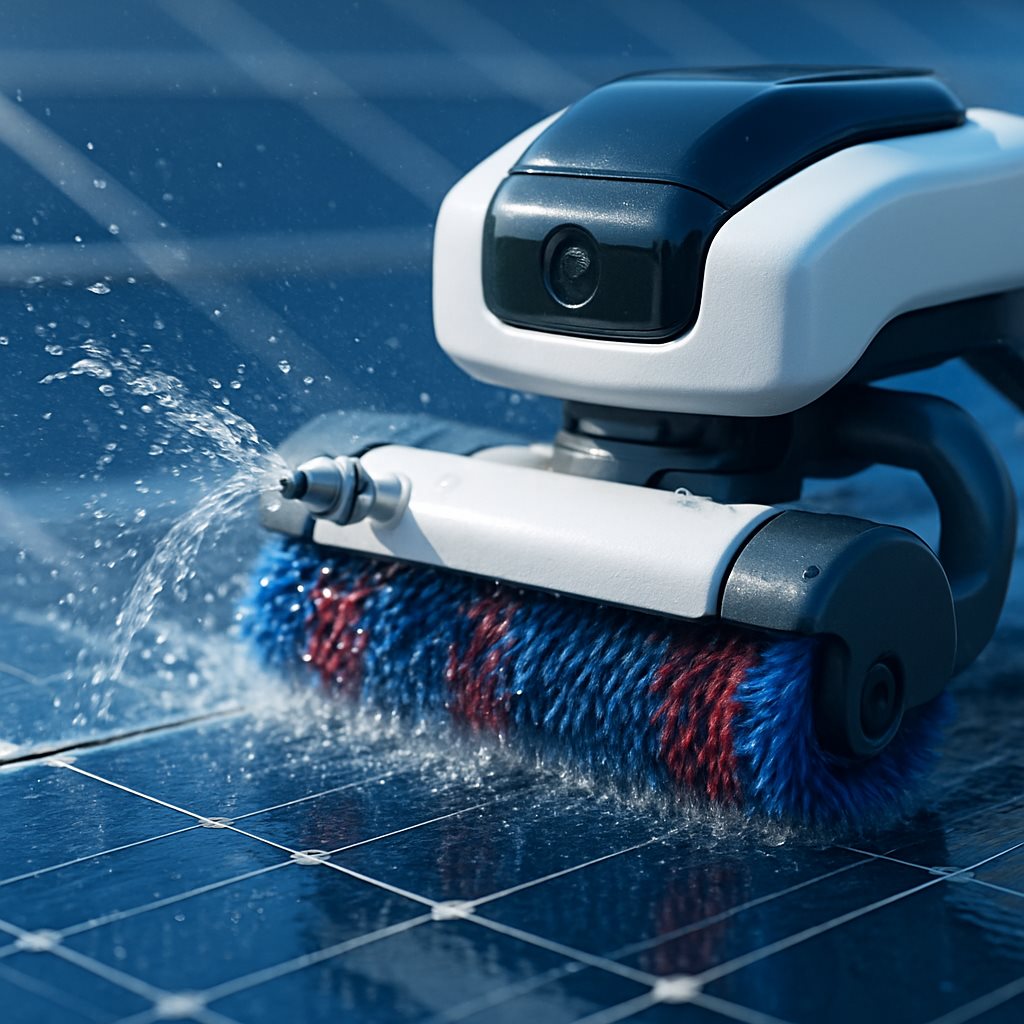
Most cleaning robots combine motion across the panels with a cleaning action – typically water, brushing, or both. The details vary by design, but the core sequence is the same: the robot navigates the array, applies its cleaning method to each panel, and moves on, either autonomously or under supervision.
The most capable systems are water-based and self-powered. A water-powered cleaning robot, for example, uses the pressure of the cleaning water itself to drive both its movement and its cleaning – so it needs no grid electricity, no batteries, and no rails. A high-torque, low-pressure hydraulic design gives it enough force to lift stuck-on grime while staying gentle on the glass. You can see the full cleaning cycle on our how it works page.
Types of Solar Cleaning Robots
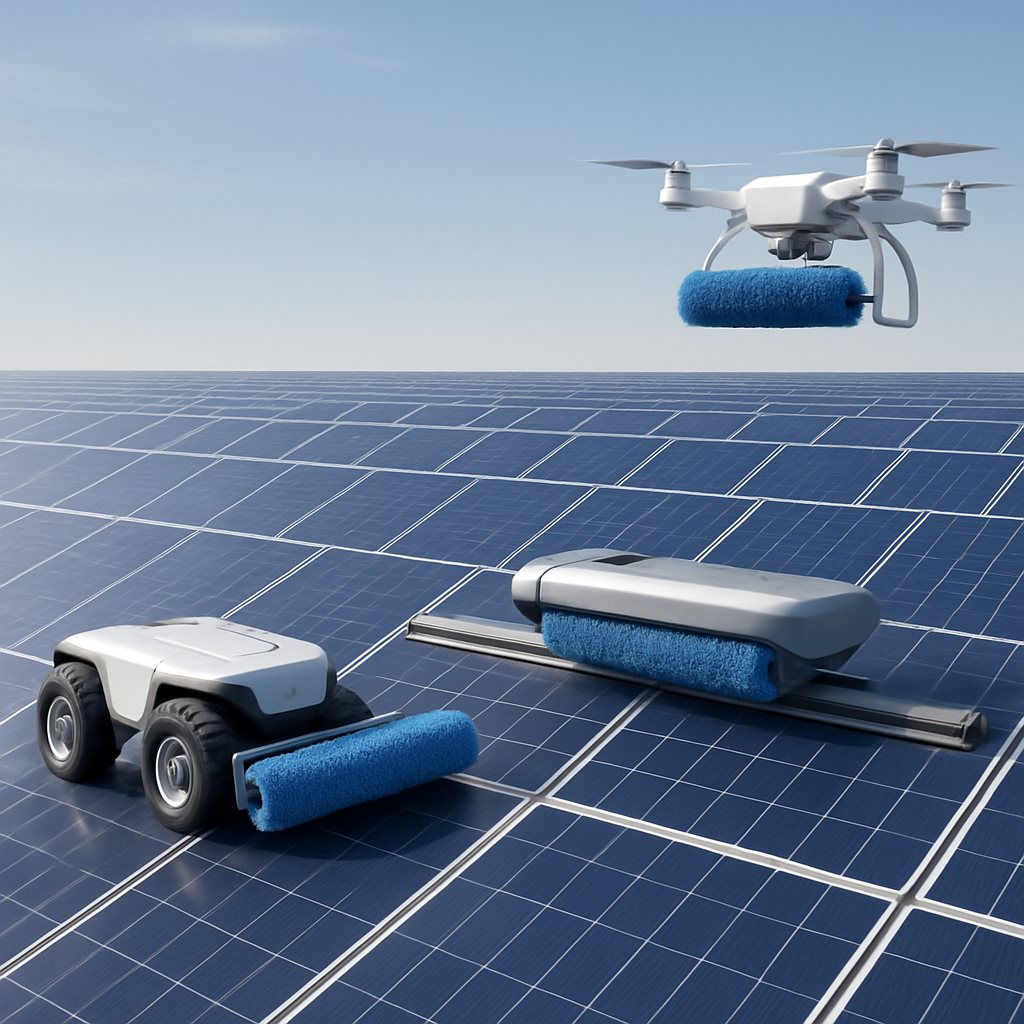
Not all cleaning robots are alike. Understanding the main categories helps you match a system to your site:
- Water-based vs dry. Water-based robots use controlled water to lift and rinse soiling; dry systems use brushes or air alone. The trade-offs – cost, water use, and cleaning power – are compared in our guide to wet vs dry cleaning.
- Rail-based vs rail-free. Rail-based robots run on permanent tracks fixed to the array; rail-free robots move without any installed track, avoiding the cost and shading rails add. See rail-free vs rail-based robots.
- Ground robots vs drones. Ground robots clean in contact with the glass; cleaning drones spray from the air. Each has strengths, compared in robots vs drones for solar cleaning.
- Autonomous vs supervised. Fully autonomous robots run without an operator on site; others still need staff to oversee each cycle.
Benefits of Autonomous Robotic Cleaning
Across installation types, robotic cleaning delivers a consistent set of advantages:
- Higher energy yield. Consistent cleaning keeps panels near their rated output instead of drifting down between manual visits.
- Lower operating cost. It removes recurring cleaning labor, cuts water use, and eliminates specialized cleaning chemicals.
- Improved safety. Autonomous cleaning takes people off rooftops and elevated arrays – the single biggest safety gain, explored in is robotic cleaning safer than manual.
- Gentler on panels. Controlled, low-pressure cleaning avoids the micro-abrasions of harsh manual scrubbing, helping panels last longer.
- Sustainability. Water-based, grid-free cleaning lowers the environmental footprint of maintenance, as covered in the sustainability case for robotic cleaning.
The ROI and Cost of Robotic Cleaning
The financial case is what drives adoption. While a cleaning robot is a larger upfront investment than a bucket and squeegee, the operating economics quickly favor automation: sharply lower labor costs, reduced water use, and recovered energy production. For most commercial and utility-scale sites, payback typically falls between 12 and 36 months, with the fastest returns in high-soiling desert environments. The full breakdown – including how to calculate ROI for your own site – is in our guide to the ROI of autonomous cleaning.
Robotic Cleaning by Installation Type
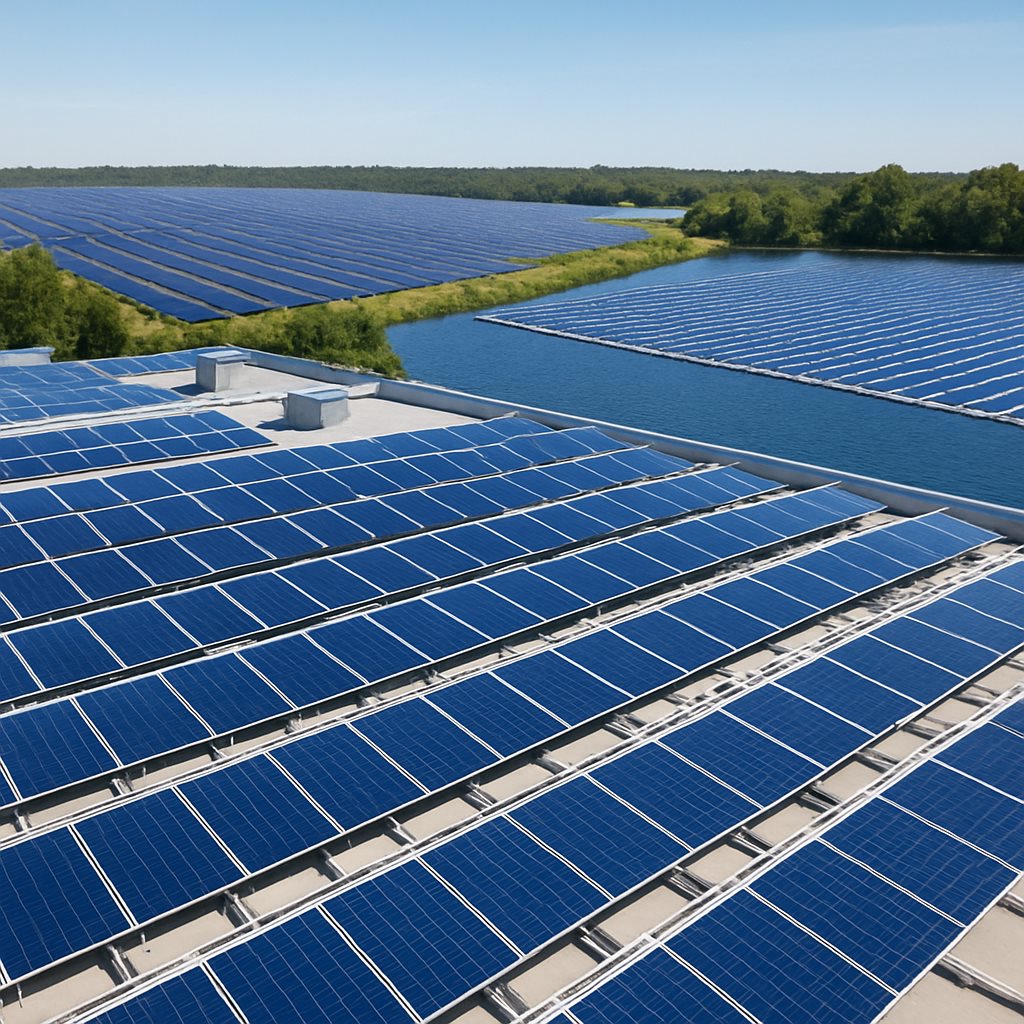
The right approach depends on where the panels sit:
- Commercial rooftops. Here the priority is safety and access – keeping crews off the roof. See our rooftop cleaning solution.
- Utility-scale ground arrays. Here the priority is scale – cleaning thousands of panels often enough to protect a large revenue base. See ground-mounted cleaning and how utility and commercial needs differ in utility-scale vs commercial cleaning.
- Floating solar. On water, adding rails and cabling is complex, which suits a rail-free, water-powered approach – see floating solar.
- Agrivoltaics. Dual-purpose farming-and-solar sites have their own constraints, covered in our agro-solar solution.
- Bifacial and tracker arrays. Modern utility projects often use bifacial panels and single-axis trackers, each of which changes the cleaning picture – see cleaning bifacial panels.
Monitoring and O&M Integration
A cleaning robot is most valuable when it is measured and managed. Connected systems report cleaning status and the energy recovered to a central dashboard, enabling condition-based cleaning that responds to real soiling rather than a fixed calendar – see remote monitoring and IoT. Treated this way, cleaning becomes a core, automated part of operations and maintenance, which is the theme of our guide to solar O&M automation.
How to Choose a Solar Panel Cleaning Robot
Choosing well means matching the system to your site rather than a spec sheet. Key questions include: does it need rails or grid power; can it remove stuck-on grime, not just dust; how much water does it use; is it truly autonomous; and is the vendor proven. Our buyer’s guide walks through each factor in detail.
Where Solaris Fits
Solaris Hydrobotics builds water-based, autonomous cleaning robots designed around a patented high-torque, low-pressure hydraulic motor – so they clean stuck-on grime gently, with no grid electricity, no rails, and no operator, across rooftop, ground, floating, and agrivoltaic installations. To see how a system would perform on your site, explore our solutions or request a demo.
Frequently Asked Questions
What is a solar panel cleaning robot?
It is an automated machine that cleans PV panels on its own, removing dust and grime that reduce output. The best systems are autonomous, safe, and able to scale across large arrays without manual crews.
How do solar panel cleaning robots work?
They move across the array and clean each panel using water, brushing, or both. Water-powered models use the pressure of the cleaning water to drive both movement and cleaning, needing no grid electricity, batteries, or rails.
Are cleaning robots better than manual cleaning?
For most commercial and utility-scale sites, yes. They clean more consistently and safely, use less water, and scale to large arrays that manual crews cannot service cost-effectively.
How much does a solar panel cleaning robot save?
Savings come from recovered energy production plus lower labor and water costs. Most commercial and utility sites see payback in 12 to 36 months, with the fastest returns in high-soiling environments.
Do cleaning robots damage solar panels?
Well-designed systems do not. Low-pressure, water-based cleaning removes soiling while staying gentle on the glass, avoiding the micro-abrasions that harsh manual scrubbing can cause.
What types of solar installations can robots clean?
Rooftop, utility-scale ground-mounted, floating, and agrivoltaic arrays – including modern bifacial and tracker systems. Rail-free, autonomous designs adapt across all of these.
How often should panels be cleaned with a robot?
On a condition-based schedule set by real soiling rather than a fixed calendar. Dusty and desert sites need frequent cleaning; milder climates need it less often.